Jakarta (VNA) – Indonesia has unveiled its first long-term master plan for the creative economy, positioning the sector as a new engine of growth under a development strategy extending to 2045.
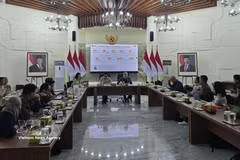
The Indonesian Government has launched the 2026–2045 Creative Economy Development Master Plan (Rindekraf), marking the country's first comprehensive long-term strategy dedicated to the creative economy. This endorsement is a concrete step toward realising the vision of the creative economy as a new engine of economic growth in welcoming Golden Indonesia 2045.
Rindekraf is integrated into planning documents, which are further elaborated into strategic plans and work plans of ministries, agencies, and regional governments. This integration is expected to align policy directions between the central and regional governments to accelerate the growth of the creative sector, said Minister of Creative Economy Teuku Riefky Harsya.
The Ministry of Creative Economy has expanded the scope of the creative economy from 17 to 21 subsectors through Rindekraf 2026–2045 by adding four new subsectors: new technology, digital content, voice-over, and automotive modification.
The new technology subsector encompasses the development of artificial intelligence (AI), blockchain, big data, cybersecurity, and other cutting-edge digital technologies. The digital content subsector accommodates the growth of new professions and business models such as content creators, affiliates, and live commerce.
Through Rindekraf, the 21 creative economy subsectors are grouped into four main clusters: the arts and culture-based creative economy subsector cluster; the design-based cluster; the technology and digital content-based cluster; and the media and creative distribution-based cluster.
To date, 13 provinces and 24 regencies/cities have established creative economy institutions, while 17 provinces and 67 other regencies/cities are in the process of institutional strengthening.
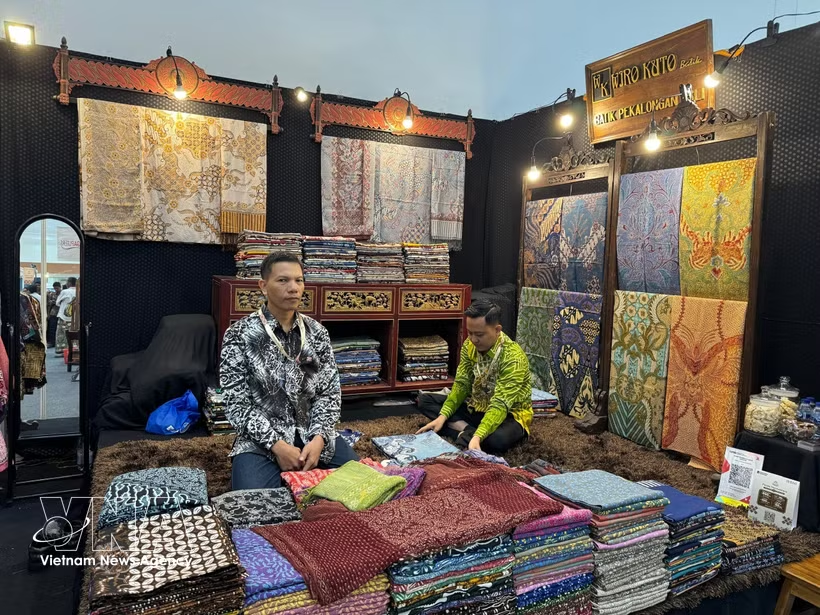
Indonesia's creative economy currently accounts for around 7–8% of GDP and provides jobs for more than 24 million people, with the culinary, fashion and craft industries remaining its three largest subsectors./.