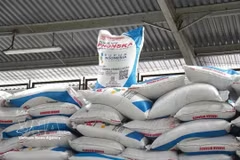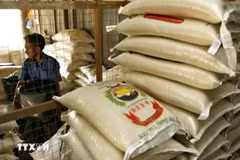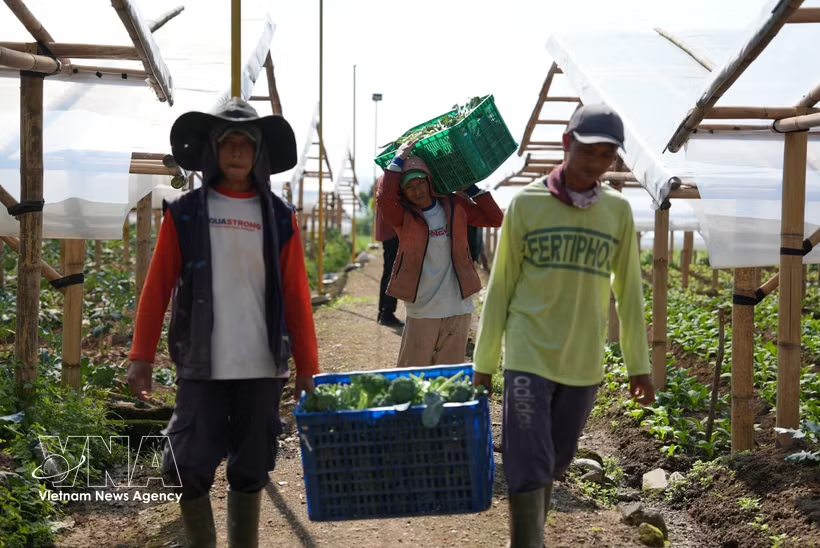
Jakarta (VNA) – The Indonesian government is advancing its transition towards a low-emission agricultural system through sustainable farming practices under the 2025–2029 National Medium-Term Development Plan.
Indonesia is preparing an initiative to promote low-emission rice farming systems, particularly in low- and medium-yield production areas, according to Ade Candradijaya, Head of the Agricultural Cooperation Bureau at the Ministry of Agriculture.
The initiative prioritises measurable approaches that can reduce emissions while maintaining productivity and increasing farmers’ incomes, he said. Digital technology is considered a crucial tool in reducing greenhouse gas emissions, especially methane, from rice cultivation and livestock farming, while ensuring productivity and stable incomes for farmers.
To boost domestic rice production, the Ministry of Agriculture is continuing to invest heavily in irrigation infrastructure, crop development and farmer empowerment programmes. However, Ade emphasised that ensuring food security depends not only on increasing productivity but also on sustainable development solutions such as efficient water management, soil health protection, climate change adaptation and improved production efficiency.
Indonesia's efforts to transition to low-emission agriculture are taking place amid growing concerns about the impact of food systems on climate change. According to the Food and Agriculture Organisation of the United Nations (FAO), the global food and agriculture system emitted 16.5 billion tonnes of CO₂ equivalent in 2023, accounting for around 32% of total global greenhouse gas emissions.
At the FAO Sustainable Rice Transformation Dialogue in Bali on June 22, Indonesia called for support from international development and financial partners, including the Global Environment Facility (GEF), FAO, the World Bank and the United Nations Development Programme (UNDP), through the Food Systems Integrated Programme (FSIP).
FSIP, which is being implemented in 32 countries, including Indonesia, has received more than 280 million USD in GEF funding and total investments of approximately 2.2 billion USD to support the transition towards sustainable food systems, focusing on key agricultural commodities and promoting integrated farming and sustainable environmental management./.