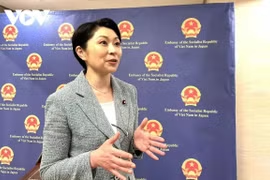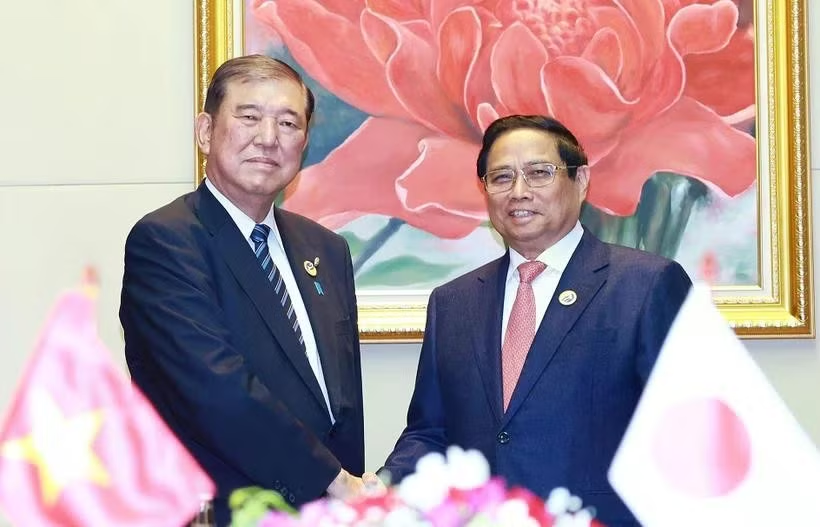
Hanoi (VNA) – Strengthening ties with Vietnam—a dynamic economy of over 100 million people—is one of Japan’s top foreign policy priorities, Japanese Ambassador to Vietnam Ito Naoki has affirmed.
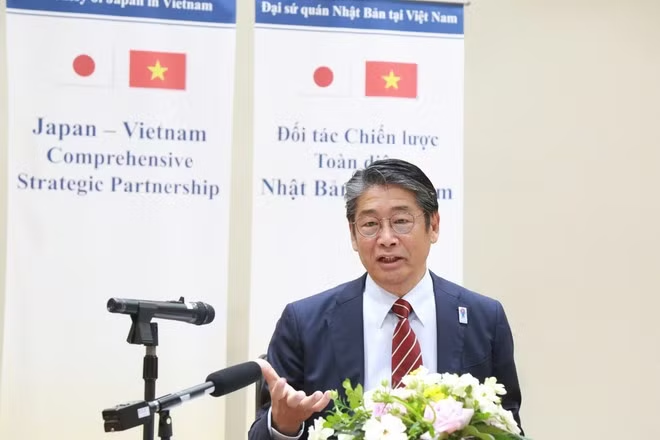
Speaking to the press ahead of Prime Minister Ishiba Shigeru’s official visit to Vietnam from April 27 to 29, the ambassador said the trip is expected to foster the Japanese leaders’ personal relations with their Vietnamese counterparts.
Vietnam is entering an era – that of the nation’s rise and Japan believes that it’s time to further expand the cooperative relationship between the two countries within the framework of the Comprehensive Strategic Partnership for peace and prosperity in Asia and the world.
He noted that cooperation between Japan and Vietnam is structured around three main pillars: economic, trade, and investment collaboration; security cooperation; and people-to-people and cultural exchanges.
Three pillars of collaboration
As Vietnam strives to become a developed nation by 2045, the ambassador emphasised that cooperation with Japan will play a crucial role in achieving this goal. He added that Japan aims to deepen its partnership with Vietnam in emerging priority areas such as digital transformation, green transition, innovation, and science and technology, in line with the Southeast Asian nation’s growing development demand.
In the energy sector, cooperation is being advanced under the Asia Zero Emission Community (AZEC) initiative, proposed by Japan. The two countries have agreed to implement 15 Japanese investment projects in renewable energy, including offshore wind and solar power generation, with a total investment of up to 20 billion USD.
The two sides are also working together to develop a highly skilled workforce, particularly in sectors like semiconductors. Japan’s Ministry of Education, Culture, Sports, Science and Technology is promoting the NEXUS programme, which includes joint semiconductor research between Japan and Vietnam and training for young professionals. Additionally, the Vietnam–Japan University — a joint initiative of both countries — is preparing to launch a specialised training course in semiconductor skills this autumn.
In terms of security, Japanese Defence Minister Kihara Minoru has visited Vietnam and in April, the Japan’s Maritime Self-Defense Force's destroyer Suzunami docked at Da Nang Port and conducted joint drills with the Vietnam People’s Navy.
Technological cooperation in defence equipment has also made steady progress over the past two years. In 2023, Japan transferred anti-corrosion pre-treatment processing technology to the Vietnamese military. In 2024, it handed over two decommissioned material transport vehicles.
Regarding people-to-people and cultural exchanges, there are currently around 630,000 Vietnamese residing in Japan. Each year, approximately 620,000 Vietnamese tourists visit Japan, while 710,000 Japanese tourists travel to Vietnam.
Ambassador Ito affirmed that Japan will continue its efforts to remain a preferred destination for young Vietnamese seeking employment. The Japanese government has launched the "Employment for Skill Development Programme," and Japanese businesses are also striving to further improve working conditions for Vietnamese workers.
Vietnamese workers are expected to continue coming to Japan to work and acquire skills, then return home to contribute to Vietnam’s economy and businesses. This cycle of human resource development, he noted, is a vital aspect of the bilateral relationship.
Currently, around 170,000 Vietnamese are studying Japanese. While this is a significant number, the two countries aim to increase it further—particularly the number of advanced-level Japanese language learners. On the occasion of Prime Minister Ishiba’s visit, the Japanese Embassy is working closely with Vietnam’s Ministry of Education and Training to develop a framework to grow this number in the medium and long term.
Vietnam and Japan are also working closely together to address shared global challenges. The ambassador noted that this cooperation is becoming increasingly important, especially as the global situation continues to evolve in an unpredictable fashion.
According to Ambassador Ito, Vietnam is pursuing a more proactive foreign policy in multilateral forums such as the United Nations and ASEAN, and Japan hopes to strengthen alignment and cooperation to support Vietnam’s strategic orientation.
This year, Japan and Vietnam will co-chair the Japan-Mekong Cooperation Framework, with both sides committed to pursuing practical outcomes. The ambassador added that cooperation in international forums will be one of the key topics during Prime Minister Ishiba’s visit to Vietnam./.