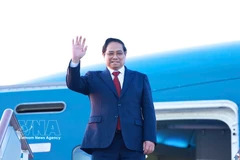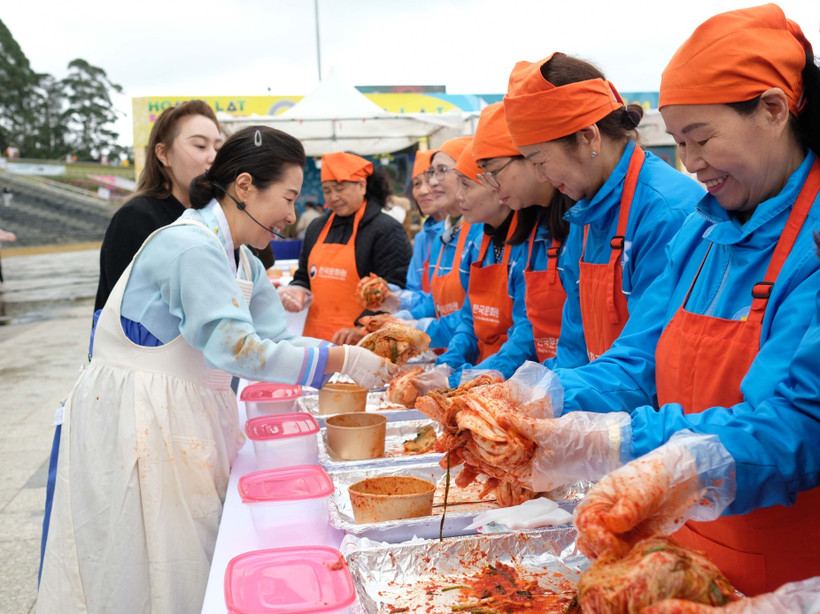
Hanoi (VNA) - The state visit to the Republic of Korea (RoK) by Party General Secretary To Lam from August 10–13 is eagerly anticipated by many Korean nationals living, studying, and working in Hanoi, who see it as an opportunity to generate strong synergy in economic cooperation, people-to-people exchanges, and cultural understanding.
Remarkable transformations
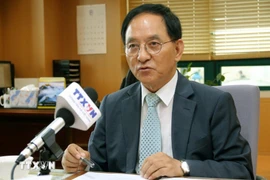
Having lived in Hanoi for nearly 25 years, An Sung Gu, Deputy General Director of POSCO Vietnam, expressed admiration for the remarkable transformations he has witnessed in Vietnam, particularly in the capital city.
When he first arrived in Hanoi in 2001, An recalled it as a newly developing city. Today, it has grown into a modern metropolis comparable to other Southeast Asian capitals, with numerous high-rise buildings of 40–50 storeys. Transport and power infrastructure has improved significantly, providing residents with much better living conditions than two decades ago.
Sharing this view, Ja Young Cho, a senior IT expert working in Hanoi, was impressed by the city’s adoption of electric buses. The completion of Metro Lines 1 and 2 has brought Hanoi closer to its goals of green space development and a clean environment, efforts aimed at improving the quality of life for residents.
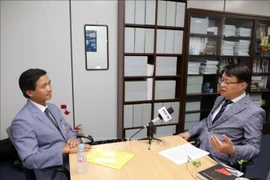
These “spectacular” changes, according to Park Nark Jong, former Director of the Korean Cultural Centre in Vietnam, are the result of the Doi Moi (Renewal) policy implemented since Vietnam opened its market economy. Having lived and worked in Vietnam for 13 years, Park assessed that the country has achieved comprehensive socio-economic development in recent years.
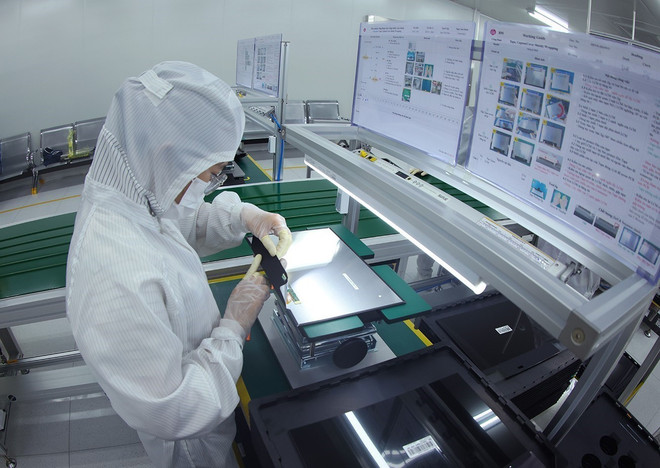
In economic development, he noted Vietnam’s rapid expansion of infrastructure, facilitating the flow of goods and people. Incomes have improved, and consumer culture has shifted towards more diverse and higher-end products. Both foreign and domestic brands are competing and expanding in the market. With its young and abundant workforce, Vietnam has also become an attractive manufacturing base for the IT and high-tech industries. Many global corporations, including Korean giants such as Samsung and LG, have established production facilities in Vietnam, becoming key drivers of the country’s growth.
In social development, Park highlighted the importance of effective investment in education and the growing number of talented individuals with overseas study experience, which contributes significantly to Vietnam’s overall capacity. The Vietnamese are becoming more culturally open, with greater access to diverse cultural forms, giving rise to new social trends, particularly among the youth. One example is the Korean wave (Hallyu), with K-pop and K-drama gaining a strong following among young Vietnamese.
Expanding and deepening cooperation
Ahead of General Secretary To Lam’s state visit, Park expressed hope that the outcomes will enhance the quality of economic cooperation, expand training and human resource collaboration, and strengthen mutual cultural understanding.
Specifically, he hoped the bilateral partnership would be strengthened in high-value-added industries, such as technology transfer and joint research and development, moving beyond simple manufacturing cooperation. Collaboration in building a start-up ecosystem and in Fourth Industrial Revolution technologies could, he said, create substantial synergy.
In culture, Park wished for more two-way exchanges to foster mutual understanding and respect.
As an IT professional and adviser on the RoK’s ODA programmes, Ja Young Cho expressed hope for more cooperative projects, especially in technology, noting that Vietnam needs more experts to apply advanced know-how from countries including the RoK.
On social and cultural exchanges, An observed vibrant people-to-people interaction in recent years, with around 200,000 Vietnamese living and working in the RoK, and a growing number of Korean–Vietnamese marriages. This, he said, reflects the close ties between the two countries, not only economically, but also culturally and socially.
He added that if the RoK and Vietnam strengthen cooperation on global challenges such as tariffs and supply chain issues, both countries could achieve positive outcomes in these areas.
Positive impacts
According to Park, deeper bilateral cooperation will benefit both Koreans living in Vietnam and Vietnamese in the RoK. For Koreans in Vietnam, it will create opportunities to expand business or find jobs in new sectors, while improving living conditions and reducing cultural differences. For Vietnamese in the RoK, it will enable professional growth through study and work, economic stability, and improved living standards for their families.
After nearly 25 years in Vietnam, An has seen a steady rise in the number of Koreans coming to live, work, and study in the country. Thousands of Korean companies, including major corporations like POSCO, Samsung Electronics, and LG, have invested in Vietnam and are operating successfully through professional production.
Both Vietnamese and Koreans widely attribute these achievements to the leadership of the Communist Party and the State of Vietnam.
An said Vietnam’s progress in administrative reform, through restructuring ministries, sectors, localities, and administrative bodies, is expected to continue improving the country’s investment climate./.