Hanoi (VNA) – Lao Party General Secretary and President Thongloun Sisoulith has called for continued efforts to complete the establishment of 621 communes nationwide by 2027, describing the initiative as a key step in strengthening grassroots governance and local development.
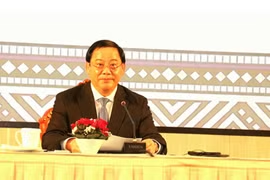
Speaking at a national conference on organisation work of the Lao People's Revolutionary Party in Vientiane, Thongloun stressed that newly established communes must quickly become fully operational. He said they should serve as the primary level for delivering public services, addressing citizens’ concerns and implementing Party policies at the grassroots level.
According to the Lao leader, the reform will create new momentum for political institution-building, rural development and poverty reduction, while supporting the implementation of the Party’s “Three Builds” policy, which aims to develop provinces into strategic units, districts into strong and comprehensive units, and villages into development units.
He emphasised that communes should promote grassroots democracy and act as front-line strongholds for national defence, security, environmental protection and natural resource management.
Thongloun also highlighted the role of communes in training future leaders by attracting qualified young people to work at the local level, where they can gain practical experience before being recruited into the civil service and the Party.
Future cadres, he said, must emerge from grassroots administration and master the “four knows” following the teaching of late leader Kaysone Phomvihane: know to lead in politics and ideology, know to distinguish between friends and foes, know to direct economic development, and know to guide socio-cultural affairs.
The Lao leader called for clearer decentralisation between district and commune authorities, as well as between communes and villages, accompanied by appropriate decision-making powers and resource allocation. Such reforms, he said, would allow higher-level authorities to focus on policymaking, leadership and oversight.
He also urged the modernisation of local public administration, including consideration of a one-stop-shop model at the commune level to improve service quality and convenience for citizens.
Thongloun stressed the need to classify communes according to their characteristics, including urban and rural areas, lowland and mountainous regions, to ensure tailored policies that reflect local conditions, development levels and comparative advantages.
He also called for greater recognition of the role of villages as community organisations supporting commune-level administration and development./.