Magnitude 6.8 earthquake hits Indonesia

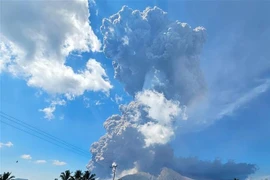
The epicentre was located to be about 177km west of Tual city in Maluku province. The USGS estimated the quake's depth at 66 km, while the BMKG reported a depth of 98km.

Jakarta (VNA) - A magnitude 6.7 earthquake struck off eastern Indonesia on July 14 but there was no tsunami threat.

According to the US Geological Survey (USGS) and Indonesia's Meteorology, Climatology and Geophysics Agency (BMKG), the quake occurred at around 12:49 local time. The epicentre was located to be about 177km west of Tual city in Maluku province. The USGS estimated the quake's depth at 66 km, while the BMKG reported a depth of 98km.

Meanwhile, the German Research Centre for Geosciences (GFZ) recorded a magnitude 6.8 earthquake with a depth of 10km.

The Pacific Tsunami Warning Centre and BMKG said the quake did not have the potential to generate a tsunami. There were no immediate reports of damage or casualties, although tremors were felt in several small towns in eastern Indonesia.

Indonesia, an archipelago of more than 17,000 islands, is prone to frequent seismic activity due to its location along the Pacific "Ring of Fire," a region of high tectonic activity.

In 2018, a 7.5-magnitude earthquake and subsequent tsunami devastated the city of Palu on Sulawesi island, claiming more than 2,200 lives. In 2004, a massive 9.1-magnitude quake off the coast of Aceh province triggered a tsunami that killed over 170,000 people in Indonesia alone./.

VNA

See more

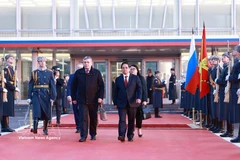
Philippine President Ferdinand Romualdez Marcos Jr. (Photo: Kyodo/VNA)

ASEAN leaders to discuss oil, food and migrant labour

The Philippines holds the ASEAN Chairmanship in 2026 under the theme “Navigating our future, together,” with three key priorities: strengthening peace and security, enhancing economic connectivity, and empowering people.

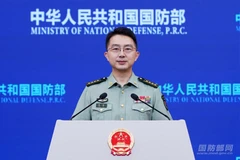
Spokesperson of the Chinese Ministry of National Defence and Deputy Director-General of its Information Office Col. Jiang Bin. (Photo: VNA)

China, Vietnam bolster military cooperation

Colonel Jiang Bin, spokesperson of the Chinese Ministry of National Defence and Deputy Director-General of its Information Office, described China-Vietnam ties as “profound”, noting the two countries are socialist neighbours working to build a China-Vietnam Community with a shared future of strategic significance. Military exchanges and collaboration have broadened in recent years, with new strides in high-level visits, joint training and border defence cooperation, he added.

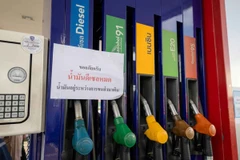
Illustrative Image (Photo: Bangkokpost)

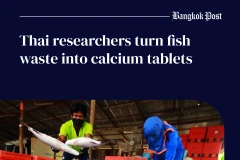
Thailand extracts bio-calcium from fish waste

Researchers at Rajamangala University of Technology, Thanyaburi (Thailand) developed a method to extract calcium from discarded parts of blackchin tilapia, including heads, bones, scales and tails - materials typically treated as waste and a source of pollution.

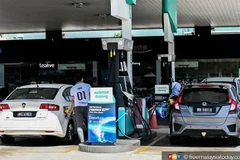
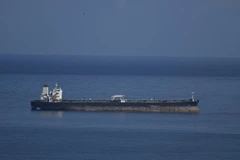
Philippines receives first Russian oil shipment in five years

Philippines receives first Russian oil shipment in five years

On March 24, Philippine President Ferdinand Marcos Jr. declared a national energy emergency through an executive order, allowing the government to fast-track fuel procurement, make advance payments for fuel contracts, and ensure the availability of fuel and other essential goods amid rising prices.

Philippines declares energy emergency over Middle East tension (Photo: BBC)

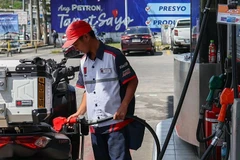
Philippines declares energy emergency

The Philippine Government on March 24 announced an "imminent danger of a critically low energy supply" as tensions in the Middle East threaten fuel supplies and the stability of the country’s power system.

Delegates at the event (Photo: cambodia.un.org)

Cambodia accelerates access to climate-resilient water services

Funded by the UN Joint Sustainable Development Goals (SDG) Fund, the Water Infrastructure & Smart Energy Joint Programme (WISE JP) introduces a pioneering financial model that combines commercial and low-interest capital - a revolving blended‑finance facility - dedicated to ensuring climate‑smart water systems.