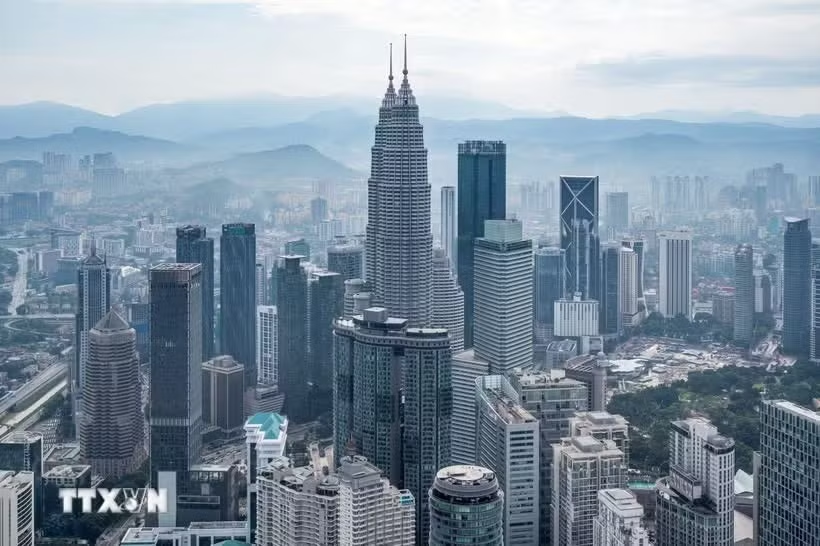
Kuala Lumpur (VNA) – Malaysia has accepted the 10% tariff imposed by the US under Section 301 over forced labour concerns while reaffirming that negotiations with Washington will continue to safeguard the interests of domestic businesses.
Malaysia's Ministry of Investment, Trade and Industry (MITI) said the US has set a 10% tariff on Malaysian goods under the Section 301 measure related to forced labour. The rate is unchanged from the previous temporary tariff. Malaysia is among 17 of the 60 economies subject to the 10% rate while the remaining economies face a 12.5% tariff.
According to MITI, the Office of the US Trade Representative (USTR) took into account Malaysia's commitment to enforcing import restrictions on goods produced with forced labour when determining the tariff rate. The measure took effect on July 24, 2026, following the expiry of the temporary tariff imposed under Section 122 of the US Trade Act of 1974.
MITI added that the Section 301 investigation into industrial overcapacity involving 16 economies, including Malaysia, remains ongoing, and Kuala Lumpur will continue cooperating with US authorities.
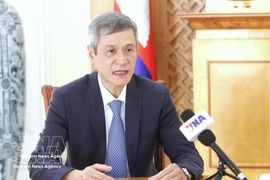
Speaking at a domestic event, Prime Minister Anwar Ibrahim said Malaysia accepts the announced tariff but will continue negotiations with Washington over the 10% rate. Minister of Investment, Trade and Industry Johari Abdul Ghani is leading the Malaysian delegation in intensive discussions with US officials to protect the country's business interests.
Malaysian media reported that in June 2026, the USTR concluded Malaysia lacked a dedicated legal framework to comprehensively screen and block production inputs from third countries linked to forced labour. However, the country's commitment to strengthening its legislation, including tighter supply chain due diligence rules currently being drafted by MITI, helped secure its placement among the 17 economies subject to the lower 10% tariff.
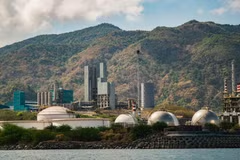
The USTR has also exempted several product categories to help maintain global supply chains, including electrical and electronic equipment, artificial intelligence (AI)-related products, crude and refined palm oil, gemstones, silk, selected herbal oils, petroleum products, fertilisers, and goods already subject to national security tariffs such as steel and aluminium.
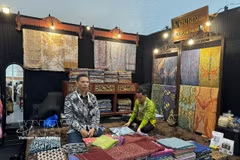
Meanwhile, the US and Malaysia are working on a tariff-rate quota arrangement under which a specified volume of Malaysian textiles and apparel could enter the US duty-free. In return, Malaysian textile manufacturers are expected to increase imports of US cotton./.