Malaysia seeks to strengthen economic cooperation with ASEAN members

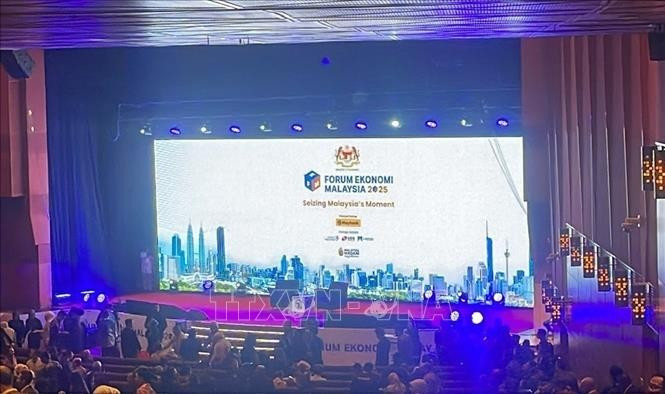
The Malaysian economic forum (FEM) 2025 was held in Kuala Lumpur on January 9 to discuss cooperation orientations and key initiatives for the Association of Southeast Asian Nations (ASEAN) and Malaysia in the coming year.

At the Malaysian economic forum (FEM) 2025 in Kuala Lumpur on January 9. (Photo: VNA)

Kuala Lumpur (VNA) – The Malaysian economic forum (FEM) 2025 was held in Kuala Lumpur on January 9 to discuss cooperation orientations and key initiatives for the Association of Southeast Asian Nations (ASEAN) and Malaysia in the coming year.

The forum brought together over 50 speakers from various sectors, including fiscal and monetary policy, technology, green growth, and education reform.

Speaking at the event, Malaysian Prime Minister Anwar Ibrahim underscored the importance of deepening ties with Southeast Asian neighbours to address future challenges effectively.

He said this year, Malaysia plans to solidify its position as a hub for electricity and high-quality human resources, and diversify supply chains via such key sectors such as oil and gas, semiconductors, and Islamic finance.

ASEAN is projected to become the world’s fourth-largest economic bloc, thanks to enhanced partnerships with non-regional countries such as India and China. As the ASEAN Chair in 2025, Malaysia is committed to working with member states to address shared challenges, promote economic development, and ensure peace and stability in the region.

ASEAN’s strength lies in its vast market of approximately 665 million people, with a middle-class population expected to double compared to two decades ago. While other regions face predictions of slower or declining economic growth, the bloc is forecast to grow between 4% and 5% over the next decade./.
VNA

See more

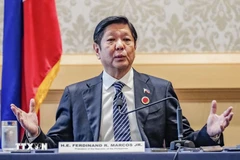
Philippine President Ferdinand Romualdez Marcos Jr. (Photo: Kyodo/VNA)

ASEAN leaders to discuss oil, food and migrant labour

The Philippines holds the ASEAN Chairmanship in 2026 under the theme “Navigating our future, together,” with three key priorities: strengthening peace and security, enhancing economic connectivity, and empowering people.

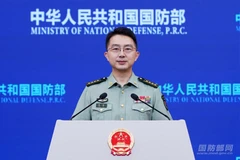
Spokesperson of the Chinese Ministry of National Defence and Deputy Director-General of its Information Office Col. Jiang Bin. (Photo: VNA)

China, Vietnam bolster military cooperation

Colonel Jiang Bin, spokesperson of the Chinese Ministry of National Defence and Deputy Director-General of its Information Office, described China-Vietnam ties as “profound”, noting the two countries are socialist neighbours working to build a China-Vietnam Community with a shared future of strategic significance. Military exchanges and collaboration have broadened in recent years, with new strides in high-level visits, joint training and border defence cooperation, he added.

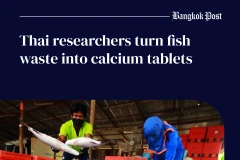
Illustrative Image (Photo: Bangkokpost)

Thailand extracts bio-calcium from fish waste

Researchers at Rajamangala University of Technology, Thanyaburi (Thailand) developed a method to extract calcium from discarded parts of blackchin tilapia, including heads, bones, scales and tails - materials typically treated as waste and a source of pollution.

Philippines receives first Russian oil shipment in five years

Philippines receives first Russian oil shipment in five years

On March 24, Philippine President Ferdinand Marcos Jr. declared a national energy emergency through an executive order, allowing the government to fast-track fuel procurement, make advance payments for fuel contracts, and ensure the availability of fuel and other essential goods amid rising prices.

Philippines declares energy emergency over Middle East tension (Photo: BBC)

Philippines declares energy emergency

The Philippine Government on March 24 announced an "imminent danger of a critically low energy supply" as tensions in the Middle East threaten fuel supplies and the stability of the country’s power system.

Delegates at the event (Photo: cambodia.un.org)

Cambodia accelerates access to climate-resilient water services

Funded by the UN Joint Sustainable Development Goals (SDG) Fund, the Water Infrastructure & Smart Energy Joint Programme (WISE JP) introduces a pioneering financial model that combines commercial and low-interest capital - a revolving blended‑finance facility - dedicated to ensuring climate‑smart water systems.