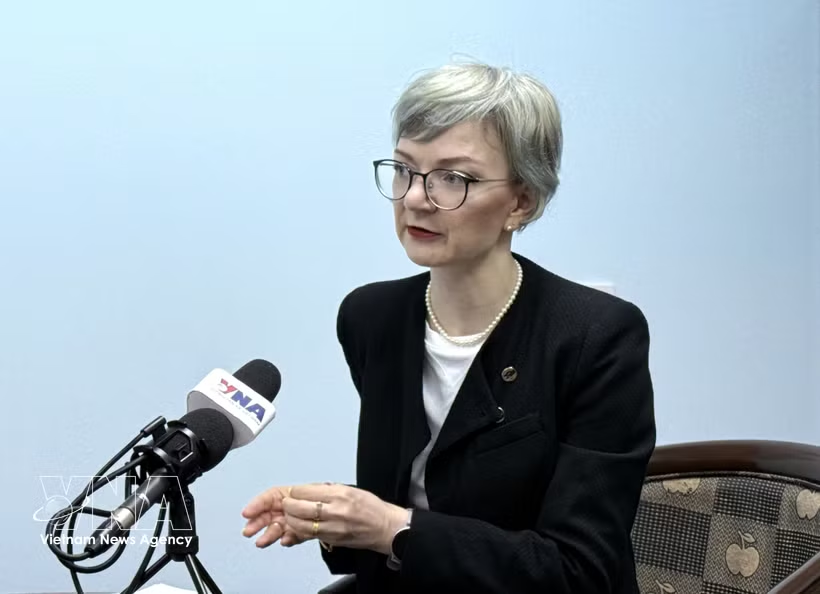
Kuala Lumpur (VNA) – Dr. Julia Roknifard, senior lecturer in international relations at Taylor's University of Malaysia, has praised Vietnam as a strategic linchpin to realise the ASEAN Vision 2045.
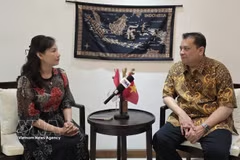
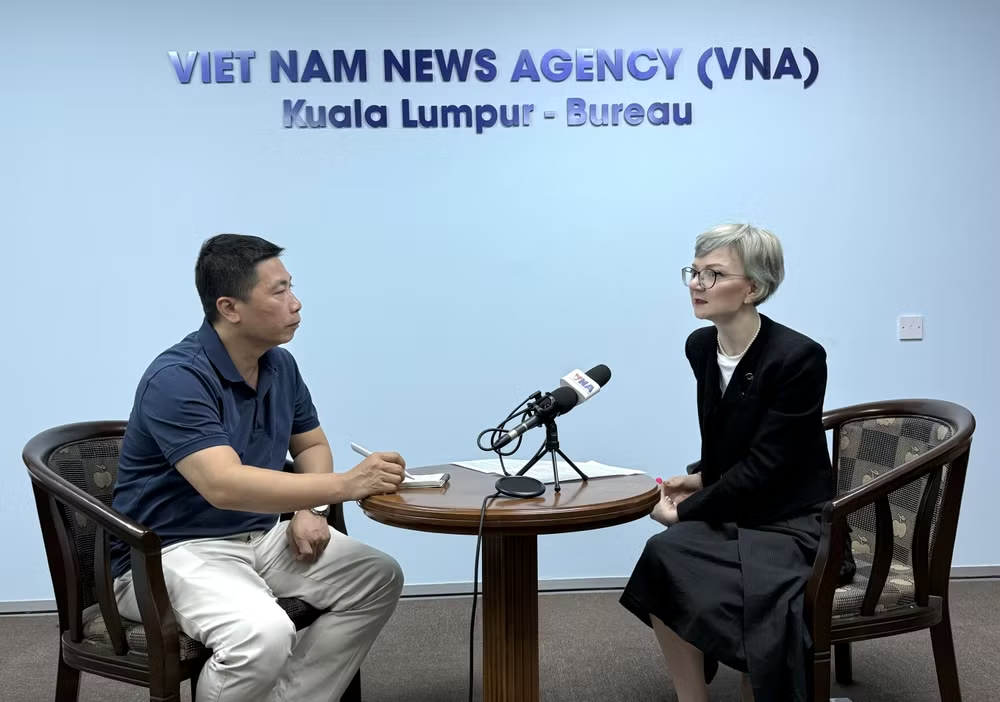
Talking with Vietnam News Agency (VNA) reporters based in Kuala Lumpur, Roknifard said the 2045 vision can be achieved by building on three pillars of upholding its founding principles, improving institutional adaptability, and leveraging the role of key member states.
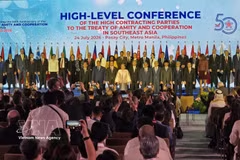
ASEAN’s cohesion still hinges on the core principles of the Treaty of Amity and Cooperation in Southeast Asia (TAC), including non-interference, peaceful dispute settlement and mutual respect, she said. To boost adaptability, she urged the bloc to speed up digital transformation, strengthen supply chain resilience and widen the use of local currencies in cross-border payments to cushion against global economic and geopolitical shocks.
She flagged the risk of trade and supply chain disruptions from strategic competition as one of ASEAN’s most pressing challenges, which has compounded pressures on food, energy and inflation. To respond, the bloc should leverage its neutral position, diversify supply chains, push hi-tech manufacturing and accelerate green energy transition to attract long-term investment and sharpen regional competitiveness, she said.
On the East Sea issue, she said the waters hold strategic importance and ample oil and gas resources, creating opportunities for joint development if parties can establish appropriate cooperation mechanisms. Promoting joint development zones could ease tensions while delivering economic benefits to regional nations, she added.
She described Vietnam as one of ASEAN’s standout members, citing strong economic growth, a strategic geographic location and a balanced foreign policy that have reinforced the bloc’s cohesion and centrality. While Indonesia benefits from its large domestic market and Malaysia and Singapore play key roles in regional value chains, Vietnam distinguishes itself with rapid growth, a favourable geostrategic position and extensive global integration, allowing it to act as a bridge between mainland and maritime Southeast Asia.
The scholar praised Vietnam’s consistent advocacy of international law, particularly the 1982 UN Convention on the Law of the Sea (UNCLOS) in addressing East Sea issues. Vietnam’s foreign policy of independence, self-reliance, diversification and multilateralism has helped consolidate ASEAN unity while driving coordination in national defence, digital economy and infrastructure connectivity, she said.
Sustained high growth and extensive global integration over recent decades have made Vietnam one of ASEAN’s most dynamic economies, she said, adding that its experience shows the importance of combining economic reform, infrastructure and education investment, and proactive economic diplomacy to deepen integration into global value chains while maintaining independence and self-reliance.
Vietnam’s development experience and balanced foreign policy can actively contribute to realising the ASEAN Vision 2045 while bolstering the bloc’s centrality and cohesion amid continued global and regional volatility, she concluded./.