Hanoi (VNA) – Malaysia's household debt rose to 1.73 trillion MYR (about 423 billion USD) at the end of March although the debt-to-GDP ratio edged down slightly.
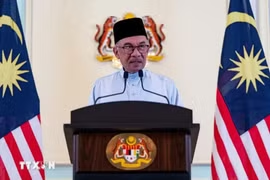
Malaysian Prime Minister Datuk Seri Anwar Ibrahim was quoted by local media as saying that household debt stood at 84.4% of gross domestic product (GDP) at the end of the first quarter, down marginally from 84.7% three months earlier.
According to the Malaysian government's assessment, debt growth has remained broadly in step with economic expansion and income gains, easing concerns that households may be becoming increasingly overstretched amid uncertainty in the global economy.
In a written parliamentary reply, PM Anwar, who is also Finance Minister, said the government and Bank Negara Malaysia continue to monitor household indebtedness, repayment capacity and broader economic conditions to ensure families could weather potential external shocks.
The impaired household loan ratio remained stable and low, at 1% at the end of December 2025, compared with 1.1% in June 2025, he said in response to a question from Aminolhuda Hassan (PH-Sri Gading) on how the government was assessing Malaysians’ financial resilience in the event of a global recession.
He said the increase in household debt has been driven by higher incomes rather than excessive borrowing, adding that households generally remain capable of meeting their debt obligations. The government, he stressed, is committed to ensuring household debt grows at a pace consistent with borrowers' repayment capacity.
Amid continued geopolitical tensions in the Middle East, the leader said banks will continue to provide targeted debt relief measures for affected customers, including loan restructuring, repayment rescheduling and temporary payment deferments./.
Malaysia unveils action plan to become regional AI leader
The Malaysia Digital 2030 (MD2030) strategy is built around seven strategic pillars, namely government, economy, infrastructure, talent, society, trust and security, and innovation, with each led by the relevant ministry under a whole-of-government approach.