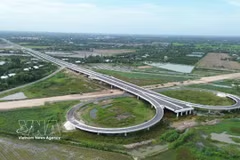
Hanoi (VNA) – The Ministry of Construction has set a target of completing the expansion of the eastern North-South expressway by 2030.
At a meeting on preparations for expanding sections of the expressway, Minister of Construction Tran Hong Minh said the route is the country's most important transport artery, playing a strategic role in socio-economic development as well as national defence and security.
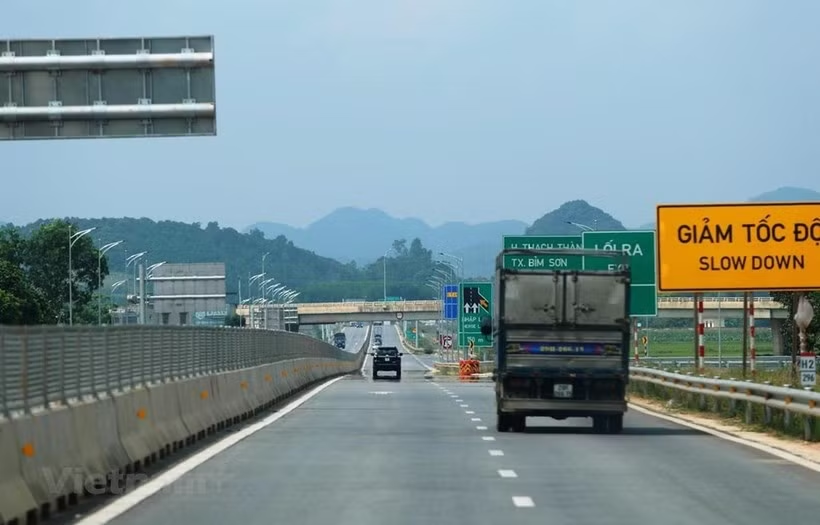
He noted that with strong support from the Party and the State, the expressway has gradually been completed, creating a continuous North-South corridor. However, many sections were built under phased investment plans with only four limited-access lanes, making further expansion necessary to meet rising transport demand.
As Vietnam is entering a new development stage, characterised by ambitious economic growth targets, regional connectivity, urbanisation, and enhanced defence requirements, it is neccesary to expand the eastern North-South expressway to create socio-economic infrastructure, particularly multimodal transport systems.
Minh asked project management boards and consultants to conduct a comprehensive assessment of the entire expressway corridor, stretching from northern Cao Bang province to the southernmost province of Ca Mau.
The review will divide the route into three sections: Cao Bang-Hanoi, Hanoi-Ho Chi Minh City, and Ho Chi Minh City-Dat Mui. For each section and component project, authorities will assess current traffic volumes, road capacity and technical standards before proposing appropriate investment plans.
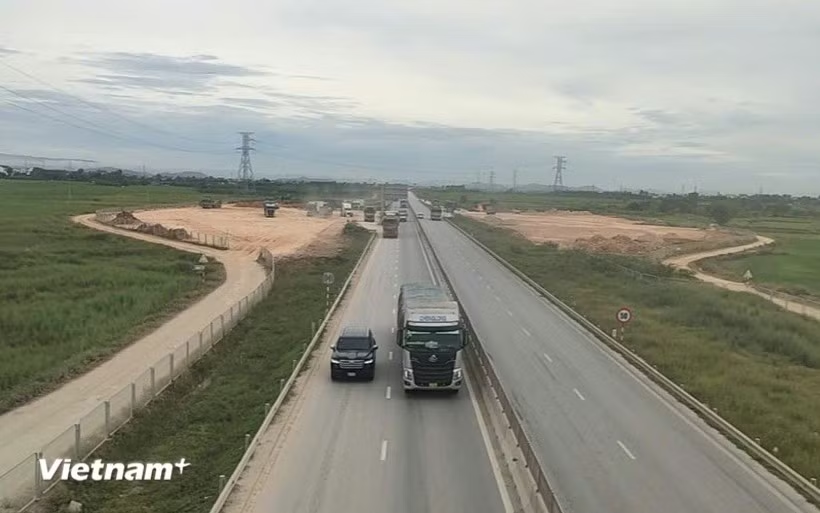
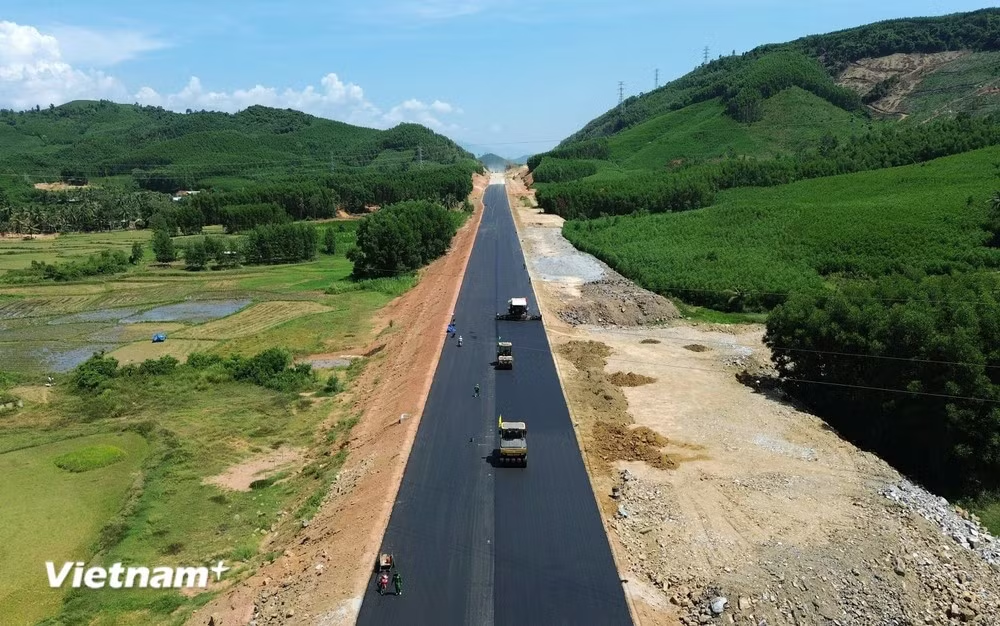
The ministry has endorsed a proposal to expand existing four-lane limited-access sections to the planned six-lane standard. The Phan Thiet-Dau Giay section will also be widened to eliminate bottlenecks and ensure a consistent cross-section along the route.
The approach is intended to provide a long-term solution, avoiding repeated expansion projects that would consume additional resources, disrupt traffic and reduce operational efficiency.
The ministry also requested that the pre-feasibility study provide stronger political, legal and practical justification for the investment. The report must include a comprehensive assessment of socio-economic benefits in line with Conclusion No. 18-KL/TW issued by the Party Central Committee on April 2, 2026, with quantitative indicators covering economic growth, employment creation and the efficient allocation and use of public resources.
Regarding the 2026-2030 medium-term public investment plan, the ministry said expansion projects will be prioritised only after funding has been allocated to projects included in the Party Central Committee's action programme. New projects will be prioritised to achieve the national target of 5,000 kilometres of expressways by 2030.
Priority for expansion will be given to sections with the highest traffic demand, particularly those built during the 2017-2020 phase of the eastern North-South expressway project. Construction on these sections is expected to begin in 2027, while work on the remaining sections is targeted to start in 2028, enabling the entire expansion programme to be completed by 2030.
For three existing public-private partnership (PPP) component projects – Dien Chau-Bai Vot, Nha Trang-Cam Lam and Cam Lam-Vinh Hao – the ministry assigned the Department for Roads of Vietnam to work with current investors to agree on expansion plans and incorporate the results into the pre-feasibility study.
For sections previously funded through the State budget, authorities were instructed to continue assessing the feasibility of using public investment, compare it with the PPP model and propose appropriate financing mechanisms, including toll collection after completion to recover State capital.
The ministry also directed project management boards and consultants to maximise the use of existing infrastructure, and review updated traffic forecasts against figures previously reported to the National Assembly. They should also explain any discrepancies and evaluate special mechanisms applied during earlier component projects, including contractor selection and construction material supply.
Other necessary information includes researching legal bottlenecks and proposing new policy mechanisms to facilitate implementation of future expansion projects./.