Hanoi (VNA) – International integration is increasingly becoming a measure of a locality’s competitiveness, from its investment environment, infrastructure and human resources to technological innovation and participation in global value chains.
With a new development space following the administrative merger, the northern province of Phu Tho is shifting from “opening up to attract” to “actively connecting for development,” laying a foundation for rapid and sustainable growth.
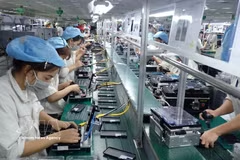
In the first seven months of 2026, the province’s industrial production index rose 24.3% year-on-year, with processing and manufacturing up 25.18%. Export turnover reached 31.53 billion USD, up 39.7% and equivalent to 79.8% of the annual target, while import turnover stood at 41.9 billion USD, up 65.2%.
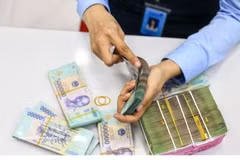
Registered FDI exceeded 1.9 billion USD, 2.6 times higher than the same period last year and 18.9% above the annual target. More than 3,000 new businesses were established, while 730 resumed operations.
Behind these figures is the increasingly clear shift of the local economy within international production, trade and investment chains. Integration is no longer simply about taking goods overseas. A locality must also be able to attract quality investment, adopt new technologies, develop supporting industries, provide internationally competitive human resources, organise efficient logistics and maintain a competitive business environment.
This is why Phu Tho does not measure integration solely by export growth. The province recorded export turnover of about 36.8 billion USD in 2025, while the industry and trade sector has set a target of 39.5 billion USD for 2026. By the end of July, the province had achieved 31.53 billion USD.
Amid rapidly changing international trade conditions, requirements from major markets are also reshaping competition. Standards on traceability, carbon emissions, environmental protection, social responsibility, labour safety and supply-chain transparency are increasingly prerequisites for goods to access overseas markets. Substantive integration therefore also means upgrading businesses’ production and management capacity.
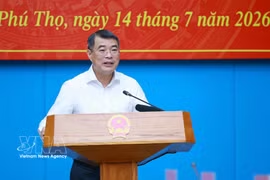
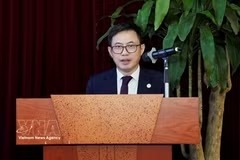
Tran Quang Tuan, Director of the provincial Department of Industry and Trade, said international economic integration was no longer confined to industrial parks but was spreading to agriculture, tourism, logistics, e-commerce and other sectors.
With a broader development space following the merger, Phu Tho has gained additional advantages in infrastructure, resources and markets, as well as greater potential for regional connectivity, enabling it to participate more deeply in international economic flows, he said.
Shift from quantity to quality
According to Tuan, authorities need to accompany businesses in a more practical manner, not only through trade promotion but also by helping them improve competitiveness, develop supporting industries, accelerate digital transformation and meet international market standards.
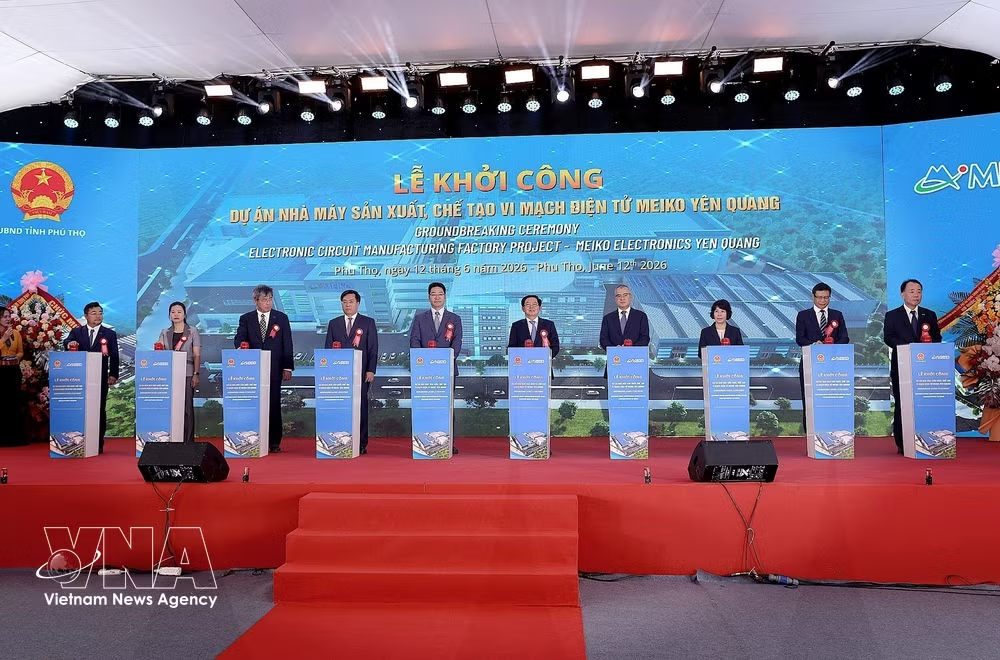
A notable change in Phu Tho’s integration process is the shift in investment attraction from quantity to quality. The new development space gives the province a larger market, greater industrial land resources, improved infrastructure and a more diverse production ecosystem. However, traditional advantages are no longer sufficient amid growing competition for international investment.
Global corporations are increasingly focused on infrastructure quality, component supply capacity, human resources, digital transformation, environmental standards and the stability of the investment environment.
To become a destination for new investment flows, Phu Tho therefore needs to upgrade both the “hardware” and “software” of its economy.
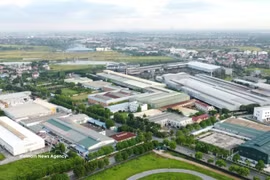
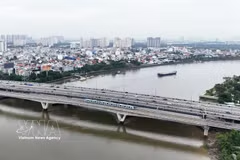
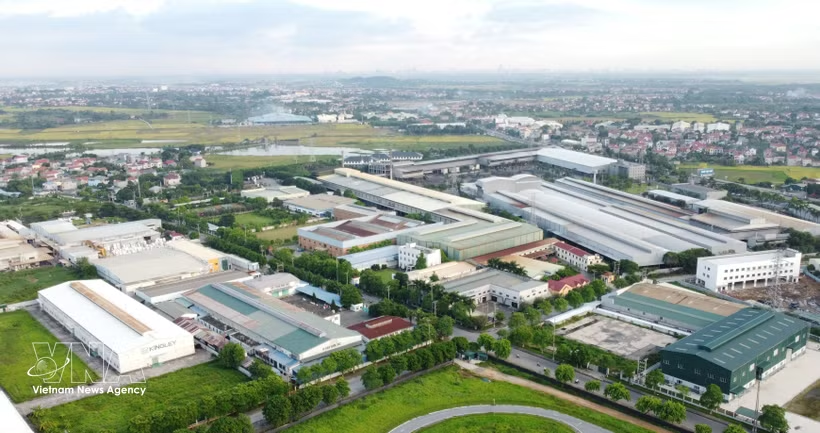
From industrial parks and clusters to its gradually improving logistics network, the province is developing conditions to connect local production with domestic and international markets. Its priority in attracting high-tech projects in electronics, semiconductors, supporting industries, precision engineering, medical equipment, new materials, logistics and clean energy is expected to improve the quality of growth.
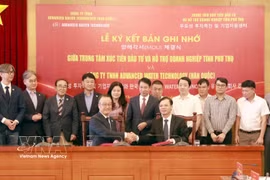
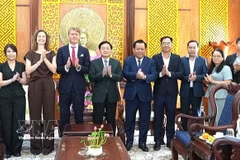
In early August, the provincial Centre for Investment Promotion and Enterprise Support received a delegation of Brazilian businesses seeking information about the investment environment in electronics and semiconductors, reflecting the province’s growing focus on high-tech and high-value investment.
Bui Hong Do, Director of the centre, said Phu Tho’s advantages now lie not only in industrial land and incentive policies, but also in a favourable business environment, synchronised connectivity infrastructure and an increasingly complete industrial ecosystem.
These factors are important for the province to participate more deeply in global value chains, he added.
From the business perspective, integration requirements are also being viewed more substantively.
Vinh Phuc Pharmaceutical JSC, whose products have gained acceptance in domestic and foreign markets, has invested in automated production lines, digitised quality management processes and a real-time product data traceability system to meet increasingly demanding requirements from partners.
Company Director Do Van Doanh said businesses that fail to adapt promptly to new trends risk falling behind or even being eliminated.
Integration opens up vast markets while creating a strong process of selection, he said. Businesses that innovate technology, build brands, improve quality, control raw material sources and meet international standards will have greater opportunities to expand, while models relying mainly on low costs and simple processing will find it increasingly difficult to compete.
Proactive integration must therefore begin with building a highly adaptable economic ecosystem. Authorities need to continue administrative reform, improve governance quality and develop transport, industrial park and logistics infrastructure. Businesses should invest in technology, accelerate digital transformation, build brands and improve human resources, while educational institutions need to update training programmes in line with labour market needs and international production chains./.