NA greenlights investment policy of Lao Cai – Hanoi – Hai Phong rail project

According to the resolution, the construction of a modern and harmonious railway aims to meet the transport demand between Vietnam and China. The initiative is expected to serve as a catalyst for rapid and sustainable economic development along the Lao Cai-Hanoi-Hai Phong economic corridor while strengthening national defence and security and promoting the industrialisation and modernisation, contributing to delivering on the targets and missions set at the documents of the 13th National Party Congress and the Party’s resolutions.

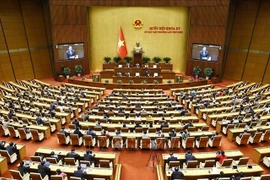
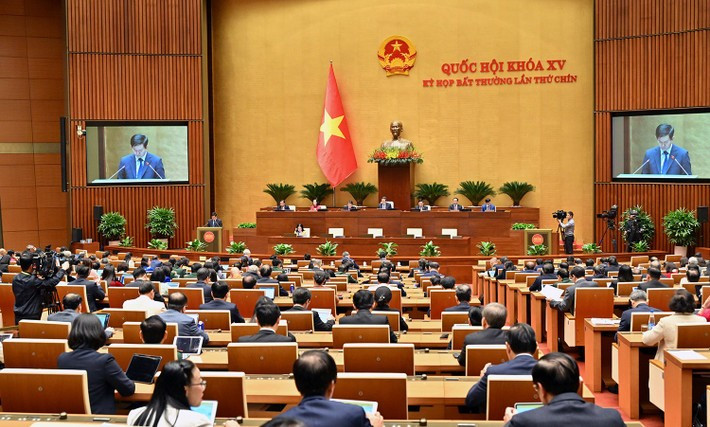
A resolution on the investment policy of the Lao Cai – Hanoi – Hai Phong railway project is approved at the the 15th NA's 9th extraordinary session in Hanoi on February 19. (Photo: VNA)

Hanoi (VNA) – The 15th National Assembly adopted a resolution on the investment policy of the Lao Cai – Hanoi – Hai Phong railway project, with 455 out of 159 participating deputies voting in favour, at the 9th extraordinary session in Hanoi on February 19.

According to the resolution, the construction of a modern and harmonious railway aims to meet the transport demand between Vietnam and China. The initiative is expected to serve as a catalyst for rapid and sustainable economic development along the Lao Cai-Hanoi-Hai Phong economic corridor while strengthening national defence and security and promoting the industrialisation and modernisation, contributing to delivering on the targets and missions set at the documents of the 13th National Party Congress and the Party’s resolutions.

The new railway line will span approximately 390.9 kilometres for the main route and include 27.9 kilometres of branch lines. The project will traverse nine localities of Lao Cai, Yen Bai, Phu Tho, Vinh Phuc, Hanoi, Bac Ninh, Hung Yen, Hai Duong and Hai Phong. Starting at the border crossing point in Lao Cai province, the line will end at Lach Huyen station in Hai Phong city.

The project involves constructing a new electrified single-track railway line with a 1,435 mm gauge, accommodating both passenger and freight services. The main line from new Lao Cai station to Nam Hai Phong station will be designed for speeds up to 160 km/h, while sections through Hanoi will operate at 120 km/h and the remaining will run at 80 km/h.
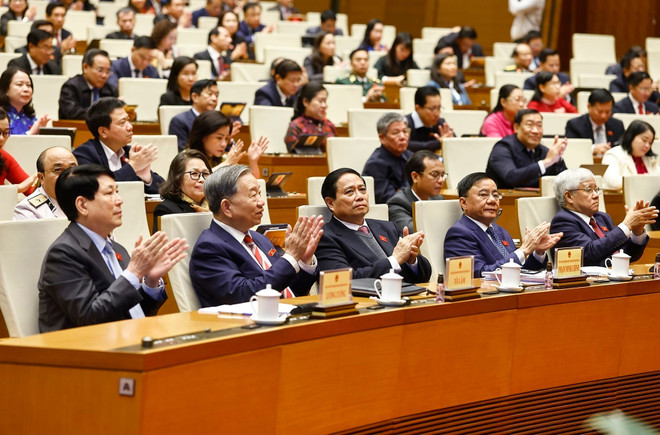
na.jpg
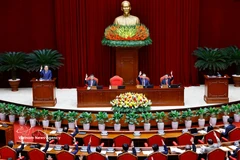
Vietnamese top leaders at the 15th National Assembly's 9th extraordinary session on February 19 (Photo: VNA)

In terms of special mechanisms and policies for the project, the Prime Minister is authorised to issue government bonds to cover any shortfalls in the annual investment plan as approved by the parliament without increasing the state budget deficit. The project can also access Official Development Assistance (ODA) and preferential foreign loans without requiring standard ODA project proposals.

Notably, the project is exempt from capital balance assessment requirements typically mandated by the Law on Public Investment.

The provincial People’s Committees are allowed to adjust zoning plans as well as criteria on architecture and technical and social infrastructure in in station-adjacent areas, potentially diverging from national technical standards while ensuring adequate infrastructure.

Meanwhile, the provincial People's Councils are authorised to use local budgets for independent public investment projects to handle compensation and resettlement in railway station-adjacent areas, creating land funds for urban development in accordance with the law.

Provinces will retain 50% of the revenue generated from land development around stations, with the remainder going to the state budget to support project funding./.
source

See more

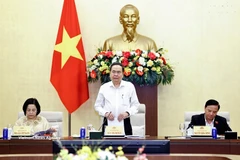
The 55th session of the National Assembly Standing Committee on March 2, 2026. (Photo: VNA)

📝OP-ED: Streamlining state apparatus: A foundation for rapid, sustainable development

The election is unfolding as Vietnam presses ahead with sweeping administrative reforms, including efforts to streamline the state apparatus and implement a two-tier local government model from the central level to grassroots authorities. Amendments to key laws are also aimed at strengthening decentralisation, improving the management of public assets and accelerating digital transformation, enabling citizens to access information more easily while fostering a leaner, more transparent governance system that better upholds people’s rights.

Prime Minister Pham Minh Chinh (L) at the working session with leaders of the Dien Bien provincial People’s Committee on March 8. (Photo: VNA)

PM asks Dien Bien province to make greater efforts for prosperity, people’s happiness

PM Chinh highlighted Dien Bien’s strategic location, sharing long borders with Laos and China, as well as its large natural area and rich cultural heritage of 19 ethnic groups, and strong growth potential for agriculture, industry, renewable energy, services and tourism, calling for greater efforts to create new momentum for sustainable development.

National Assembly Vice Chairman Tran Quang Phuong (right) inspects election preparations at Polling Station No. 1 in Kenh Dao hamlet, Dat Mui commune, Ca Mau province. (Photo: VNA)

NA Vice Chairman inspects election preparations in southernmost Ca Mau province

The delegation noted that local authorities had launched preparations early and in a well-organised manner, reflecting strong determination and a high sense of responsibility. Communication activities have been carried out in various forms to disseminate official information and create a positive atmosphere ahead of the election.

Mobile loudspeaker vehicles and banners used to promote the upcoming election in Vinh Vien commune, Can Tho city. (Photo: VNA)

Final-week tasks stressed ahead of NA, People’s Council election

Special attention must be given to groups such as workers in industrial parks, university students, the elderly, people with disabilities, ethnic minority communities and voters living in specific or remote areas, ensuring that all eligible citizens can fully exercise their voting rights.

Voters in Truong Sa special zone cast their ballots to elect deputies to the 16th National Assembly and People’s Councils at all levels for the 2026–2031 term. (Photo: VNA)

Truong Sa voters cast early ballots for NA, local council elections

Voters at 20 out of the 22 polling stations in Truong Sa (Spratly) special zone in the central province of Khanh Hoa cast their ballots on March 8 in early voting for deputies to the 16th National Assembly and People’s Councils at all levels for the 2026–2031 term, one week ahead of the nationwide election day on March 15.

Prime Minister Pham Minh Chinh speaks at the meeting with the Policy Advisory Council in Hanoi on March 7, 2026. Photo: VNA

PM requests flexible, prompt, effective response to all situations

Prime Minister Pham Minh Chinh called for measures to ensure stable supplies of fuel, electricity and energy, while also viewing current challenges as an opportunity to accelerate the green energy transition and better harness the country’s potential and competitive advantages.

National Assembly Vice Chairman Tran Quang Phuong speaks at the March 7 inspection on An Giang's preparations for the election of deputies to the 16th legislature and People’s Councils at all levels for the 2026-2031 tenure. (Photo: VNA)

NA Vice Chairman inspects election preparations in An Giang

National Assembly (NA) Vice Chairman Tran Quang Phuong on March 7 led a working delegation to meet with the Election Committee of An Giang to inspect and supervise preparations for the election of deputies to the 16th legislature and People’s Councils at all levels for the 2026-2031 tenure.

Bru–Van Kieu ethnic minority villagers in Quang Tri province's remote commune of Truong Son are eagerly preparing for early voting. (Photo: VNA)

Bru–Van Kieu community in Quang Tri gear up for early voting

According to the provincial Election Committee, three polling stations in Truong Son commune – located in Hoi Ray, Nuoc Dang and Doc May villages – will organise voting on March 8, seven days before the nationwide election of deputies to the 16th National Assembly and People’s Councils at all levels for the 2026–2031 tenure, to make it easier for residents in remote areas where travel remains difficult to cast their ballots.

Politburo member, Secretary of the Party Central Committee, Secretary of the Party Committee of the Vietnam Fatherland Front (VFF) and central mass organisations, and President of the VFF Central Committee Bui Thi Minh Hoai speaks at the event in Phu Tho province on March 6. (Photo: chinhphu.vn)

Front leader meets voters in Phu Tho

Voters in Phu Tho province's Hoa Binh and Luong Son expressed their hope that if elected, the candidates would continue to uphold their roles and responsibilities as people’s representatives, remain close to the grassroots level, and understand the legitimate aspirations of the people.

Party General Secretary To Lam speaks at the event in Hanoi on March 6. (Photo: VNA)

2026 inspection-supervision decision for NA Party Committee's Standing Board announced

The NA Party Committee is ready to cooperate closely, promptly provide relevant documents and materials, and work in accordance with the delegation’s requests. During the inspection and supervision process, its Standing Board hopes members of the inspection delegation will offer frank comments and clearly point out both its achievements and shortcomings.