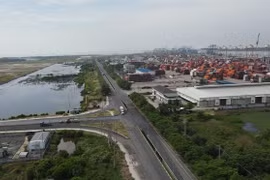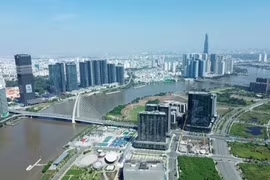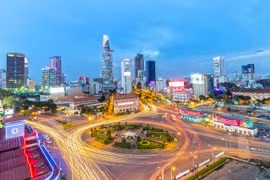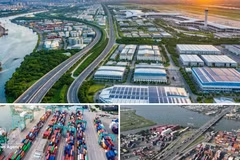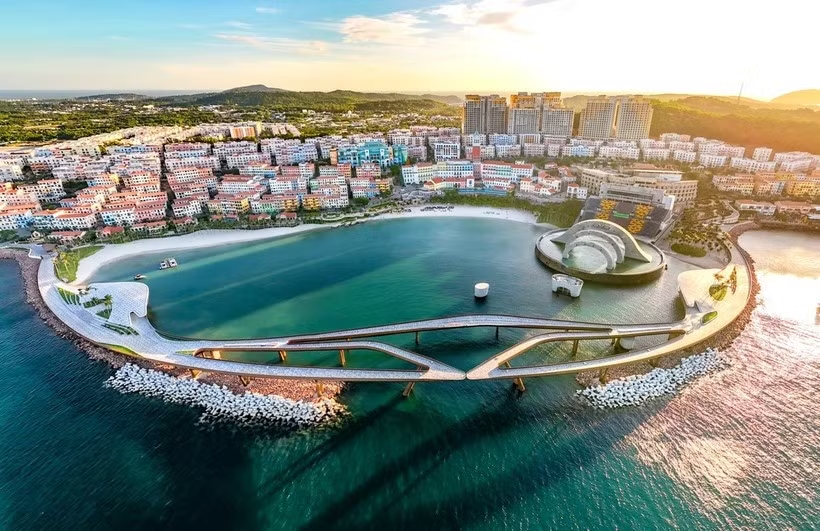
Hanoi (VNA) – Next-generation megacities are emerging as a strategic model to reshape Vietnam’s urban landscape, serving as new growth drivers for sustainable development in the decades ahead.
Unlike traditional megacities defined mainly by size, this new model is built on a comprehensive set of criteria, including polycentric structures, smart infrastructure, environmental sustainability, high quality of life and urban resilience. Experts say such cities can help redistribute population from overloaded urban cores while fostering innovation and long-term economic expansion.
At a recent workshop on next-generation megacities organised by the Vietnam Urban Planning and Development Association, participants highlighted both opportunities and challenges facing Vietnam’s rapid urbanisation.
Tran Thu Hang, Director of the Architecture and Planning Department under the Ministry of Construction, said urbanisation has accelerated significantly in recent years, turning cities into hubs of knowledge, technology and innovation. However, mounting pressure on infrastructure, environmental pollution, traffic congestion, regional disparities and climate change are posing serious constraints.
She stressed that developing next-generation megacities is not only a trend but a strategic choice to foster growth poles, innovation, and the stature of Vietnamese cities in regional and global economic networks.
Globally, organisations such as UN-Habitat, the Organisation for Economic Co-operation and Development (OECD) and the World Bank have promoted new urban models centred on multi-core development, smart governance and sustainability. One notable approach is the “15-minute city”, where essential services are accessible within a short distance, reducing reliance on motorised transport and lowering emissions.
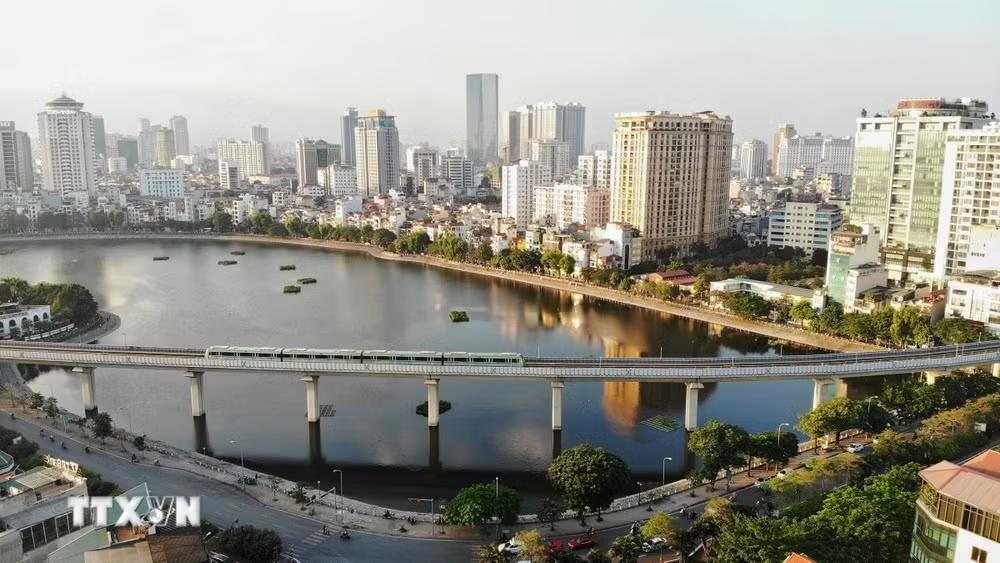
Architect La Kim Ngan noted that next-generation megacities are defined not just by scale but by integrated systems that balance infrastructure, environment and livability.
Meanwhile, Bui Van Doanh from the Vietnam Real Estate Association said satellite megacities can ease population pressure on traditional urban centres while creating more spacious and liveable environments.
“These new urban areas not only provide new living spaces but also help revitalise and ‘re-energise’ existing cities,” he said.
Truong Van Quang, Deputy Secretary General of the Vietnam Urban Planning and Development Association, said that infrastructure including urban railways, inter-regional expressways, seaports, airports, digital infrastructure and national data platforms play a decisive role. In this system, cities will no longer develop in isolation but become an interconnected network.
“The Vietnamese megacity model needs to be based on the pillars of global economic function, infrastructure and network connectivity, innovation ecosystem, sustainable development, and smart urban governance to ensure sustainable development, high quality of life, and regional and global competitiveness,” Quang shared.
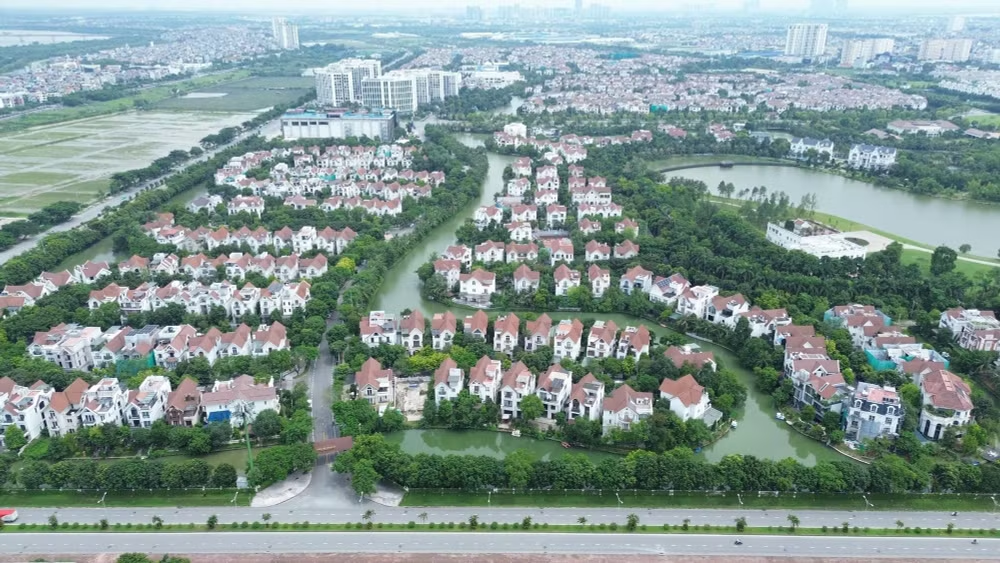
Pham Thi Mien, Deputy Director of the Vietnam Institute for Real Estate Market Research, noted that the current “monocentric” urban structure has concentrated population and capital in central areas, driving up property prices and resulting in imbalances.
She suggested that next-generation megacities could help redistribute investment flows, establish new value zones and ensure a more stable and sustainable real estate market.
To realise this model, experts underscored the need for integrated regional planning, a transparent institutional framework, forward-looking infrastructure and strong participation from capable developers.
Experts also agreed that next-generation megacities, operating based on data, technology, and innovation, are becoming hubs for attracting and retaining high-quality human resources. This model is considered a driving force for elevating the nation's standing and realising the goal of double-digit economic growth for Vietnam in the coming decades./.