Party chief requests promoting innovation, digital transformation in schools

Meeting with teachers and students of Hanoi - Amsterdam High School for the Gifted and Cau Giay Secondary School on May 14 afternoon, Party General Secretary To Lam stressed that the Party aims to build a modern and world-class education system rooted in Vietnamese cultural identity, thus nurturing a young generation that excels intellectually, thrives physically, embraces national values, and is capable of competing globally to elevate Vietnam’s position in the international arena.

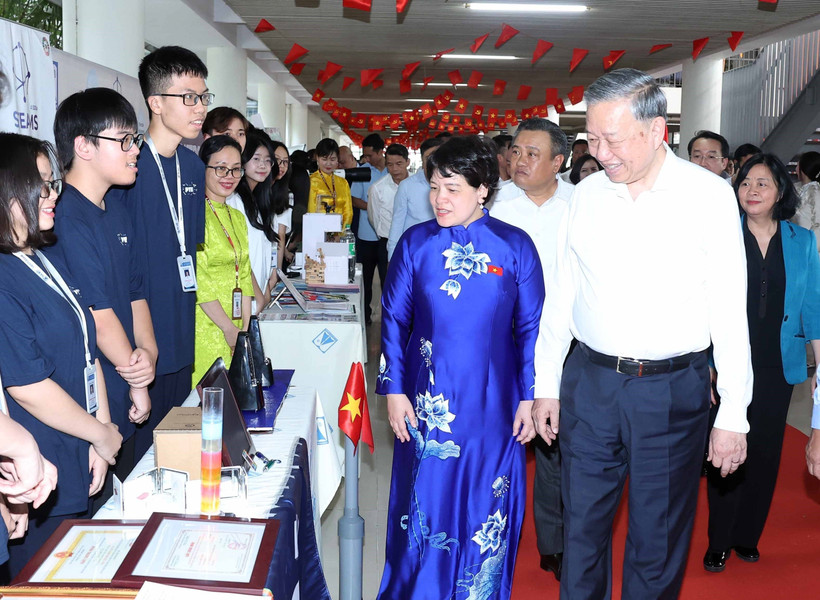
Party General Secretary To Lam meets with teachers and students of Hanoi - Amsterdam High School for the Gifted on May 14. (Photo: VNA)

Hanoi (VNA) - Party General Secretary To Lam has asked for a broad reform of the education system in Hanoi, prioritising STEM (Science, Technology, Engineering and Mathematics) education, foreign languages, digital skills, and modern technology, noting that intellectual training must be integrated with cultural, ethical, aesthetic, and health education to shape well-rounded individuals.

Meeting with teachers and students of Hanoi - Amsterdam High School for the Gifted and Cau Giay Secondary School on May 14 afternoon, Lam stressed that the Party aims to build a modern and world-class education system rooted in Vietnamese cultural identity, thus nurturing a young generation that excels intellectually, thrives physically, embraces national values, and is capable of competing globally to elevate Vietnam’s position in the international arena.

He took the occasion to present education practice rooms, 100 scholarships for outstanding students of each school, and plant commemorative trees in their campus.

stem.jpg
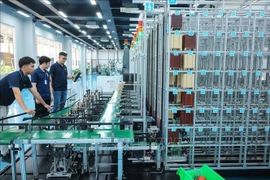
Party General Secretary To Lam notes that the operation of modern STEM classrooms at the two schools is not merely a material gift, but a strong affirmation of the Party and State’s commitment to investing in the future. (Photo: VNA)

The Party leader emphasised the importance of promoting science, technology, and digital transformation in education, noting that the operation of modern STEM classrooms at the two schools is not merely a material gift, but a strong affirmation of the Party and State’s commitment to investing in the future, unlocking creative potential and fostering a passion for science and technology research among Vietnam’s youth.

He expressed his hope that students will embrace self-learning, take initiative in research, and apply knowledge to real life, becoming intelligent, responsible, and resilient citizens, thus contributing to the cause of educational reform and the nation’s strategic development goals.

He said he desires to hear suggestions and proposals from teachers and students on how to improve teaching and learning toward the goal of training students to become excellent citizens in ethics, intellect, and talent. He encouraged the adoption of advanced teaching methods, high-quality educational activities, and greater opportunities for students to engage in scientific research, technological innovation, and foreign language communication.

It is necessary to identify and nurture exceptionally gifted students as a source of future national talent, thus creating strong resources for the development of the capital in particular and the country in general, he said.

Acknowledging and commending the efforts of educators, teachers and education managers in the capital city, he called on Party committees, authorities and the education sector, mass organisations and the broader society to continue modernising and improving the quality of education.

The Party chief also urged efforts to narrow the gap between top-tier schools and those in outlying areas, reduce pressure on students, strengthen cultural and arts education to ensure well-rounded development, and consider policies to support school lunches for primary and secondary students.

Hanoi needs to effectively implement the Politburo's Resolution No. 57 on breakthroughs in science and technology development, innovation, and national digital transformation; and give greater attention to investing and supporting the education sector’s development, especially in promoting innovative teaching, STEM education, and digital transformation in schools, he said.

He also emphasised the importance of supporting disadvantaged students, reaffirming the principle that no student should be left behind under any circumstances./.
VNA

See more

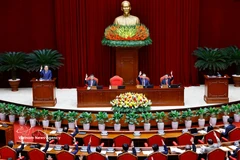
Politburo member and State President Luong Cuong delivers the opening remarks of the 14th National Party Congress on January 20, 2026 (Photo: VNA)

Opening remarks of 14th National Party Congress

The 14th National Party Congress is a momentous event for the country and a historic turning point toward the 100th founding anniversary of the Party (February 3, 1930-2030), concentrating the will, aspirations, and determination of our entire Party, people, and armed forces with the spirit of strategic self-reliance, self-strengthening, and confidence to advance strongly into a new era, for a peaceful, independent, democratic, prosperous, civilised, and happy Vietnam steadily progressing towards socialism.

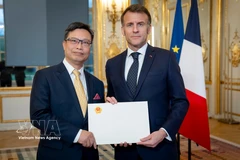
Deputy Minister of Foreign Affairs Le Thi Thu Hang and non-resident foreign ambassadors at the meeting (Photo: VNA)

Deputy FM hosts non-resident ambassadors attending 14th National Party Congress

The 14th National Party Congress is a milestone in Vietnam’s development, as it not only reviews and assesses 40 years of Doi moi (Renewal), but also sets out orientations for national development in the 2026–2030 period, with a vision to 2045, through strong and right decisions to guide the country into a new era of development.

Professor Zhu Chenming, Honorary Director of the South Asia–Southeast Asia Research Institute under the Yunnan Academy of Social Sciences. (Photo: VNA)

14th National Party Congress: Bridging the past and the future

Zhu said the congress plays a crucial role in shaping Vietnam’s future development, as it discusses development pathways and policy directions to achieve targets set for 2030 and realise the long-term vision towards 2045. The convening of the congress is truly a major political event in the life of the Vietnamese people.

Dr. Kin Phea, Director of the International Relations Institute under the Royal Academy of Cambodia (RAC). (Photo: VNA)

Vietnam’s progress tied to Communist Party of Vietnam leadership: Cambodian expert

In his presentation at a recent seminar hosted by the Vietnamese Embassy in Cambodia, Dr. Kin Phea described the the 14th National Congress of the CPV as a historic and momentous event, saying that with three strategic breakthroughs and six key tasks set for the country’s new revolutionary period, the Congress is seen as a landmark ushering in a new era - the era of the nation’s rise.

General Secretary of the Communist Party of India (CPI) Doraisamy Raja (Photo: VNA)

Vietnam advances creative, adaptive socialism for new era: Indian Communist Party leader

The 14th National Congress of the CPV comes at a critical juncture, as the world faces profound upheavals marked by escalating geopolitical tensions, economic instability, and deep structural crises within global capitalism. Against this backdrop, Vietnam’s decision to pursue a new growth model driven by science, innovation, and digital transformation reflects strategic vision, confidence, and a clear grasp of the requirements of the times.

Deputy Minister of Foreign Affairs Le Thi Thu Hang welcomes journalists and updates them on a number of achievements Vietnam has attained in recent years. (Photo: Ministry of Foreign Affairs)

Deputy Foreign Minister meets int’l journalists covering 14th National Party Congress

Deputy Minister of Foreign Affairs Le Thi Thu Hang said the 14th Congress holds special historical significance, marking a major turning point in the country’s development, as it not only reviews and assesses the achievements of 40 years of Doi moi (Renewal), but also defines goals, vision, and major policy decisions to lead Vietnam into a new era of development.