Petrolimex to pilot E10 biofuel sales in HCM City from August 1

The pilot rollout of E10 biofuel aims to assess consumer acceptance and the technical readiness of Petrolimex’s distribution network, serving as a foundation for potential nationwide expansion.

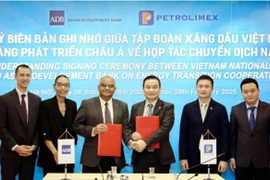
The Vietnam National Petroleum Group (Petrolimex) is set to pilot the sales of E10 biofuel at its stations in the pre-merger areas of Ho Chi Minh City starting August 1. (Photo: Petrolimex)

Hanoi (VNA) – The Vietnam National Petroleum Group (Petrolimex) is set to pilot the sales of E10 biofuel at its stations in the pre-merger areas of Ho Chi Minh City starting August 1, according to Tran Ngoc Nam, member of the Board of Directors and Deputy General Director of Petrolimex.

The pilot rollout aims to assess consumer acceptance and the technical readiness of Petrolimex’s distribution network, serving as a foundation for potential nationwide expansion, he said.

The Ministry of Industry and Trade (MoIT) is currently developing a roadmap for the nationwide adoption of E10, scheduled to begin on January 1, 2026. This move aligns with the government’s effort to reduce greenhouse gas emissions and fulfil its commitment to achieving net-zero emissions by 2050.

Under national technical regulation QCVN 01:2022/BKHCN, E10 is a finished gasoline product blended with 9–10% bioethanol by volume. In addition to reducing dependence on fossil fuels, E10 offers environmental advantages and improved engine performance.

Researchs conducted both domestically and internationally show that ethanol has high oxygen content, which helps improve the combustion process of the fuel mixture. Therefore, E10 gasoline can reduce carbon monoxide (CO) and hydrocarbon (HC) emissions compared to traditional mineral gasoline, which means reducing the risk of air pollution and the greenhouse effect - one of the main causes of global climate change.

E10 is also considered engine-friendly. Studies confirm that E10 is compatible with most gasoline engines, including older models.

More than 60 countries have already adopted E10 fuel. In the US and Europe, the use of biofuel blends is mandated by law. Since 2018, Asian countries like China and the Philippines have fully switched to E10, banning retail sales of unblended fossil gasoline.

At a recent mid-year review of the petroleum market, the MoIT reaffirmed its commitment to boosting biofuel adoption, particularly E10, as a strategic step toward phasing out conventional gasoline and advancing Vietnam’s emission reduction goals.

Advancing green transition

As part of its strategic development vision toward 2035, Petrolimex aims to become Vietnam’s leading energy group in green, clean, and high-quality fuel products, backed by Industry 4.0 technology and comprehensive digital transformation. Biofuel trading plays a central role in this transition.
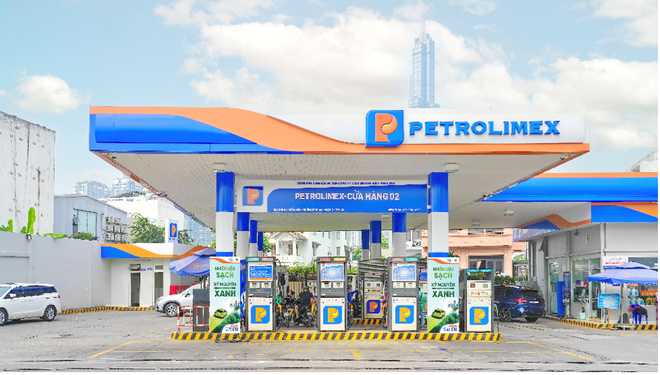
xang-dau.png
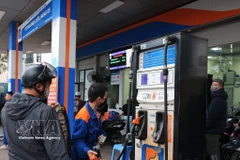
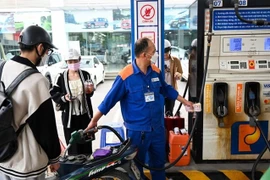
A Petrolimex station (Photo: Petrolimex)

The group is currently upgrading its retail infrastructure, expanding its ethanol blending capacity, and strengthening partnerships with both domestic and international ethanol producers to ensure a stable and sustainable fuel supply. In addition to E10, Petrolimex is exploring alternative fuels such as hydrogen and other renewables.

According to Nam, successful E10 implementation requires thorough infrastructure and technology preparation, including dedicated ethanol storage and close coordination with refineries. Thus, Petrolimex proposed the MoIT to issue detailed guidance to allow major distributors to plan investments and technical upgrades. It also suggested revising several technical standards to align with international gasoline specifications.

Bui Ngoc Bao, Chairman of the Vietnam Petroleum Association, stressed the need to outline a specific roadmap with at least six months of lead time for businesses to prepare. He also urged early release of a draft decision to replace the Prime Minister's Decision No. 53/2012/QD-TTg, in order to gather public feedbacks and address outdated regulations on fuel quality, market management, and E10 standards.

To support E10 deployment, the MoIT has instructed agencies to introduce a set of measures, including ethanol price subsidies to stabilise supply, finalisation of technical standards, enhanced public communication, and expansion of biofuel distribution networks, particularly in rural, mountainous, and island areas./.
VNA

See more

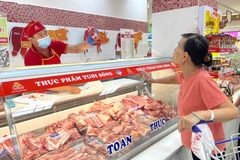
At a supermarket in Ho Chi Minh City (Photo: VNA)

Ho Chi Minh City to pilot pork trading on Mercantile Exchange of Vietnam

Nguyen Nguyen Phuong, Deputy Director of the municipal Department of Industry and Trade, said listing pork on the MXV will finally give consumers and firms more stable prices, while slapping on stricter food safety rules and making it easier to track where the meat actually comes from. Farmers, meanwhile, stand to gain from more predictable margins and dodge fewer of the supply-demand imbalances that routinely distort prices.

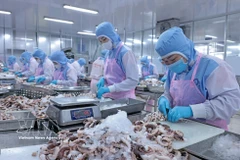
Processing octopus for export to the Japanese market at Huy Nam Company in An Giang (Photo: VNA)

Squid, octopus exports pick up early in 2026

In terms of product structure, squid has emerged as the main growth driver. Export turnover of squid exceeded 64 million USD, rising nearly 30%, while octopus exports brought in more than 47 million USD, up over 16%. The development indicates that demand for squid products is recovering faster in the short term.

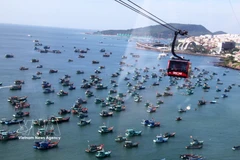
The world’s longest over-sea cable car to Hon Thom Island in the Phu Quoc special zone, An Giang province. (Photo: VNA)

An Giang steps up tourism development ahead of APEC 2027

Tourism in the province has recorded strong growth, affirming its position as one of the region’s leading destinations. Phu Quoc Island continues to attract the majority of international travellers, receiving more than 817,660 visitors, accounting for over 98.5% of total foreign arrivals to the province.

Import-export activities at Lach Huyen international port in Hai Phong (Photo: VNA)

Reducing risks, removing logistics bottlenecks amid Middle East volatility

According to Truong Xuan Trung, Trade Counsellor of Vietnam in the UAE, the Middle East serves not only as a consumption market but also as a key global transhipment hub, meaning instability in the region creates ripple effects across intercontinental transport networks. Shipping route adjustments and airspace restrictions have lengthened transit times, increased costs and disrupted delivery schedules, with some Vietnamese shipments forced to reroute or seek alternative markets.

Cargo is handled at container terminals No. 3 and No. 4 of Hai Phong International Gateway Port. (Photo: VNA)

Businesses seek “survival momentum” amid global geopolitical turbulence

This is an urgent move as the challenges of 2026 differ markedly from previous ones, shaped by overlapping external shocks ranging from geopolitical tensions disrupting supply chains to surging logistics and raw material costs, exchange-rate pressures, and increasingly complex tariff barriers in global markets.

At the 2025 trade connectivity week for mechanical, electrical and digital industries. (Photo: VNA)

Ho Chi Minh City gives boost to supporting industry firms

Supporting industry firms in Ho Chi Minh City are scrambling to embed themselves more deeply into both global and domestic supply chains, backed by a suite of local incentives that are speeding up their tech upgrades and market access.

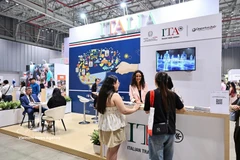
Italy's national pavilion at the ongoing Food & Hospitality Vietnam 2026 exhibition at Ho Chi Minh City's Saigon Exhibition and Convention Centre (SECC) draws visitors for hands-on experiences. (Photo: IVNA)

Italian food firms eye opportunities in Vietnam

Italy’s exports of food and beverages to Vietnam reached 105.1 million EUR in 2025, up 4% year-on-year, positioning the country among the leading EU suppliers to the Vietnamese market.

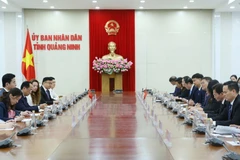
An overview of the working session (Photo: baoquangninh.vn)

Quang Ninh promotes all-round cooperation with Guangxi Zhuang Autonomous Region

Quang Ninh encourages Guangxi enterprises to invest in high-tech marine aquaculture and expand aquatic product exports in China. At the same time, the province aims to develop livestock farming in line with international standards and attract investment in deep-processing plants for agricultural products such as cinnamon, star anise and tea, linked with traceability systems at border gates.

Illustrative image (Source: VNA)

Vietnam becomes fastest growing market for Norwegian salmon in Southeast Asia

The Norwegian Seafood Council (NSC) reported at the “Norwegian seafood industry in Vietnam market 2026” event held in Ho Chi Minh City on March 25 that fresh Norwegian salmon exports to Vietnam jumped 16% in volume in the first two months of 2026 compared with a year earlier, while frozen salmon shipments surged about 37%.

At a petrol station (Photo: VNA)

Energy giants work hard to roll out E10 RON95 sale ahead of schedule

Petrolimex and PVOIL, are in a strong position to accelerate the transition toward cleaner fuels. These companies have been actively preparing infrastructure, upgrading blending systems, and coordinating supply chains to ensure the availability of E10 RON95 across their nationwide retail systems.

Deputy Prime Minister Nguyen Chi Dung visits Bosch Industrial in Stuttgart, Germany. (Photo: VNA)

Vietnam, Germany boost innovation, startup ecosystem connectivity

Deputy PM Nguyen Chi Dung highly valued CfE’s reputation and pioneering role in building Germany’s innovation-driven startup ecosystem, and called for stronger cooperation with NIC to support Vietnamese universities, research institutes and organisations in training and scientific research.