Pilot project allows fee payment for cars and motorbikes online

Residents in Hanoi and Ho Chi Minh City will now be able to pay registration fees for cars and motorbikes through the Government’s national public service portal, banking electronic payment channels and intermediary payment service providers.
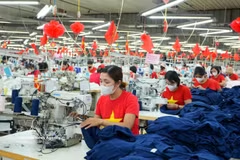
Pilot project allows fee payment for cars and motorbikes online ảnh 1Residents of Hanoi and HCM City can pay registration fees for cars and motorbikes through electronic payment services.(Photo: kinhtedothi.vn)

Hanoi (VNA) - Residents in Hanoi and Ho Chi Minh City will now beable to pay registration fees for cars and motorbikes through the Government’snational public service portal, banking electronic payment channels andintermediary payment service providers.

This is a pilot project conducted by the General Department of Taxation as ofMarch 12, to digitise administrative procedures through online portals as wellas facilitating taxpayers.

The department said this pilot project will save money and time for taxpayers,contributing to modernising tax administration and collection to the Statebudget.

For registration fees paid via the national public service portal, there mustbe accounts at banks or payment intermediaries, which are linked to the portal.

Payers who want to pay via commercial banks must have bank accounts atVietcombank, Vietinbank, Agribank, VPBank, MBBank and BIDV.

For payers who pay through payment intermediaries, they must use services bythe National Payment Corporation of Vietnam and Momo./.
VNA


See more

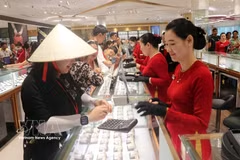
Tourists shop at Ngoc Hien Pearl Farm in Phu Quoc city, An Giang province. (Photo: VNA)

Vietnam seeks to boost shopping tourism

Shopping tourism remains underdeveloped in Vietnam despite its potential to attract visitors and boost revenue. Diversifying dining, shopping and entertainment services while extending stays would help increase tourist spending.

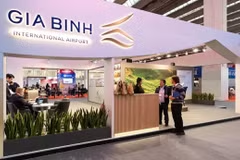
The booth of Gia Binh International Airport at Routes World 2026 (Photo: baoquocte.vn)

Gia Binh airport seeks global airline partnerships at Routes World 2026

Participation in Routes World, an annual route development forum, is intended to help Gia Binh establish relationships with international carriers and strategic partners before the airport becomes operational and position it to participate in the development of future regional and international air links.

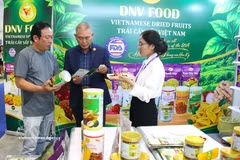
Visitors explore products at the fair (Photo: VNA)

HCMC Export 2026 helps expand trade links with global partners

The 2026 Vietnam Outstanding Export Products Fair (HCMC Export 2026) opened in Ho Chi Minh City on the afternoon of October 22, bringing together more than 700 Vietnamese businesses, along with domestic and international buyers, importers and trade partners.

Vietnamese products are promoted at Lotte Mart’s Seoul Station branch in Seoul. (Photo: VNA)

Vietnam Goods Week in Korea 2026 opens in Seoul

Vietnamese goods have considerable room for growth in the RoK. Closer cooperation in product sourcing and brand promotion will help Vietnamese products strengthen their position in the market.

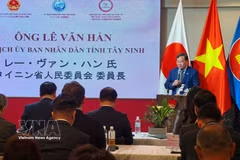
Chairman of the Tay Ninh provincial People’s Committee Le Van Han speaks at the event. (Photo: VNA)

Tay Ninh province seeks Japanese investment in high-value industries

Chairman of the provincial People’s Committee Le Van Han said Japan is an important, reliable and long-term partner of Tay Ninh. Japanese businesses have invested more than 1.4 billion USD in the province, contributing to economic growth, workforce development and the adoption of modern management practices.

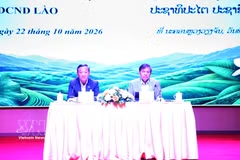
Vietnamese Ambassador to Laos Nguyen Minh Tam (L) and Lao Deputy Minister of Agriculture and Environment Xaynakhon Inthavong co-chair the conference. (Photo: VNA)

Vietnam, Laos eye to boost strategic agricultural cooperation

Tam said agriculture directly supports livelihoods, rural development and Laos’s production capacity, while the two countries have complementary strengths. Laos has abundant land and favourable natural conditions, while Vietnam offers experience in production, scientific and technological application, crop varieties, processing and access to international markets.

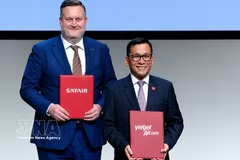
Representatives from Vietjet and Satair exchange a strategic Memorandum of Understanding (MoU) to expand cooperation in aviation supply chains, materials management and solutions supporting aircraft operations and maintenance. (Photo: VNA)

Vietjet, Satair partner to strengthen aviation supply chains

With the foundation of the Integrated Material Services (IMS) programme that currently supports Vietjet's Airbus fleet, the two companies aim to expand materials management solutions, apply digital technologies and optimise resources to improve operational efficiency and strengthen resilience to supply chain disruptions.

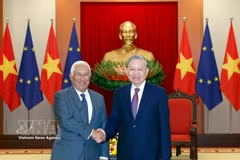
General Secretary of the Communist Party of Vietnam Central Committee and President To Lam (R) receives European Council President António Costa January 2026. (Photo: VNA)

Vietnam, EU seek to deepen economic and trade ties

Since establishing diplomatic relations on November 28, 1990, Vietnam and the EU have developed increasingly close ties. The upgrade to the Comprehensive Strategic Partnership during President of the European Council António Costa's visit to Vietnam in January 2026 marked a historic milestone, making Vietnam the first ASEAN member state to establish the highest-level partnership framework with the EU.

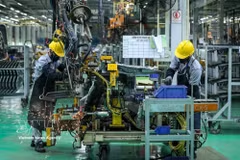
THACO has invested in and applied advanced technologies and machinery to improve productivity and the quality of its automotive products. (Photo: VNA)

More measures needed to boost private investment in R&D

The resolution calls on private enterprises to become leading forces in core technology development. However, high investment costs, commercialisation risks and legal uncertainties continue to discourage businesses, particularly small- and medium-sized enterprises (SMEs), from investing in R&D.

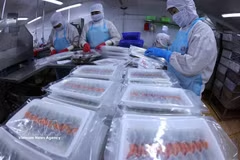
The fisheries sector is among those expected to benefit significantly when VEFTA takes effect. (Photo: VNA)

VEFTA opens up new export opportunities for Vietnamese goods

While the agreement awaits entry into force, businesses are recommended to review tariff schedules, product-specific origin requirements, the costs of origin certification, quality testing and compliance with importers’ standards. Early preparation will help them make effective use of the new opportunities.