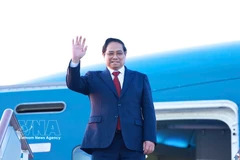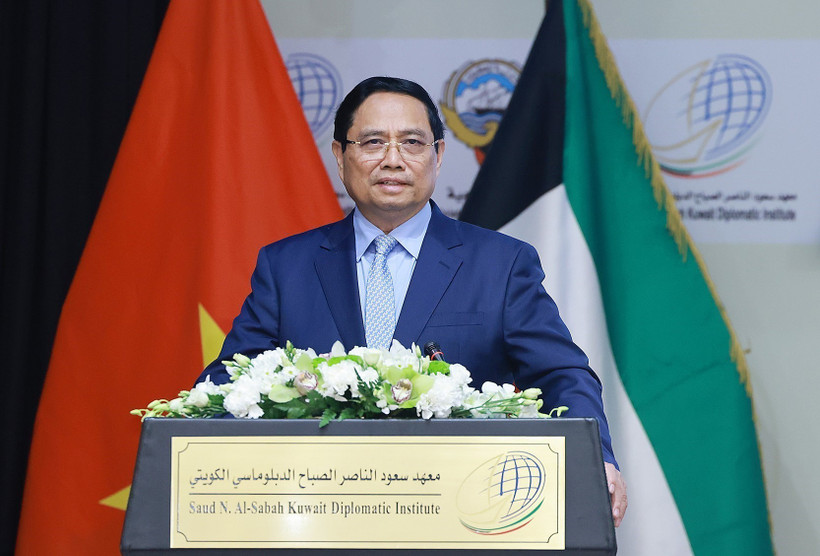
Kuwait City (VNA) – Vietnamese Prime Minister Pham Minh Chinh delivered a policy speech at the Kuwait Diplomatic Institute on November 18 as part of his official visit to Kuwait, stressing that Vietnam–Kuwait relations are entering a period of dynamic transformation and hold the potential to become a model partnership between Southeast Asia and the Gulf, as well as a solid friendship bridge connecting Asia and the Middle East.
The PM expressed sincere gratitude to the Emir, Crown Prince, Government and people of Kuwait for the warm and thoughtful welcome extended to the Vietnamese delegation. He noted his visit is the first by a high-ranking Vietnamese leader in 16 years and takes place as the two countries prepare to celebrate the 50th anniversary of diplomatic ties in 2026.
The PM outlined Vietnam’s perspective on the world today, underlining unprecedented challenges, uncertainty and intertwined opportunities and risks in the early 21st century.
He identified six major contradictions in international relations, yet emphasised that peace, cooperation and development remain the prevailing aspirations of all nations, despite barriers such as political polarisation, economic fragmentation, institutional disparity and uneven development.
In this context, PM Chinh underscored the strategic importance of the Middle East, a crossroads connecting Europe, Asia and Africa, home to three major world religions, and a region central to global energy and trade flows.
Each country, he said, has its own development path, but Vietnam and Kuwait share a common vision: fostering sincere, equal and respectful cooperation guided by mutual trust, mutual understanding and the principles of the UN Charter and international law, with the ultimate goal of building a peaceful, stable and sustainably developing world.
He affirmed the two nations’ shared commitment to peace, justice, compassion and human-centred development.
The PM shared Vietnam’s journey over the past eight decades from struggles for independence to national renewal. Vietnam consistently implements three fundamental factors in national construction and development: a socialist-oriented market economy deeply integrated into the global economy; socialist democracy; and a socialist rule-of-law state.
At the same time, Vietnam pursues three development viewpoints: maintaining political and social stability, placing people as the centre, the subject, the goal, the driving force and the most important resource of development; and ensuring that economic growth does not come at the expense of social progress, justice, welfare or the environment.
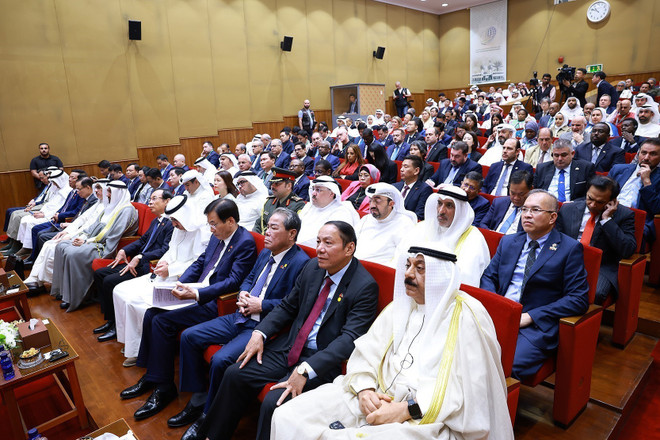
PM Chinh highlighted six priority policy areas. Economic development is the central task, with an independent and resilient economy actively engaging in comprehensive and effective global integration. Cultural development is the spiritual foundation of society.
Vietnam implements a consistent foreign policy of independence, self-reliance, diversification and multilateralisation, being a good friend, reliable partner and responsible member of the international community. The country focuses on ensuring social security, constantly improving the material and spiritual life and happiness of the people, he said.
Ensuring national defence and security is an important and regular task, he said, reiterating Vietnam’s “Four No’s” defence policy - not participating in military alliances, not affiliating with one country to oppose another, not allowing foreign countries to establish military bases or use Vietnamese territory to oppose other countries, and not using force or threatening to use force in international relations.
He emphasised strengthening the Party leadership and building a clean, strong political system with resolute anti-corruption efforts.
After almost 40 years of Doi Moi (Renewal), Vietnam has transformed from a war-torn, embargoed country into an increasingly important global partner. Vietnam has set up diplomatic relations with 194 countries, comprehensive strategic partnerships with 14 nations, including all five permanent members of the UN Security Council, and trade agreements with more than 60 partners via 17 free trade agreements.
Vietnam’s GDP is projected to reach around 510 billion USD by 2025, ranking 32nd globally, with per-capita income surpassing 5,000 USD, up from just over 100 USD in 1990. The country is now among the world’s top 20 economies in terms of international trade and investment attraction.
PM Chinh reviewed the long-standing friendship between Vietnam and Kuwait. Kuwait was the first Gulf country to establish diplomatic ties with Vietnam in 1976. Over nearly five decades, the two sides have supported each other consistently at multilateral forums and shared common aspirations for peace, independence and development.
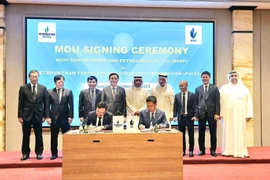
Kuwait was also the first Gulf nation to provide Vietnam with the largest preferential ODA, including those for the Dau Tieng irrigation project in 1979, and offered invaluable assistance, such as 600,000 COVID-19 vaccine doses during difficult times. Today, Kuwait remains one of Vietnam’s leading partners in the Middle East, with bilateral trade reaching 7.3 billion USD in 2024 and major investments such as the landmark Nghi Son Refinery and Petrochemical Complex.
However, the PM noted that economic cooperation still falls short of potential, and political-diplomatic ties have yet to fully match the pace of development. He called for both sides to overcome challenges and enter a new, stronger phase of partnership.
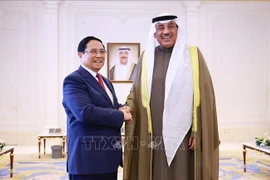
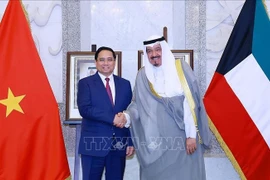
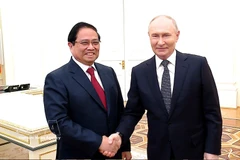
PM Chinh briefed the participants on his meetings with the Emir, Crown Prince and Prime Minister of Kuwait, saying that during which both sides agreed to elevate bilateral ties to a Strategic Partnership and identified nine priority areas for future cooperation including strengthening political trust and high-level exchanges; enhancing coordination to safeguard legitimate interests and strengthen cooperation in national defence, security and non-traditional security, including cybersecurity under the Hanoi Convention on Cybercrime; expanding collaboration in science, technology, innovation and digital transformation; and deepening energy cooperation, including oil and gas, services and high-quality human resources.
The two countries also shared views on regional and global issues of mutual concern.
He stressed that Vietnam–Kuwait relations are now at a historic turning point, poised to become a model of cooperation between Southeast Asia and the Gulf and a solid bridge between Southeast Asia and the Middle East. The new Strategic Partnership, he said, will create favourable conditions for both sides to contribute more actively to regional and global peace, stability and development.
He emphasised the role of the Kuwait Diplomatic Institute in nurturing future generations of diplomats and expressed confidence that the newly signed memorandum of understanding between the diplomatic academies of the two countries will soon translate into concrete cooperation programmes starting in 2026.
After addressing the Kuwait Diplomatic Institute, PM Chinh, his spouse and the high-ranking Vietnamese delegation left Kuwait for Algeria at the invitation of Algerian Prime Minister Sifi Ghrieb./.