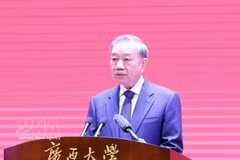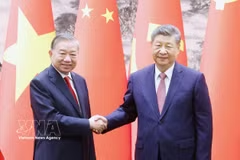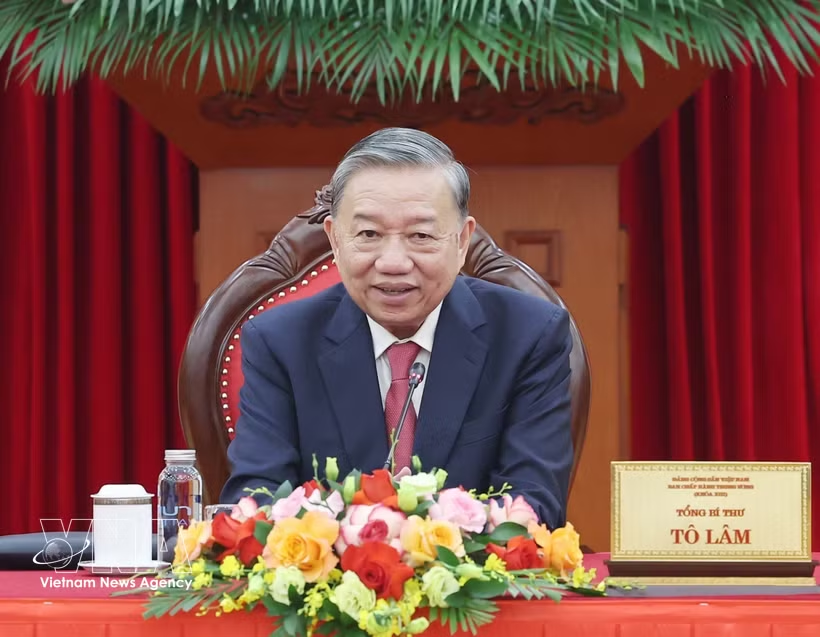
Hanoi (VNA) – General Secretary of the Communist Party of Vietnam Central Committee and State President To Lam has written an article posted on the People’s Daily of China ahead of his state visit to China from April 14-17.
The following is a translation of his article.
PROMOTING THE TRADITION OF FRIENDSHIP BETWEEN VIETNAM AND CHINA, ELEVATING STRATEGIC CONNECTIVITY IN THE NEW DEVELOPMENT PHASE
To Lam,
General Secretary of the Central Committee of the Communist Party of Vietnam,
President of the Socialist Republic of Vietnam
At the invitation of Comrade Xi Jinping, General Secretary of the Central Committee of the Communist Party of China and President of the People’s Republic of China, I and a high-level delegation will pay a state visit to China from April 14 to 17, 2026. This is my first state-level foreign visit after being elected by the 16th National Assembly as State President. I convey sincere sentiments, deep respect, and the highest priority of the Party and State of Vietnam, as well as the aspirations of the Vietnamese people, to join the Party, State, and people of China in continuing to inherit and promote the tradition of friendship, elevate strategic connectivity, and jointly shape new visions for the development of Vietnam–China relations in the new era.
Vietnam and China are neighbouring countries “with mountains and rivers linked as one,” sharing many cultural similarities. The relationship between the two peoples has been nurtured through long-standing historical exchanges and tested over time. In relations between neighbouring countries, what is most enduring is the ability to view ties from a strategic height with a long-term vision; to cherish the values painstakingly built by previous generations; and to place the fundamental and long-term interests of the people above all else. This is also how Vietnam views and develops its relations with China.
Over more than 100 years, the Vietnamese revolution has been closely linked with the Chinese revolution. In 1925, in Guangzhou, China, the beloved leader of the Vietnamese people, Nguyen Ai Quoc, founded the Vietnam Revolutionary Youth League, laying political, ideological, and organisational groundwork for the establishment of the Communist Party of Vietnam. The League’s headquarters on Wenming street in Guangzhou and the launch of Thanh Nien (Young People) newspaper have become a landmark and a milestone inseparable from Vietnam’s revolutionary history. In early 1941, from Guangxi, Nguyen Ai Quoc returned to Pac Bo in Cao Bang to directly lead the Vietnamese revolution, marking a decisive turning point in the Vietnamese people’s struggle for national independence.
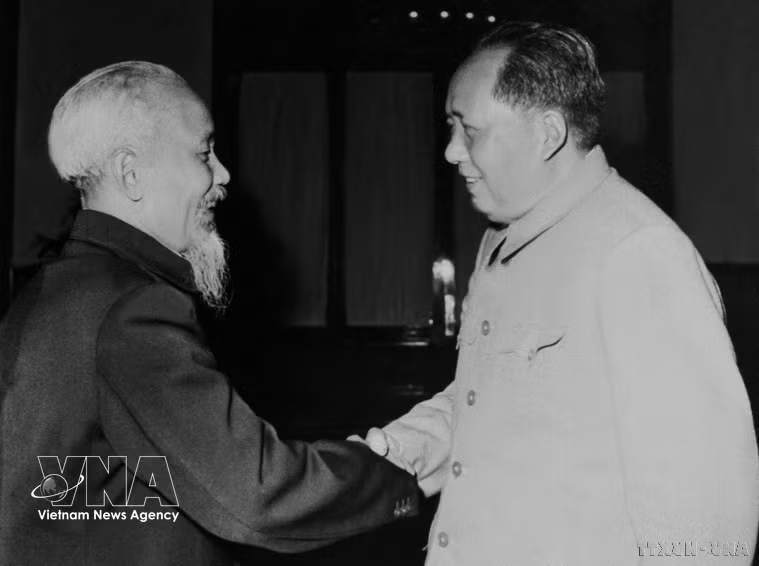
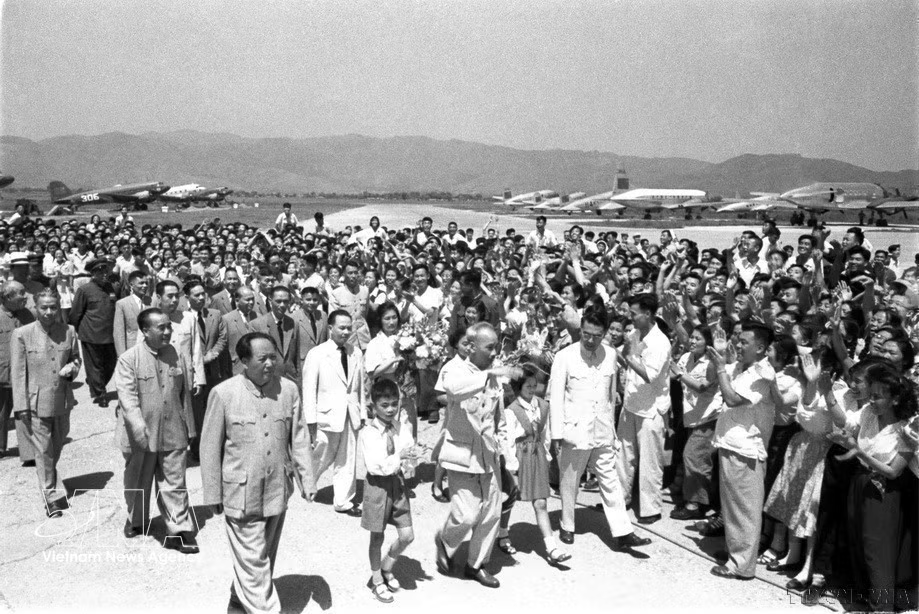
The friendship between Vietnam and China has been carefully nurtured by generations of leaders of both countries, from President Ho Chi Minh, President Mao Zedong, and Premier Zhou Enlai to successive generations of communists and people of the two nations. During the period of national liberation struggle, the two sides extended valuable support and assistance to each other. In the period of national construction, both countries have steadfastly pursued development paths suited to their respective conditions, advancing reform, opening-up, and international integration, thereby achieving accomplishments of historical significance. Vietnam always remembers and values the support extended by the Party, State, and people of China during difficult periods.
The year 2026 marks the 76th anniversary of diplomatic relations between the two countries. Throughout this journey, Vietnam–China relations have experienced ups and downs, yet friendship and cooperation have remained the mainstream. Historical practice shows that strong and stable relations between the two countries align with the practical interests of both peoples and contribute positively to peace and development in the region.
With that important perception, Vietnam–China relations have been consistently nurtured by both Parties and countries. Vietnam’s Party and State always regard the development of ties with China as a consistent policy, an objective requirement, a strategic choice and a top priority in its foreign policy of independence, self-reliance, multilateralisation and diversification. China’s Party and State also identify Vietnam as a priority direction in its neighbourhood diplomacy and an important component of its broader foreign policy. This is not only a continuation of history, but also a choice rooted in the long-term, fundamental interests of both countries, in line with the aspirations of their peoples and the need to maintain a peaceful and stable environment for development in the new period.
On the foundation of the neighbourliness, friendship, mutual respect and equal cooperation, the top leaders of both sides have, over recent years, promptly made appropriate decisions and polices - from defining the “16-character guideline” and the spirit of the “four goods,” to establishing a comprehensive strategic cooperative partnership framework and building a Vietnam–China community with a shared future that carries strategic significance, while promoting ties along the “six major orientations.” What matters is not only the introduction of new concepts, but also the shared understanding that both sides should view and advance Vietnam–China relations from a long-term strategic perspective, recognising each other’s development as an opportunity for their own growth.
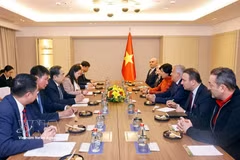
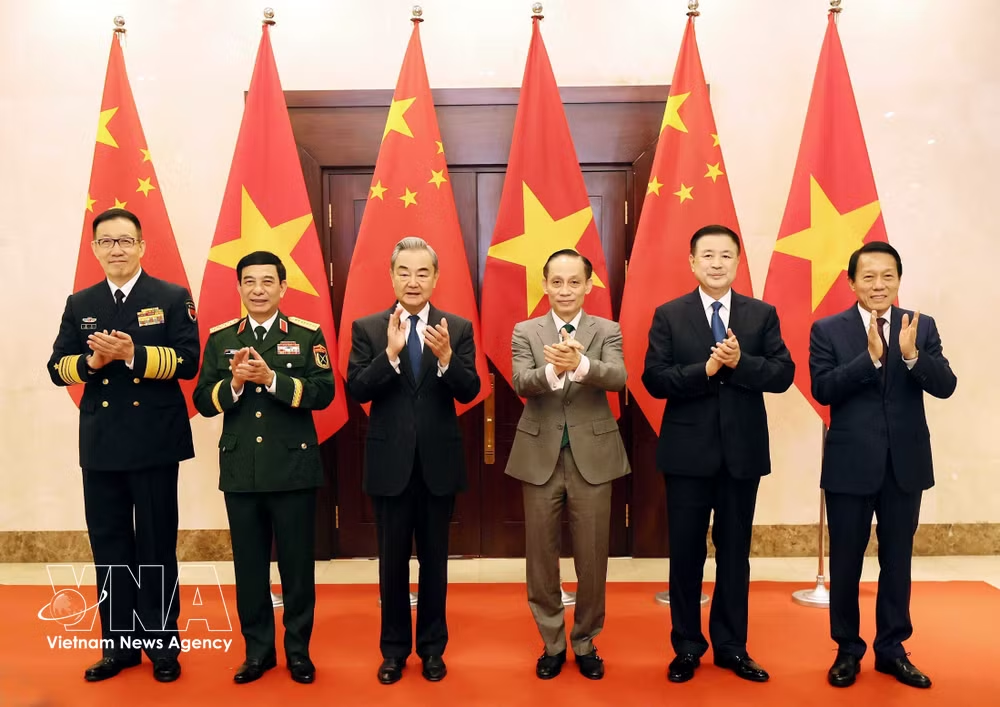
With these common perceptions, high-level exchanges between the two Parties and countries have been maintained more regularly, while cooperation mechanisms across Party, government, National Assembly/National People’s Congress, and Fatherland Front/People’s Political Consultative Conference channels have been implemented in a more coordinated manner. In March, the two countries successfully held the first “3+3” strategic dialogue at the ministerial level on diplomacy, defence and public security, marking a new step forward in strategic connectivity and underscoring the growing depth and substance of bilateral relations.
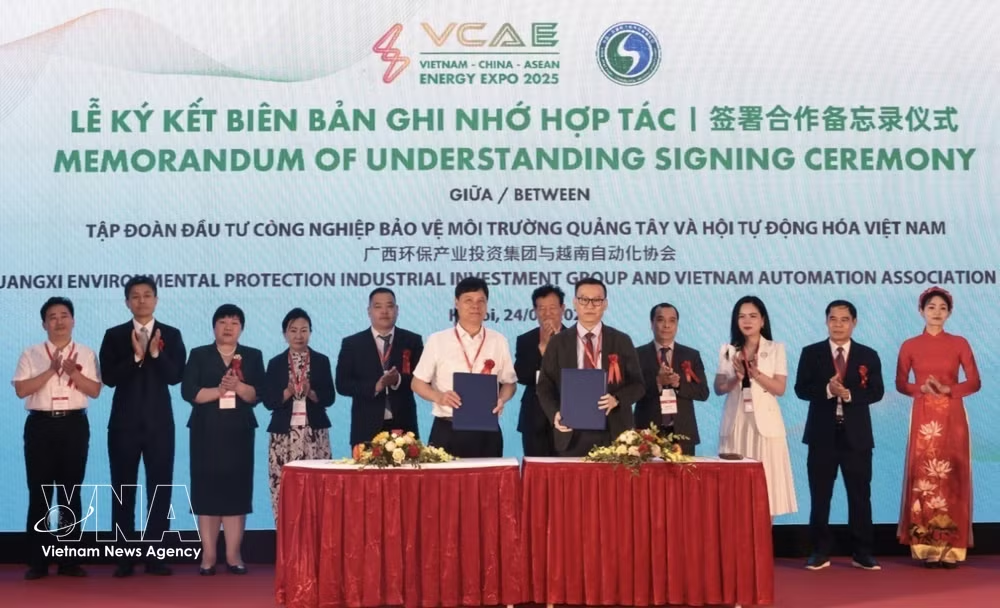
Despite a highly complex international environment, bilateral economic, trade and investment cooperation has continued to expand. Two-way trade in 2025 recorded impressive double-digit growth. Vietnam maintained its position as China’s largest trading partner within ASEAN and its fourth-largest globally, while China remained Vietnam’s largest trading partner and its second-largest export market. Cooperation in supply chains, logistics, infrastructure, science and technology, as well as the digital and green economies, has advanced rapidly. Both sides are committed to strengthening rail connectivity, with three standard-gauge railway projects in northern Vietnam being actively promoted by both sides and making positive breakthroughs.
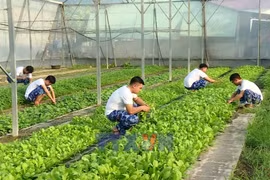
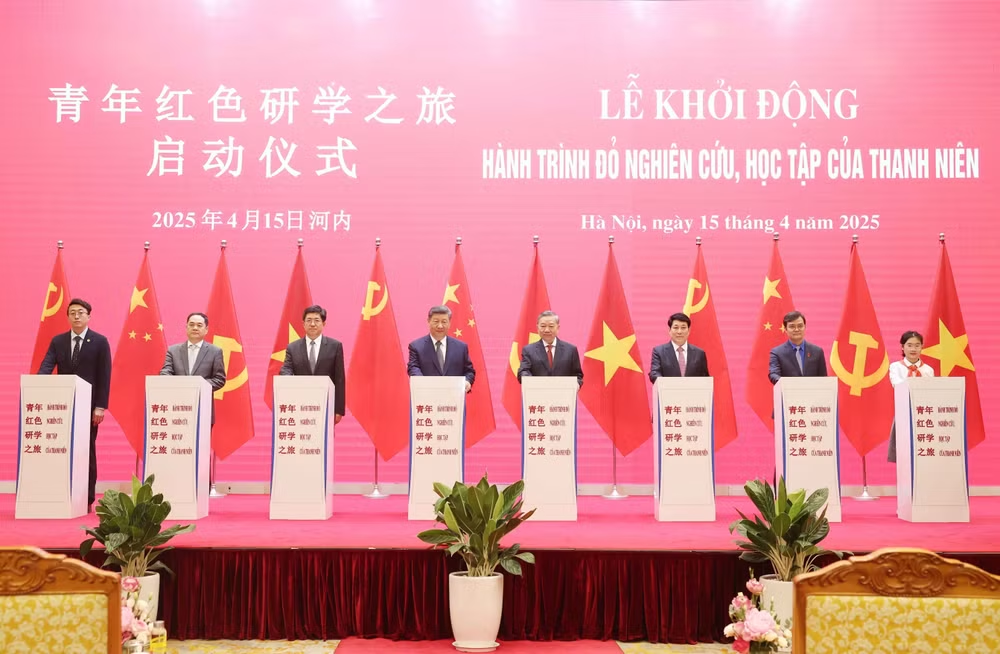
People-to-people exchanges have continued to deepen, providing an increasingly solid social foundation for bilateral relations. The Year of Vietnam-China Humanistic Exchange 2025 was implemented through a wide range of activities, with intensified exchanges among youth, scholars, localities and cultural organisations. The “Red study tour” initiative for Vietnamese youth in China, jointly launched in April 2025 by Party General Secretary and President of China Xi Jinping and myself, has been actively carried out and attracted broad participation from young people. Through the initiative, the younger generations of both countries have gained a better understanding of each other, developed a deeper appreciation of the long-standing friendship, and strengthened their sense of responsibility as a successor generation tasked with carrying forward and further nurturing Vietnam–China relations.
To achieve the comprehensive and substantive results in Vietnam–China relations today, the leading important factor has been the sincerity, mutual trust and understanding between the top leaders of the two Parties and countries, along with the active engagement, strong support and sustained efforts of ministries, agencies, localities, business communities and people of both nations. The Vietnamese Party, State and people highly value the friendship and dedication of Party General Secretary and President of China Xi Jinping to the development of bilateral ties in recent years.
The world is undergoing profound, era-defining changes, creating both major opportunities and challenges. Vietnam is entering the phase of implementing the Resolution of the 14th National Party Congress, with two centennial strategic goals. The Politburo’s Resolution 57-NQ/TW also identifies science and technology, innovation and digital transformation as top breakthroughs and key drivers of rapid and sustainable development. On China’s side, 2026 marks the beginning of the 15th five-year plan, with a focus on high-quality growth, technological self-strengthening, green transition and higher-level opening-up
Against the backdrop of new demands of the times and each country’s new development priorities, both sides, in my view, should focus on four major tasks.
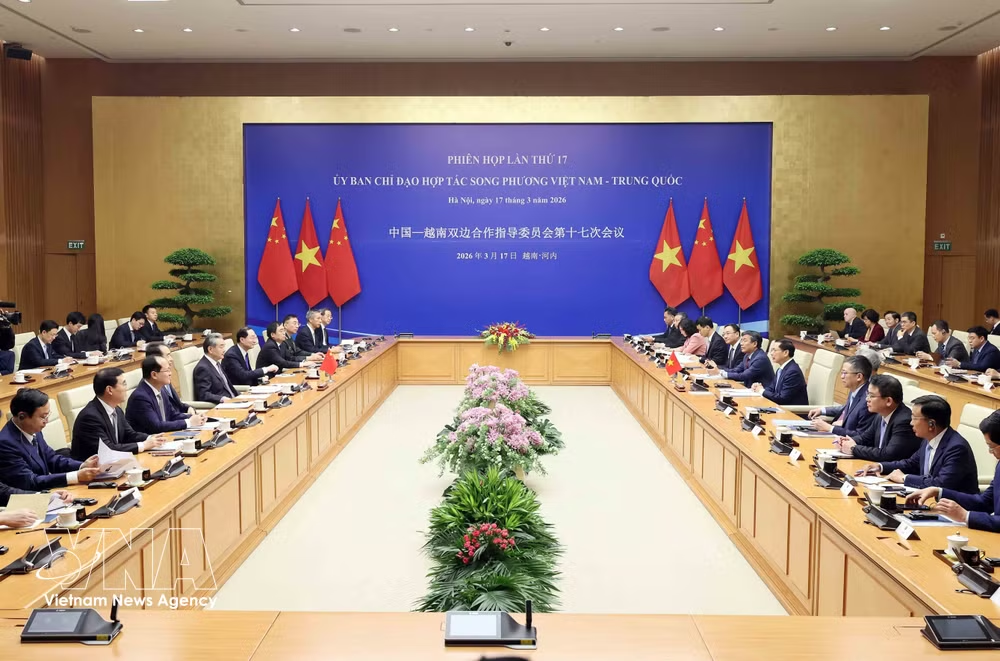
First, it is essential to further consolidate the political foundation of Vietnam–China relations. Strategic orientation from the top leaders of both Parties and countries plays a decisive role in ensuring the stable and healthy development of bilateral ties. It is therefore crucial to continue maintaining regular high-level exchanges, increasing strategic sharing, making full use of existing mechanisms, and effectively implementing cooperation across the channels of the Party, Government, National Assembly/National People's Congress, Vietnam Fatherland Front/Chinese People's Political Consultative Conference, as well as ministries and sectors. Deeper strategic trust will create more favourable conditions to expand substantive cooperation and better address issues in reality.
Second, a stronger shift is needed in substantive cooperation, using concrete results as a measure. In the coming phase, cooperation between the two countries needs to move strongly from "increasing scale" to "improving quality"; from expanding trade to deeper connections among development strategies, economic corridors, production chains, supply chains, and strategic infrastructure. Vietnam hopes to work with China to accelerate projects connecting railways, expressways, and border trade infrastructure (logistics, smart border gates, etc.); boost more balanced, healthy, and sustainable trade development; and create conditions for Chinese investment in Vietnam to increasingly focus on areas of Vietnam’s priority and China’s strengths.
Science, technology, innovation, and digital transformation should become the new focus of Vietnam-China relations. Vietnam is placing this field at the centre of its national development strategy; China is also strongly propelling high-quality development, scientific and technological self-strengthening and new productive forces. Strengthening cooperation in this area is significant for both economic development and self-reliance of each nation.
Third, it is necessary to further deepen the social foundation of relations between the two countries. Bilateral relations can only be truly sustainable when they are nurtured and fostered among the people, especially among the younger generation. Therefore, it is essential to continue promoting the outcomes of the Year of Vietnam – China Humanistic Exchange 2025; to create genuine breakthroughs in tourism development and cooperation for the 2026–2027 period; to further expand youth, education, tourism, culture, media and locality-to-locality exchanges; and to make better use of the “red addresses” of the two countries’ revolutionary history in order to educate about traditions and enhance mutual understanding. I hope that an increasing number of students, young scientists and young entrepreneurs from both countries will come together through programmes of study, research, start-ups and practical exchanges, as it is they who will write the next chapter of Vietnam–China relations in the 21st century.
Fourth, alongside expanding cooperation, both sides should continue to safeguard a peaceful and stable environment, effectively manage differences and properly address outstanding issues. In relations between two neighbouring countries, the value of a sound relationship is reflected not only in areas of favourable cooperation, but also in the capacity to jointly handle differences through dialogue, restraint, mutual respect and responsibility towards the overall bilateral relationship. Vietnam wishes to work with China to persist in resolving differences by peaceful means, on the basis of high-level common perceptions, international law and the legitimate interests of each side; while at the same time strengthening coordination within multilateral mechanisms, thereby contributing to peace, stability, cooperation and development in the region and the world.
Vietnam is entering a new phase of development with strong determination and great aspirations. We are fully aware that, in order to achieve rapid and sustainable development, it is essential to maintain a peaceful environment; and that, to successfully realise the goals set for 2030 and 2045, it is necessary to maximise internal strength while expanding effective international cooperation on the basis of independence and self-reliance. Within this overall orientation, relations with China are always identified by Vietnam as a strategic priority. This stems from geographical proximity, historical ties, numerous cultural similarities, increasingly intertwined development interests, and the shared responsibility of the two countries for peace, stability and prosperity in the region.
I am confident that, under the leadership of the Communist Party of China, with Comrade Xi Jinping at its core, the Chinese people will continue to successfully implement the 15th five-year socio-economic development plan and achieve further significant accomplishments in the cause of national modernisation. Vietnam consistently regards China’s stable and high-quality development as an important factor for peace, cooperation and development in the region, as well as an opportunity for neighbouring countries, including Vietnam.
I am also confident that, building on the foundation of friendship carefully nurtured by previous generations of leaders of the two countries, on the high-level common perceptions that have been established, on the determination of agencies, sectors and localities, and on the support of the people of both countries, Vietnam–China relations will certainly continue to develop in a stable, healthy and long-term sustainable manner, bringing more tangible benefits to the two Parties, States and peoples, and making increasingly positive contributions to peace, stability, cooperation and development in the region and the world. My visit to China this time is undertaken in that spirit, with that expectation, and with a wish to join Chinese leaders to continue opening up a new space for development and to elevate strategic connectivity between the two countries in the time ahead./.