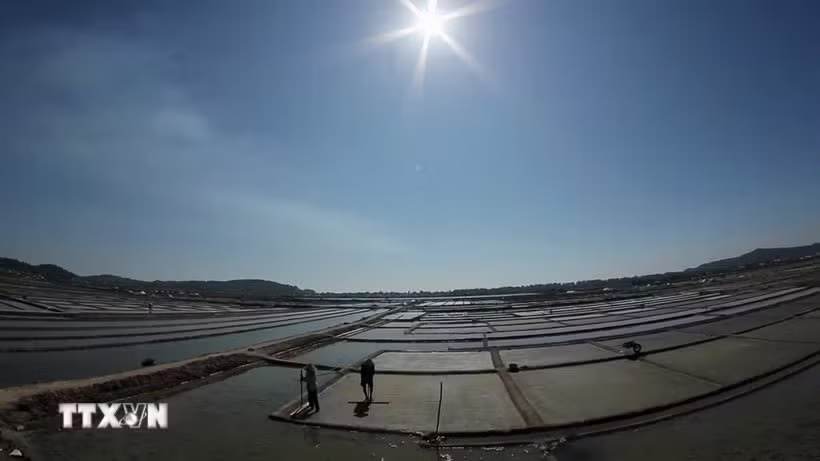
Hanoi (VNA) – With the relaunch of a project to preserve traditional salt fields and develop community-based tourism, the revival of the Sa Huynh salt-making craft in the central province of Quang Ngai looks promising, both preserving its heritage value and generating sustainable livelihoods.
A centuries-old salt-making heritage
The craft first appeared in the 19th century and was recognised as a national intangible cultural heritage by the Ministry of Culture, Sports and Tourism in December 2024. Sa Huynh is one of the oldest salt-making villages in central Vietnam, closely intertwined with the lives of Quang Ngai’s coastal communities over generations.
However, researchers said, the salt-making tradition in Sa Huynh dates back even further. Recent archaeological discoveries in Go Co village have revealed traces of an ancient salt-making area covering around 10ha on a basalt foundation, providing clear evidence of salt-making techniques used by people of the Sa Huynh Civilisation in prehistoric times.
Archaeologists have determined that local residents once employed three methods of salt production: evaporating seawater on rocks to produce crystallised salt, boiling seawater in pottery vessels, and making salt in fields.
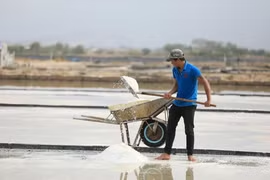
Today, the Sa Huynh salt fields cover approximately 100–115ha and provide livelihoods for nearly 600 households, with more than 1,100 workers directly engaged in production. Each year, the area supplies thousands of tonnes of clean salt to the market.
What gives the Sa Huynh salt its distinctive value is not only its quality but also its traditional artisanal production methods. Farmers still rely mainly on natural sunlight and wind to crystallise salt in neatly squared plots stretching along the coast.
The salt-making season usually begins in the first lunar month and lasts until the seventh lunar month.
Preserving heritage through community-based tourism
To preserve the traditional craft and tap into its tourism potential, Sa Huynh ward has reactivated a project on preserving traditional salt fields in association with community-based tourism development, with support from the United Nations Development Programme (UNDP) and the Global Environment Facility (GEF).
The project focuses on a range of practical activities, including raising community awareness of environmental and ecosystem protection, establishing models for waste sorting at source, caring for mangrove vegetation, developing homestay services, installing community-based tourism maps and creating check-in sites for visitors.
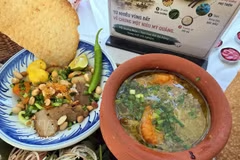
In particular, Quang Ngai aims to develop a salt-flower product meeting the One Commune, One Product (OCOP) standards to enhance the brand value of the Sa Huynh salt.
Beyond production, Sa Huynh is gradually developing an experiential tourism model centred on the traditional craft village. Visitors can directly rake and carry salt, learn about traditional production processes and listen to stories about the livelihoods of residents in the coastal area.
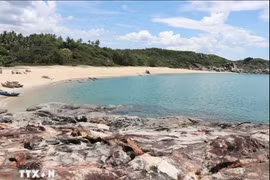
Sa Huynh also benefits from its location, which provides connections to several well-known tourist attractions such as the Sa Huynh beach, Go Co tourism village and the Sa Huynh Civilisation space. With proper investment, the area could become a distinctive highlight on Quang Ngai’s tourism map.
Recently, the Quang Ngai provincial People’s Committee approved a plan for salt production, processing and consumption in the province for 2026–2030, to build an efficient and sustainable industry while increasing added value.
Specifically, by 2030, Quang Ngai aims to maintain around 100ha of land for salt production, with annual output exceeding 5,800 tonnes. All production areas will adopt clean-salt production methods, apply science and technology, and establish linkages with the market for stable sale. This will ensure that local people can make a profit from salt production.
The province is set to incorporate the promotion of its Sa Huynh salt brand into local tourism promotion events and cultural festivals to increase marketing value. It also plans to develop the salt-making craft in connection with craft-village tourism and community-based tourism./.