Resolution revitalises urban spaces through cultural resources

Hanoi has recently launched a series of initiatives to realise its vision of becoming a "Civilised – Distinctive – Creative" capital, where culture and innovation serve as key growth engines. Among the most notable are the creative infrastructure development programme and the 2026 creative space design competition, which encourage architects, designers and creative communities to revitalise former industrial sites, relocated facilities, traditional craft villages, parks, squares and other public spaces through innovative yet practical design solutions.

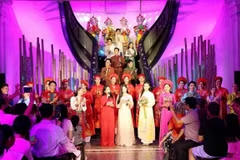
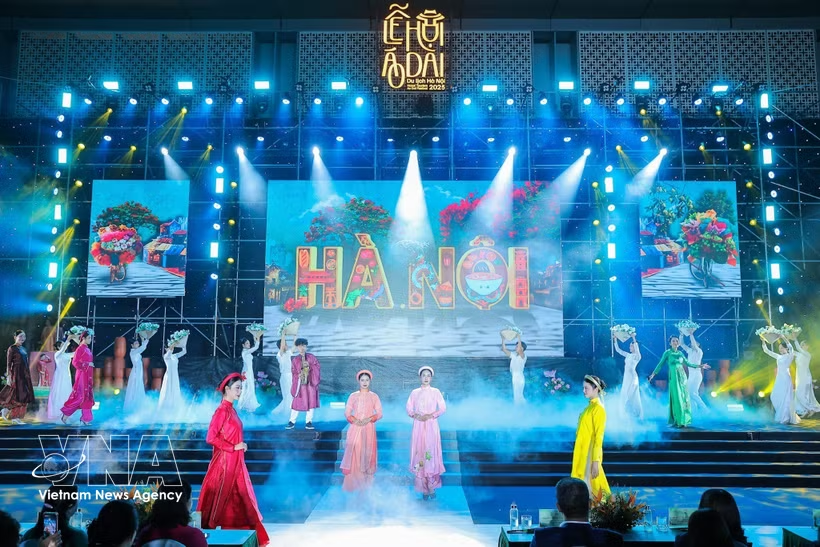
Models present "Ao dai" (Vietnam's traditional long dress) during the opening ceremony of the Hanoi Ao Dai Tourism Festival, a highlight of the capital city's creative journey. (Photo: VNA)

Hanoi (VNA) – In line with the Politburo's Resolution No. 80-NQ/TW on the development of Vietnamese culture, localities across the nation are increasingly seeking to bring cultural spaces back into everyday life, transforming culture into an endogenous driver of creativity and sustainable growth.

Hanoi has recently launched a series of initiatives to realise its vision of becoming a "Civilised – Distinctive – Creative" capital, where culture and innovation serve as key growth engines. Among the most notable are the creative infrastructure development programme and the 2026 creative space design competition, which encourage architects, designers and creative communities to revitalise former industrial sites, relocated facilities, traditional craft villages, parks, squares and other public spaces through innovative yet practical design solutions.

The initiative aims to foster a vibrant creative ecosystem, accelerate the growth of cultural industries and reinforce Hanoi's position within UNESCO's Creative Cities Network.

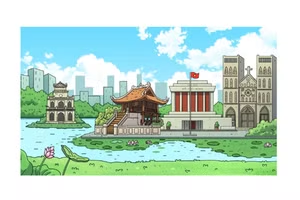
The capital is also advancing its 100-year master plan, which identifies culture as the core of long-term urban development. The plan prioritises preserving the historic urban structures and safeguarding major heritage areas, including the Old Quarter, Hoan Kiem Lake, West Lake, the Temple of Literature, the Red River corridor and the city's extensive network of traditional craft villages. It also seeks to preserve Hanoi's unique "villages within the city, streets within villages" model while promoting modern urbanisation without compromising cultural identity.

The master plan further emphasises expanding green areas and public spaces, with former industrial and relocated sites earmarked for transformation into parks, museums, cultural centres and creative hubs.

According to experts and urban managers, as Hanoi continues to face mounting challenges related to population pressure, infrastructure, public space and the gradual erosion of cultural heritage, breakthrough solutions are needed to strike a balance between conservation and development, and position cultural industries, heritage tourism and creative design as new engines of economic growth.

With more than 6,489 historical and cultural relic sites, three UNESCO-recognised intangible cultural heritage elements, one UNESCO documentary heritage and around 1,350 traditional craft villages, Hanoi possesses exceptional cultural resources to support its ambition of becoming a heritage city, a creative city and a “cultured – civilised – modern – happy” capital.

In Ho Chi Minh City, on July 22, the city's Tourism Promotion Centre and its arts centre signed a memorandum of understanding on cooperation for 2026–2030 to promote cultural tourism and creative industries. The partnership will combine tourism with performing arts to develop distinctive cultural tourism products. Priority will be given to art tourism, night-time tourism, festival tourism and MICE tourism, helping stimulate visitor demand while expanding the city's night-time economy.

The two organisations will also strengthen promotion of artistic events through domestic and international media, tourism fairs, exhibitions and promotional campaigns, while organising trips for travel businesses, journalists, key opinion leaders (KOLs) and international partners.

At the same time, the city continues to invest in traditional performing arts such as cai luong (reformed opera), hat boi (classical opera) and water puppetry, alongside contemporary and classical performances, creating signature cultural products that enrich the city's tourism portfolio.

Meanwhile, on July 23, the Hue Historical Science Association organised a scientific conference on identifying the central city’s cultural heritage, bringing together scholars, researchers, university representatives and policymakers. Participants examined Hue's cultural identity and proposed measures to preserve and promote its heritage in the context of modern development. Many of them highlighted the important role of cuisine, festivals, music and traditional beliefs in developing tourism and cultural industries, while calling for stronger digital transformation, comprehensive heritage databases, creative city models and closer integration of heritage preservation with socio-economic development.
vnanet-hue.jpg
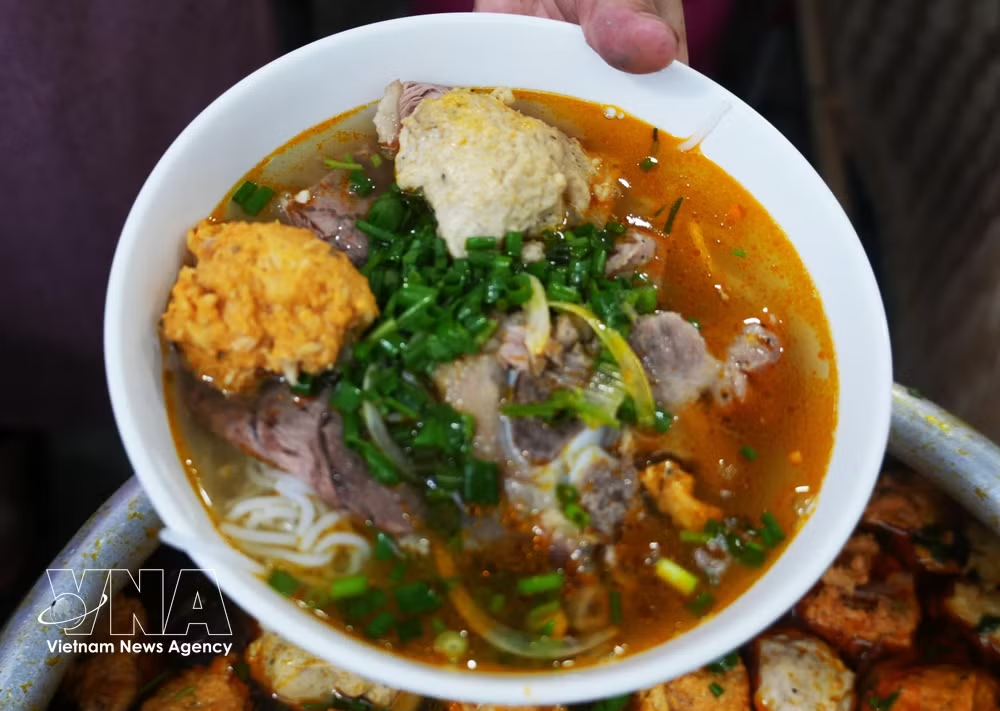
A bowl of bun bo Hue (Photo: VNA)

Hue has also announced several major cultural events, including the the Hue International Heritage and Music Festival (Hue Wonderverse Music Fest) 2026, which is scheduled to take place from August 30 to September 1 under the theme “City Awakening”. Meanwhile, the city has just held the "Hue – Culinary Capital 2026" programme under the theme “Bun bo Hue (Hue Beef Noodle) Day.” Through culinary showcases, cultural exchanges and interactive experiences, Hue continues to position its gastronomic heritage as a distinctive cultural and tourism asset, contributing to high-quality, sustainable tourism and to strengthening the city's standing on Vietnam's and the world's cultural and culinary map./.
VNA

See more

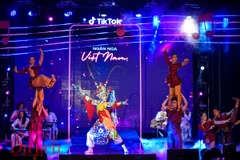
TikTok joins hands to launch the “Ngan Nga Vietnam" campaign, helping promote Vietnamese cultural identity and tourism on digital platforms (Photo: Ho Chi Minh City's Department of Tourism)

Creating Vietnamese cultural identity, sovereignty in digital space

Party General Secretary and State President To Lam has stressed the need to address bottlenecks hindering the transformation of culture into an endogenous resource, soft power and a driver of national development, as the appeal and reach of positive cultural values in the digital environment have yet to keep pace with the rapid growth of digital platforms and content.

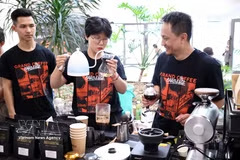
A barista demonstrates coffee brewing for visitors at the event. (Photo: VNA)

Central Vietnam's specialties inspire innovative coffee beverages

Businesses and coffee artisans in Da Nang city are reimagining the central region's signature specialties through creative coffee beverages, offering visitors distinctive flavours while adding value to OCOP (One Commune One Product) items and strengthening links between agriculture, culture, tourism and commerce.

Over 100 young overseas Vietnamese from 32 countries and territories join the Vietnam Summer Camp 2026. (Photo: VNA)

Vietnam Summer Camp 2026 wrapped up

Held from July 12 to 25 across eight cities and provinces, Vietnam Summer Camp 2026 offered a rich array of experiences. Participants explored historical landmarks, visited iconic cultural heritage sites such as the imperial city of Hue, Hoi An ancient town, and the My Son Sanctuary, and engaged in charitable activities valued at over 300 million VND (11,400 USD), including the installation of a "Youth Bookshelf."

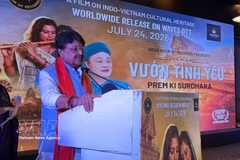
India's Madhya Pradesh Cabinet Minister Kailash Vijayvargiya speaks at the event. (Photo: VNA)

Film inspired by Vietnamese Quan Ho folk singing released globally

Produced by the India Book of Records (IBR) based on an idea by Prof. Dr. Chu Bao Que, "Love Garden" weaves Quan Ho folk singing into a bridge connecting past and present. The storyline follows a young Indian woman from Madhya Pradesh state who travels to the heartland of Quan Ho in northern Vietnam and performance stages in Hanoi to trace memories of her late mother.

A foreigner is drawn to Vietnam's traditional products at the Hanoi Tourism Gift Festival 2025. (Photo: VNA)

Vietnamese souvenirs tell everyday stories, drive creative economy

Today’s souvenirs capture the rhythm of everyday life: a “banh mi” (Vietnamese baguette) lapel pin, a sketchbook of Hanoi’s tangled streets, and illustrations of daily life in Ho Chi Minh City. They work because they paint a Vietnam that feels authentic, approachable and alive. Simple, compelling stories are giving cultural souvenirs a whole new appeal.

The organisers of the Hue Wonderverse Music Fest 2026 hold a press conference on the festival in the central city of Hue (Photo courtesy of the event's Organising Committee)

Hue to host international heritage, music festival

Themed "City Awakening – Awakening Heritage," Hue Wonderverse Music Fest 2026 aims to offer an immersive experience that combines Hue's rich cultural heritage with contemporary music, art and cutting-edge performance technology.

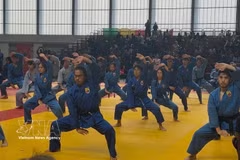
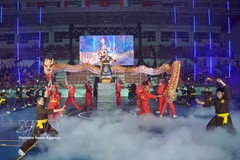
Martial artists perform in a mass demonstration at the opening ceremony. (Photo: VNA)

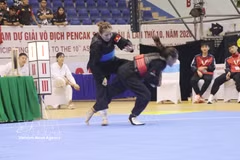
Ho Chi Minh City international traditional martial arts championship opens

Nguyen Nam Nhan, Deputy Director of the municipal Department of Culture and Sports and head of the organising committee, said Vietnamese traditional martial arts embody the essence of martial arts excellence, fostering a philosophy of life that upholds the values of Truth, Goodness, and Beauty, while continuing to gain recognition among the international community.

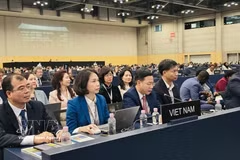
Deputy Minister of Foreign Affairs Ngo Le Van, Chairman of the Vietnam National Commission for UNESCO, addresses the session. (Photo: VNA)

UNESCO endorses vision for restoring Thang Long Imperial Citadel's central axis

The committee commended Vietnam for fulfilling the commitments it has made since the citadel was inscribed on the UNESCO World Heritage List in 2010, as well as for implementing recommendations from the committee and its advisory bodies. It also praised the country's efforts to preserve the site's cultural, historical and social values, transforming the imperial citadel into a space for public engagement, cultural exchange and historical education. The committee further welcomed the long-term vision as an important basis for the proposed restoration of Kinh Thien Palace in line with the approved conservation strategy.