RoK media spotlights Phu Quoc’s rise as global tourism destination

According to the Korean media, Phu Quoc is not just a beautiful beach. It is a place where tropical nature, modern entertainment experiences, romantic moments, and a sense of healing converge. An island where people come not only to travel but also to feel happiness with all their senses.

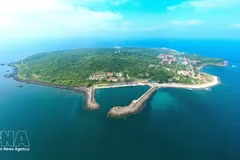
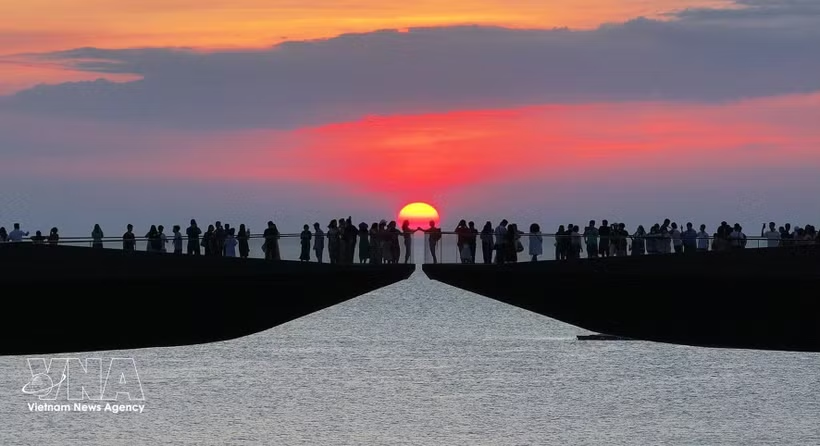
Kiss Bridge in Phu Quoc special zone, An Giang province. (Photo: VNA)

Hanoi (VNA) – The Republic of Korea (RoK)’s Yonhap News Agency has portrayed Vietnam’s Phu Quoc Island as a rising tourism paradise in Asia, where tropical beaches, spectacular sunsets and iconic attractions create memorable experiences for international visitors, including Korean ones.

In an article titled “Phu Quoc – the island where aunset and love meet”, Yonhap described the island as an emerging resort destination where romance, nature and modern tourism infrastructure blend seamlessly.

A highlight of the article is the Kiss Bridge at Sunset Town, which has become one of Vietnam’s newest tourism symbols. Stretching above the sea at a height of around 16 metres, the bridge consists of two separate sections that stop just 30 centimetres apart, leaving enough space for a handshake or a kiss.

According to Yonhap, the bridge offers visitors a cinematic experience, particularly at sunset when golden-red rays reflect on the sea, creating what many Korean tourists call one of the most beautiful moments in Southeast Asia. Beyond its architectural appeal, the structure has become a symbol of connection and emotion, attracting thousands of visitors each day eager to experience what the article describes as “the world’s most romantic 30 centimetres”.

Located off Vietnam’s southwestern coast, Phu Quoc has long been known as the country’s “Pearl Island” thanks to its pristine natural landscapes and rich ecosystems. The island, stretching about 50 kilometres from north to south, is part of the UNESCO-recognised Kien Giang Biosphere Reserve.

Yonhap noted that Phu Quoc is rapidly transforming from a quiet fishing island into a regional centre for tourism and international events. The island’s selection as host of the APEC Economic Leaders’ Week 2027 has accelerated large-scale infrastructure investment and strengthened its position as one of Asia’s most promising destinations.

The report highlighted Sunset Town, developed by Sun Group in southern Phu Quoc, as a focal point of this transformation. With red-tiled roofs, arched windows, stone-paved squares and pastel-coloured buildings, the complex evokes the atmosphere of Mediterranean coastal towns in Italy.

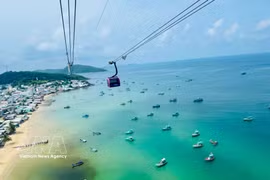
Another attraction praised by Korean media is the nearly 8-km cable car linking An Thoi Station with Hon Thom Island. The journey offers panoramic views of the An Thoi archipelago and its emerald waters. From above, Sunset Town resembles a miniature Mediterranean town set against a tropical coastline.
phu-quoc-6.jpg
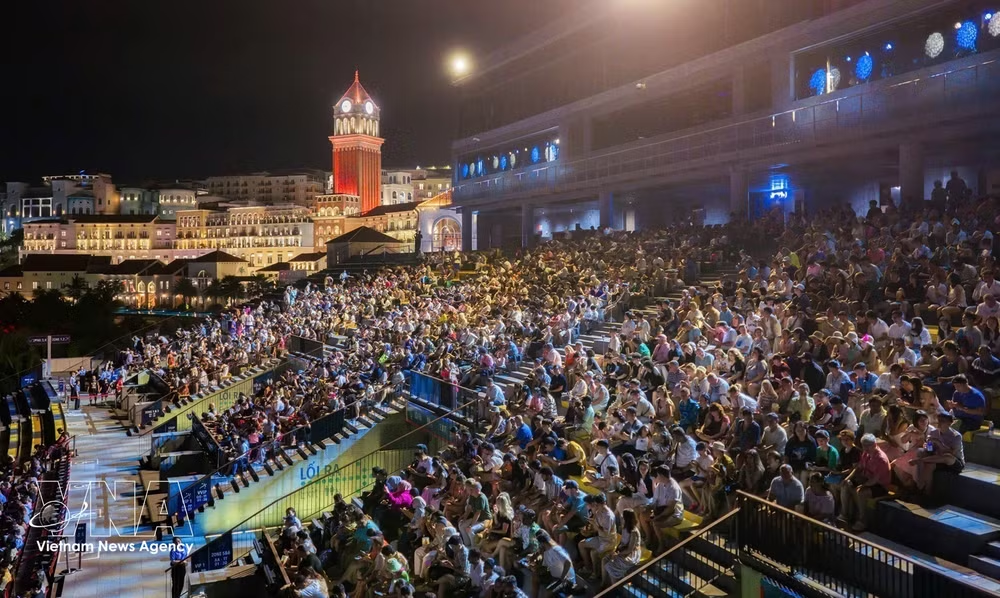
Visitors watch the “Kiss of the Sea” show in Phu Quoc special zone, An Giang province. (Photos: VNA)

On Hon Thom Island, visitors can enjoy a large-scale water park, thrill rides, seaside restaurants and festive entertainment activities throughout the day and night.

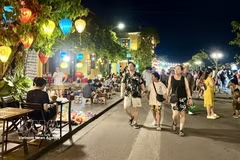
Yonhap also highlighted Phu Quoc’s vibrant nightlife, particularly multimedia performances such as Symphony of the Sea and Kiss of the Sea. Combining water effects, lights, lasers, flyboards and fireworks, the shows have been compared by Korean newspapers to world-class entertainment productions.

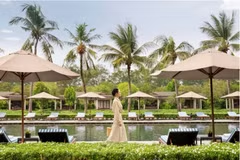
At the same time, the island offers tranquil retreats. The article cited Premier Village Phu Quoc Resort at Mui Ong Doi as an ideal destination for relaxation, where visitors can enjoy both sunrise and sunset while surrounded by the sounds of the sea and tropical forest.

With expanding tourism infrastructure and convenient direct flights from Incheon International Airport, Phu Quoc is increasingly becoming a preferred holiday choice for Korean travellers, offering an alternative to established destinations such as Phuket and Bali.

According to the Korean media, Phu Quoc is not just a beautiful beach. It is a place where tropical nature, modern entertainment experiences, romantic moments, and a sense of healing converge. An island where people come not only to travel but also to feel happiness with all their senses./.
VNA

See more

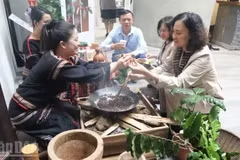
Visitors experience traditional coffee roasting by the Ede ethnic community. (Photo: nhandan.vn)

Buon Ma Thuot named among world's best culinary destinations by National Geographic

Dak Lak produces around 30% of Vietnam’s total coffee output and is home to some of the world’s finest Robusta beans. Coffee culture in the province is far more than an industry; it is a living tradition deeply embedded in daily life, intertwined with the customs of indigenous ethnic communities such as the Ede and M’nong, and the region’s vast green highlands. Visitors to Buon Ma Thuot can enjoy coffee experiences found nowhere else.

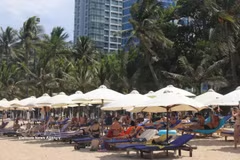
Russian tourists enjoy their time on a beach in Nha Trang, Khanh Hoa province. (Photo: VNA)

Vietnam, Russia seek solutions for surging tourism demand

Over 600,000 Russian tourists came to Vietnam in 2025, nearly reaching the record level seen before the COVID-19 pandemic, and the momentum has continued to accelerate in 2026 with more than 500,000 Russian arrivals in the Southeast Asian country in the first four months.

Ba Be Lake covers over 500 hectares of water surface and is surrounded by primary forests and a majestic cave system. (Photo: Internet)

Thai Nguyen aims to turn tourism into economic spearhead

In the new development phase, local authorities identify tourism as an important economic sector helping drive economic restructuring, generate jobs, improve local living standards, and uphold the unique cultural, historical and natural heritage values of Vietnam’s premier tea-growing land.

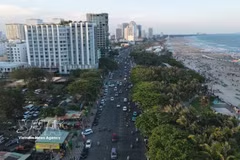
A bird's eye view of Vung Tau ward, Ho Chi Minh City (Photo: VNA)

Vung Tau stays the course on ASEAN clean tourism journey

Long known as a popular seaside getaway for domestic and international travellers, Vung Tau boasts an extensive coastline, sandy beaches and a unique landscape combining mountains, forests and the sea, making it well suited for resort, leisure and marine tourism.

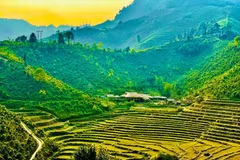
An aerial view of Lien village in Lao Cai province (Photo: vietnamtourism.gov.vn)

Social media helps bring local tourism destinations closer to visitors

Social media promotion by young people has helped create livelihoods for local communities, benefiting homestay owners, local guides, transport providers and sellers of regional specialties, particularly in remote areas with limited promotional resources but rich tourism potential.

The Chao Show by the Ho Chi Minh City-based the company Dau An Show presents the flavours of Vietnam’s three regions through nine signature Vietnamese dishes. (Photo: VNA)

Ho Chi Minh City boosts tourism appeal through culinary, cultural experiences

According to Vu Ngoc Lam, Country Director of Agoda Vietnam, travellers are becoming more selective when choosing accommodation, prioritising properties with strong reviews, quality amenities and distinctive dining options. This trend reflects a growing emphasis on the overall travel experience, alongside peer-based quality assurance.

Nam Luc waterfall is situated in Nam Luc 2 village, more than 20 kilometres from the centre of Sin Ho commune, at an altitude of 1,600-1,800 metres above sea level. (Photo: VNA)

Nam Luc waterfall: A hidden “white silk ribbon” in Lai Chau

Located amid the mist-covered mountains of the Sin Ho plateau in the mountainous northwestern province of Lai Chau, the Nam Luc waterfall is emerging as one of the region’s most compelling new destinations for trekking enthusiasts and nature lovers.