Russian region welcomes Vietnamese investors: Deputy Governor

An official of Volgograd Oblast has highlighted the region's strengths and stressed its commitment to an open, transparent, and equitable investment climate for investors, including those from Vietnam.

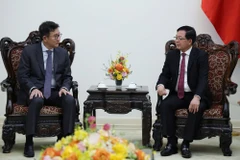
Moscow (VNA) – Volgograd Oblast always welcomes Vietnamese investors and offers all possible support to the Vietnamese community living and working here, its Deputy Governor Anna Pisemskaya told Vietnam News Agency correspondents in Russia on June 3.

Located in southern European Russia between the Volga and Don rivers, Volgograd serves as a gateway to southern Russia and a hub linking with Iran, Iraq, the Caucasus, and Kazakhstan. The strategic position has long made it a key player in international trade and regional connectivity.

A major advantage for Volgograd is that it hosts vital international transport corridors such as “North – South” and “West – East”. These routes not only link Russia’s European part with Central Asia, the Black Sea, and Caspian regions, but also extend to global markets.

The Volgograd-Don Canal, which links the ports of five seas, is a crucial waterway for transporting goods from European ports through Volgograd to Africa, the Near East, and the Middle East, supported by four cargo ports: Volgograd, Volzhsky, Kamyshinsky, and Kalachevsky, according to the official.

She said Volgograd has experienced robust economic growth in recent years. Over the past six years, its gross regional product has nearly doubled, driven by industry, agriculture, and trade. From 2014 to 2024, the province launched 182 investment projects valued at 451 billion RUB (5.7 billion USD), generating around 10,000 jobs.

The “Red October” metallurgical conglomerate, one of Russia’s largest producers of high-quality rolled metal, and the Volzhsky plant, the country’s sole silicon carbide manufacturer, underscore Volgograd’s industrial prowess.

Spanning 860 sq.km, Volgograd is Russia’s third-largest oblast, behind only Moscow and St. Petersburg. It is a major agricultural powerhouse, with the country's third-largest area of farmland, after Altai and Orenburg, and also among Russia’s top five wheat producers.

Tourism is a priority of Volgograd’s development strategy as the region offers various types of tourism, from cultural and educational tours to eco-tourism, river cruises, wellness and sports travel, and specialised events for children, business travellers, scientists, and rural enthusiasts. It has consistently ranked among Russia’s top tourist destinations and claimed the top spot nationally in May.

Education and science are also strengths of Volgograd. Currently, 18 Vietnamese students are enrolled at local universities, where they are praised for their active engagement, Pisemskaya said. Volgograd’s universities offer 82 majors and produce over 14,000 graduates annually, with more than 6,000 international students learning in what she described as a fair and welcoming academic environment.

While Vietnam is a valued international partner, it has yet to become one of Volgograd’s leading collaborators. The provincial economic committee stressed its commitment to an open, transparent, and equitable investment climate for investors, including those from Vietnam. A dedicated committee on ethnic affairs ensures equal opportunities for all communities, thus fostering economic growth and reinforcing the friendship between Vietnam and Russia, the Deputy Governor added./.
VNA

See more

Hai Phong targets 4.3 billion USD in FDI in 2026 (Photo: VNA)

Hai Phong city targets 4.3 billion USD in FDI in 2026

Hai Phong’s investment appeal is underpinned by a rapidly expanding development space, including the Southern Coastal Economic Zone covering more than 20,000 hectares, a planned free trade zone, deep-water ports at Lach Huyen, and 12 industrial parks newly established in 2025.

The relocation of check-in counters aims to better meet the travel needs of residents and visitors. (Photo: VNA)

Vietjet shifts domestic check-in at Tan Son Nhat from January 13

During the recent New Year 2026 holiday peak, Vietjet added 380 flights, equivalent to nearly 78,000 additional seats, on many key domestic routes linking Hanoi and Ho Chi Minh City with destinations such as Vinh, Thanh Hoa, Hai Phong, Da Nang, Phu Quoc, Nha Trang and Da Lat.

Commercial banks are providing approximately 88% of total green credit outstanding in Vietnam. (Photo: nhandan.vn)

Capital sources expanded for sustainable growth

According to the State Bank of Vietnam (SBV), by the end of November 2025, outstanding green credit was estimated at around 750 trillion VND (28.55 billion USD), with an average growth rate exceeding that of overall credit in the economy.

Customers select goods at a supermarket. (Photo: VNA)

Retail market expands sharply, sustainability challenges persist

According to a report on recently released by the Ministry of Industry and Trade’s Agency for Domestic Market Surveillance and Development, the size of the market reached more than 7 quadrillion VND (about 266 billion USD) in 2025, up around 10% compared with 2024.

Oil rigs at the Bach Ho oil field. (Photo: VNA)

Resolution 79: State economy to lead growth

Resolution 79 is described as a “clear action declaration” by the Politburo, saying the state economy is not only responsible for maintaining macroeconomic stability, but must also become the force leading a new growth model that is green and sustainable.

Workers at Garment 10 Corporation produce apparel for export. (Photo: Nhan Dan)

Vietnam leverages export advantages within RCEP region

In 2025, seafood exports to China alone exceeded 2.2 billion USD, up about 33% compared to 2024. Shipments to Japan fetched nearly 1.7 billion USD, a year-on-year increase of 14.6%, while those to the Republic of Korea and Australia grew by 9.6% and 3.2%, respectively.

Certificates of membership in the Vietnam International Financial Centre in Da Nang are awarded at the conference on January 9. (Photo: VNA)

Da Nang continues targeted investment promotion approaches

According to Chairman of the Da Nang People’s Committee Pham Duc An, the city prioritises building sustainable economic ecosystems and focuses on key breakthrough sectors with strong spillover effects, including high technology and digital transformation, logistics, urban infrastructure, finance, processing and manufacturing industries, high-tech agriculture, and the pharmaceutical and medicinal herb industry.

In 2025, Hyundai sales reached 53,229 vehicles across the Vietnamese market. (Illustrative photo: Yonhap/VNA)

Hyundai sales in Vietnam rise almost 23% in December

In 2025, sales reached 53,229 vehicles across the market, a result considered a testament to the efforts by TC Group, Hyundai Thanh Cong, and the entire Hyundai dealership network nationwide amidst a volatile market.

Hydroponic vegetable cultivation model at the High-Tech Agricultural Park (Photo daibieunhandan.vn)

HCM City accelerates shift toward ecological urban agriculture

​The city’s agricultural sector is undergoing a strong transformation, restructuring toward higher value-added and sustainable development. In recent years, the sector has maintained steady growth, with agricultural, forestry and fisheries output rising by an estimated 2.5% annually.