Hanoi (VNA) – After five years, a project on enhancing science education in Vietnam for 2021 – 2025 has laid the foundations for a structured and scalable STEM education model, aligned with the far-reaching reforms set out in the 2018 general education curriculum.
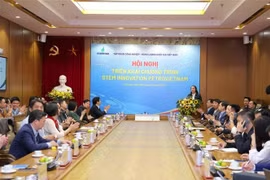
The assessment was delivered by leaders of the Ministry of Education and Training at a closing ceremony for the project, held in Hanoi on January 16 in collaboration with Kenan Foundation Asia.
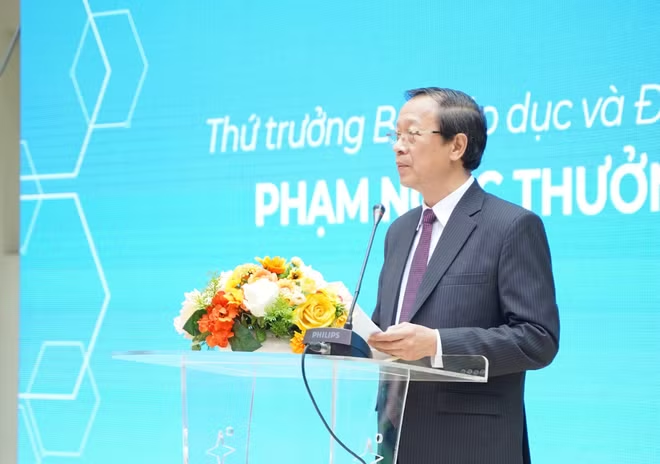
Deputy Minister of Education and Training Pham Ngoc Thuong described the establishment of a robust and well-coordinated partnership between State management agencies, schools, and businesses as one of the project’s most notable achievements. A clear process for implementation, monitoring, and evaluation has also been put in place, ensuring substance over form and avoiding the pitfalls of tokenistic initiatives.
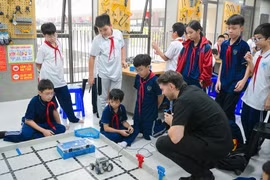
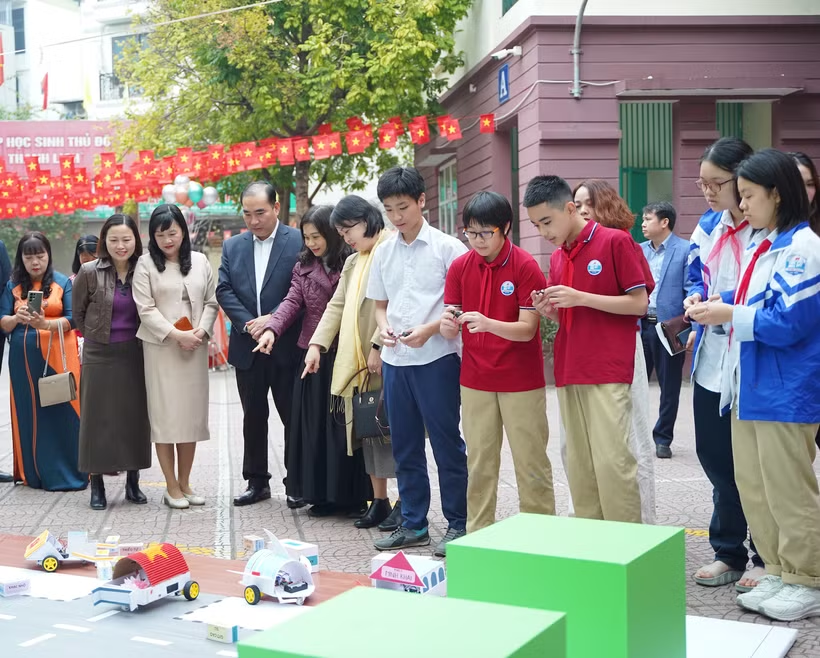
A key outcome has been the standardisation and successful transfer of a national set of STEM teaching materials. Prominent among them is guidance on developing STEM lesson plans for lower secondary teachers. The plan features 13 model lesson plans officially approved by the ministry for nationwide use. The publication provides an important foundation for scaling up STEM education consistently and coherently across the country.
Alongside curriculum development, the project has placed particular emphasis on building a core cadre of teachers. To date, 489 teachers have enhanced their STEM teaching capacity through structured training and professional development activities, while more than 1,500 core teachers have been established at local level.
Reflecting on the five-year milestone, Richard Bernhard, Country Representative of Kenan Foundation Asia in Vietnam, said it underscored Kenan’s sustained commitment to educational reform in the country. By translating policy direction into practical, effective classroom activities, the project has demonstrated that locally led efforts can successfully embed STEM as a natural component of mainstream education.
When teachers and schools are properly empowered and equipped, STEM education can develop systematically and sustainably, he noted.
From the perspective of corporate partnership, Michael Nguyen, Country Director of Boeing Vietnam, observed that five years of implementation had shown the tangible impact of early and long-term investment in the practice.
He stressed that STEM not only serves immediate educational objectives but also provides a crucial foundation for developing a workforce capable of meeting the demands of a science- and technology-driven economy. Boeing remains committed to working alongside partners in Vietnam to equip younger generations with the skills required to adapt to and shape the future, he added.
Originally scheduled to be implemented in 88 lower secondary schools, directly reaching approximately 46,000 pupils, the project’s influence has, in practice extended far wider. Through a multiplier effect within the education system, its impact has reached hundreds of thousands of students, fostering a vibrant and growing learning movement in schools nationwide.
The closing conference was seen as an important opportunity for stakeholders to undertake an objective assessment of achievements, draw lessons, and chart the course for the next phase. Ministry leaders urged local authorities to continue reviewing and investing in line with practical conditions, cautioning against pursuing superficial or “fashionable” models lacking depth and sustainability.
Building on the foundations established over the past five years, the project is expected to continue making a substantive contribution to comprehensive educational reform and to the development of a high-quality workforce in the years to come./.