Thai tourism firms face mounting debt burden amid energy crisis

Tourism operators in Thailand are calling for clearer government policies to ease mounting debt burdens and support SMEs as rising energy costs erode purchasing power and strain business operations.

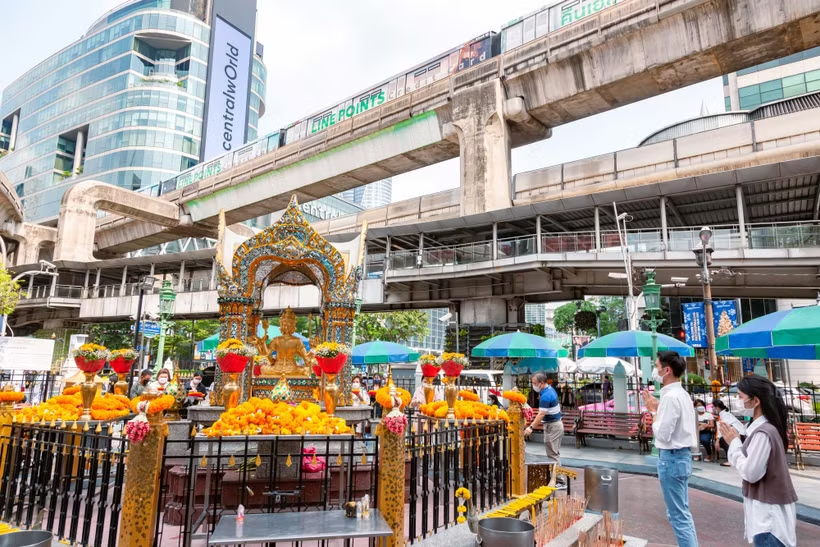
Erawan Shrine is a Hindu shrine located in front of Grand Hyatt Erawan Hotel at the Ratchaprasong intersection on Ratchadamri Road in Lumphini Sub-district, Pathum Wan district, Bangkok. (Photo: tourismthailand.org)

Bangkok (VNA) – Tourism operators in Thailand are urging the government to adopt clearer policies to ease mounting debt burdens and enhance the competitiveness of small and medium-sized enterprises (SMEs) amid rising costs driven by the global energy crisis.

Adith Chairattananon, honorary secretary-general of the Association of Thai Travel Agents, said that existing support measures, including subsidies under the latest phase of the Khon La Khrueng Plus co-payment scheme, are insufficient to sustain growth in the context of ongoing tensions in the Middle East.

People can now buy fewer goods or smaller baskets with the same amount of money compared to last year as energy crisis has pushed up logistics, energy and product costs, reducing consumers’ purchasing power.

The situation has placed significant strain on SMEs, which account for the majority of businesses in Thailand. Many have become non-performing borrowers and are unable to expand due to weak demand.

Adith stressed that the government should introduce measures to maintain reasonable prices for essential commodities, including fuel and electricity, while prioritising debt resolution to help ensure business competitiveness.

Sharing a similar view, Chai Arunanondchai, president of the Tourism Council of Thailand, said the current crisis largely stems from external factors beyond domestic control. He noted that businesses are willing to adjust operations to cope with higher energy costs faced by consumers and travellers.

He called on the government to ease the burden on enterprises by ensuring adequate supplies of goods at stable and reasonable prices. In addition, authorities should attract new foreign investment and improve the capacity of tourism operators, particularly in emerging sectors such as green tourism and wellness services, while addressing capital shortages and debt challenges.

Regarding tourism policy, Adith described the focus on high-value tourism as a positive direction, but emphasised the need for effective mechanisms to ensure fair income distribution, positive social and environmental impacts, and equitable employment opportunities.

He also suggested that Thailand diversify further into short-haul markets less affected by Middle East tensions through charter flight programmes and promotional campaigns. At the same time, the country should address long-standing issues such as airport congestion and weak connectivity between major and secondary cities./.


VNA

See more

Malaysia establishes ‘war room’ to ensure water security

Malaysia establishes ‘war room’ to ensure water security

The establishment of the war room reflects the Malaysian government’s commitment to shift from a reactive approach to a more proactive, data-driven one in managing national water challenges, particularly amid increasingly unpredictable weather conditions caused by global climate change

Indonesia diversifies supply sources to ensure energy security

Indonesia diversifies supply sources to ensure energy security

Indonesia is facing significant supply pressure as crude oil consumption reaches approximately 1.6 million barrels per day, much lower than the domestic production at only around 600,000 barrels per day, forcing the country to rely heavily on imports.

Indonesian-branded cosmetic and personal care products are available at supermarkets and shopping malls (Photo: VNA)

Indonesia aims to master cosmetics industry value chain

Key drivers include its large population, expanding middle class, and rapidly rising demand for beauty products, especially among young consumers. The market has reached billions of US dollars and is projected to maintain strong growth in the medium term.

The Anthropic logo is seen in this illustration taken on Mar 1, 2026. (File photo: Reuters)

Singapore warns of cyber risks from Frontier AI models

According to CSA, advanced AI models – among the most cutting-edge systems today – can significantly shorten the time needed to identify system vulnerabilities and develop exploitation tools, reducing the process from months to just hours.

Helicopter carrying eight reported missing in Indonesia

Helicopter carrying eight reported missing in Indonesia

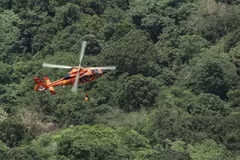
Indonesian authorities are urgently conducting a search and rescue operation after receiving reports that a helicopter carrying eight people suddenly lost contact on the morning of April 16 in West Kalimantan on the island of Borneo.

Malaysia’s job losses surge 47% in the first quarter of 2026 (Photo: AFP)

Malaysia's layoffs rise 47% in first quarter

The report, based on figures from Malaysia’s Social Security Organisation, showed layoffs peaked in January with around 10,700 cases before easing to 7,500 in February and 5,900 in March. Despite the slowdown toward the end of the quarter, the total remained significantly higher than the roughly 16,500 layoffs recorded in the same period of 2025.