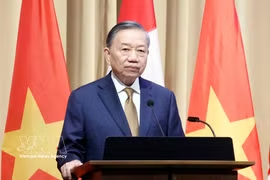
Beijing (VNA) – General Secretary of the Communist Party of Vietnam Central Committee and President To Lam's attendance at the 33rd APEC Economic Leaders’ Week in Shenzhen, China, is expected to boost development experience-sharing, build consensus and deepen multilateral cooperation, while serving as a bridge between China’s APEC Year 2026 and Vietnam’s hosting of the forum in 2027, a Chinese scholar has said.
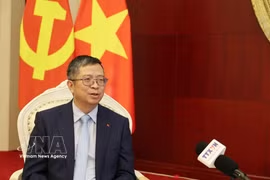
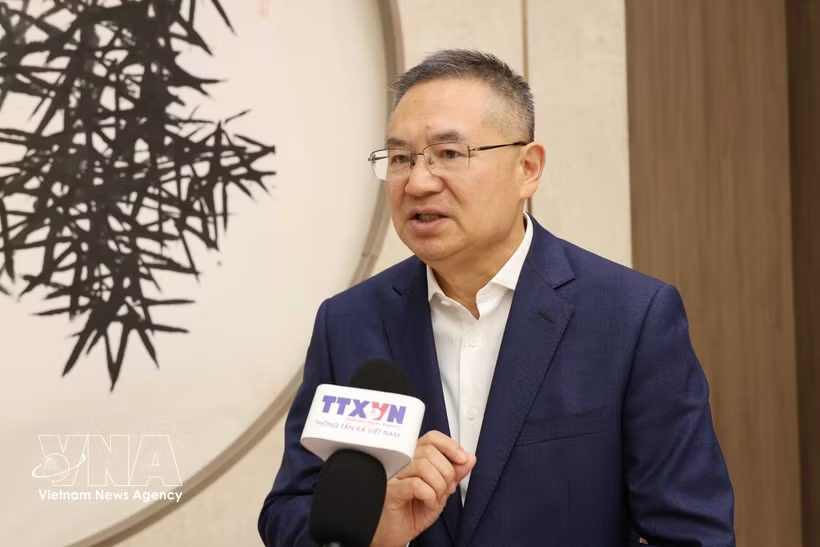
Professor Dr Cheng Hanping, Executive Director of the Institute of Regional and Country Studies and Director of the Vietnam Research Centre at Zhejiang University of Technology, outlined three key expectations for the top Vietnamese leader’s China trip from November 17 to 20.
First, Cheng expressed hope that the Vietnamese leader would share the country’s economic development experience with APEC member economies.
Vietnam’s strong economic growth in recent years, which has exceeded many expectations, has attracted considerable international attention. Sharing its experience, policies and development approaches would therefore offer practical value, particularly for economies with similar conditions and middle-income countries, he said.
Cheng highlighted Vietnam’s focus on multilateralism, inclusive development and a green, quality-driven growth model. He also referred to the Vietnamese leader’s recent visit to Japan, during which digital transformation, innovation and green transition were highlighted as key priorities. These are areas of growing global demand in which Vietnam is making active progress, he noted.
Second, Cheng expected the Vietnamese leader’s participation to help ensure continuity and effective coordination between China’s APEC Year 2026 and Vietnam’s APEC Year 2027.
Following China’s hosting of the forum this year, the international community is closely watching Vietnam’s preparations for next year’s summit, he said.
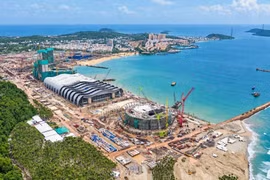
China has extensive experience in organising major international events, while Vietnam will host the APEC Economic Leaders’ Meeting in Phu Quoc in 2027. The scholar said the international community expects Vietnam to deliver an economical, green and efficient event that leaves a positive impression on participating economies.
He said China and Vietnam could work together to generate positive momentum for the region, reinforce confidence and enhance the stability and predictability of the international environment.
Third, Cheng called on Vietnam to put forward concrete initiatives to address shared challenges in the Asia-Pacific, particularly artificial intelligence (AI) governance.
The rapid development of AI has created an urgent need for appropriate rules and governance frameworks. Vietnam should take a proactive approach and work with China to promote cooperation in developing common rules, he said.
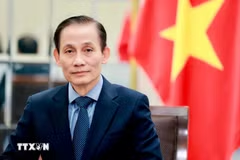
He also welcomed a proposal by the Vietnamese Ambassador to China to establish a connectivity mechanism between APEC and relevant committees, describing it as a meaningful contribution to strengthening cooperation within the forum, reinforcing confidence in multilateralism and enabling economies to address shared challenges.
Cheng stressed that the ultimate goal of regional cooperation was to promote mutual cooperation and shared benefits.
With China hosting APEC in 2026 and Vietnam taking over the role in 2027, closer coordination between the two countries could bring greater positive momentum and stability to the Asia-Pacific region, he said.
He also expressed hope that hosting APEC 2027 would give Vietnam an opportunity to showcase itself to the world as an open, dynamic, innovative, prosperous, stable and safe country, while highlighting its contributions to regional cooperation and development./.