Hanoi (VNA) – Ta Xua, a mountainous commune in Vietnam's northern Son La province, has been named Asia's Leading Emerging Tourism Destination at the World Travel Awards 2026 for Asia, Oceania and the Indian Ocean, held recently in the Maldives.
The award opens up new development opportunities for the locality while also bringing new requirements for its tourism development.
This was the first time Ta Xua had competed in the category, where it secured victory against several established destinations, including Koh Kood island in Thailand, Melaka in Malaysia, Morioka in Japan, Sumba island in Indonesia and Taipei (China). Vietnam was also represented by Ninh Binh.
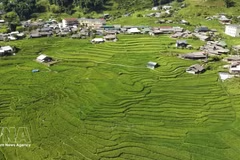
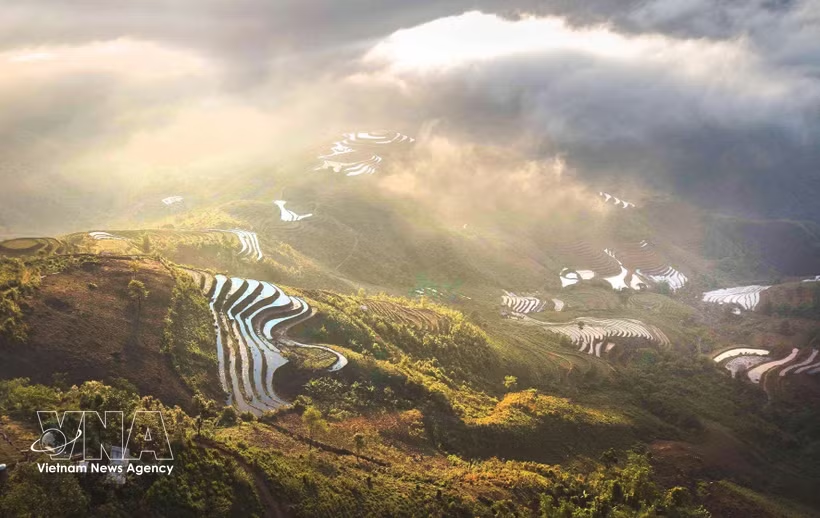
Located at an altitude of more than 1,500 metres, Ta Xua is known for its spectacular sea of clouds, ancient Shan Tuyet tea gardens and the distinctive culture of the Mong ethnic community, which makes up almost the entire local population.
Luong Duy Doanh, Director of FiveStar Travel and head of the Northeast-Western development division under the Hanoi UNESCO Travel Club, said the combination of natural scenery, indigenous culture and the hospitality of local residents had made Ta Xua an authentic and distinctive destination.
Journalist Chu Minh Khoi of Vietnam Economic Times recalled that more than five years ago, Ta Xua was still a quiet mountainous area, with only a few small eateries and simple homestays near the commune headquarters.
Tourism has since transformed the locality's appearance and people's livelihoods. In 2025, Ta Xua welcomed approximately 130,000 visitors, generating an estimated 75 billion VND (about 2.9 million USD) in revenue.
According to Chairman of the Ta Xua commune People's Committee Do Van Xiem, many households have shifted from farming to operating homestays or supplying agricultural products to accommodation establishments. The commune now has 88 households providing community-based accommodation services. Its poverty rate fell from 37% in 2024 to 33.64% in 2025.
In the first six months of 2026, the locality received around 56,000 visitors and earned 54 billion VND in tourism revenue. Although visitor spending has increased, it remains relatively modest.
Local authorities acknowledge several challenges, including inadequate tourism infrastructure, growing pressure on land management and construction, uneven service skills and a lack of in-depth cultural experiences.
Le Quang Tuan, from Vietnam Travel magazine Vietnam Travel magazine under the Vietnam Tourism Association, warned that uncontrolled construction could lead to the concrete encroachment of natural landscapes, while waste, wastewater, traffic congestion and overcrowding during peak seasons could undermine the destination's appeal.
He also cautioned that without appropriate mechanisms to attract investment and protect local interests, residents could become merely employees in tourism businesses operating on their own land.
Preserving identity for sustainable growth
Politburo Resolution No. 26-NQ/TW dated August 22, 2026, on developing tourism into a key economic sector in the new era, calls for placing culture at the heart of tourism development and shifting the industry's focus from visitor numbers to quality and experience.
For Ta Xua, this requires concrete action, starting with effective planning to prevent uncontrolled construction, experts said.
Local authorities need to clearly identify areas where construction is permitted, regulate building density and height, and protect sensitive landscapes, particularly cloud-viewing spots such as “Dinosaur Spine,” and ancient Shan Tuyet tea gardens.
Planning must go hand in hand with better waste and wastewater treatment, safer mountain roads and visitor-capacity management during peak periods. Violations of construction regulations must also be dealt with firmly.
Rather than pursuing the highest possible visitor numbers, Ta Xua should focus on delivering quality experiences for people seeking nature, tranquility and authentic local culture, Tuan said.
Tourism performance should be measured not only by visitor numbers but also by overnight stays, spending levels and the share of revenue retained by local households.
A Shan Tuyet tea-picking experience with local farmers, lessons in indigo dyeing and beeswax painting, or an overnight stay in a traditional Mong house could encourage visitors to stay longer.
More importantly, local residents must be placed at the centre of tourism development, from planning and product design to benefit-sharing. Authorities can support them through hospitality training, access to capital and connections with travel businesses./.