Hanoi aims to become one of Vietnam’s leading tourism hubs

Hanoi targets welcoming and serving between 47 million and 50.5 million tourist arrivals by 2030, including 13-15 million international visitors and 34-35.5 million domestic travellers. Tourism revenue is expected to reach 295-340 trillion VND (11.43 billion-13.17 billion USD), with the sector’s overall contribution accounting for around 7.5-8% of the city’s gross regional domestic product (GRDP).

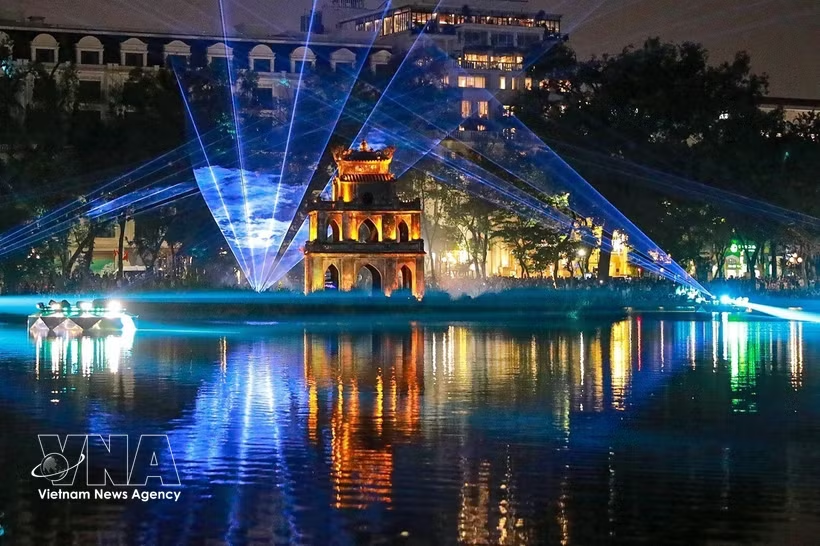
Turtle Tower in the heart of Hanoi. (Photo: VNA)

Hanoi (VNA) – Hanoi aims to become one of Vietnam’s leading tourism centres and one of the country’s three major tourism growth poles, alongside Ho Chi Minh City and Da Nang, while taking a leading role in coordinating regional tourism development.

In the longer term, the capital seeks to establish itself as a regional and international destination for cultural and heritage tourism, creativity, events and high-quality tourism services.

These goals are set out in Action Programme No. 20-CTr/TU, issued by the Hanoi Party Committee to implement the Politburo’s Resolution No. 26-NQ/TW on developing tourism into a spearhead economic sector in the new era.

The municipal People’s Committee subsequently issued Plan No. 406/KH-UBND on October 19, outlining implementation measures for the 2026-2030 period.

Under the plan, Hanoi targets welcoming and serving between 47 million and 50.5 million tourist arrivals by 2030, including 13-15 million international visitors and 34-35.5 million domestic travellers. Tourism revenue is expected to reach 295-340 trillion VND (11.43 billion-13.17 billion USD), with the sector’s overall contribution accounting for around 7.5-8% of the city’s gross regional domestic product (GRDP).

To support this growth, the capital plans to add at least 10,000 high-end accommodation rooms in the four- and five-star categories. It also aims to have three sites recognised as national tourist areas and at least three craft villages or ancient villages developed into high-quality destinations capable of competing regionally and internationally.

Nguyen Tien Dat, Vice Chairman of the Hanoi Tourism Association, said the capital is working towards a larger, higher-quality and more closely connected tourism ecosystem.

However, targets for visitor numbers, revenue and accommodation capacity are only the starting point, he noted. Sustainable growth would also require better tourism planning, distinctive products, consistent service quality and a competitive destination brand.

Turning heritage into distinctive experiences

With its rich cultural heritage, distinctive urban architecture, renowned cuisine, traditional craft villages and network of ecological destinations, Hanoi has strong potential to develop diverse tourism products.

Experts, however, believe these advantages must be transformed into meaningful visitor experiences to strengthen the capital's competitiveness and meet changing tourist demand.

Associate Professor and Doctor Duong Van Sau from the Faculty of Tourism at the Hanoi University of Culture said the capital should make greater use of its cultural assets, including Hoan Kiem Lake, the Old Quarter, the Imperial Citadel of Thang Long and the Temple of Literature.

Rather than relying mainly on conventional sightseeing tours, Hanoi should connect heritage sites with art performances, traditional craft experiences, cuisine, creative design and interactive activities involving local communities, he said.

Pham Hai Quynh, Director of the Asian Tourism Development Institute, said the capital should also step up the development of event, night-time and culinary tourism, alongside products linked to cultural industries.

International music festivals and street art programmes could enrich urban cultural life while making Hanoi more attractive to visitors, he said. He also called for stronger links between Hanoi and neighbouring localities to create connected itineraries combining urban heritage, craft villages, ecological tourism, resort stays and rural experiences.

Tran Trung Hieu, Deputy Director of the Hanoi Department of Culture, Sports and Tourism, said the city's tourism sector is working with localities to review and reorganise tourism spaces in a sustainable manner, with cultural values serving as a foundation.

The city is also promoting the application of technology to improve service quality and enhance the appeal of tourist destinations./.

VNA

See more

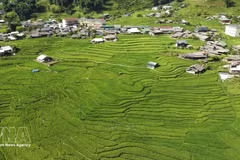
The captivating beauty of Sa Pa during the rice harvest season. (Photo: VNA)

Vietnam ranks fourth among top autumn travel destinations for 2026

Lonely Planet highlights Hanoi as an appealing autumn destination, with cool weather making it a pleasure to explore its winding, invigorating streets. Dreamy Ha Long Bay is at its clearest and the warm waters are perfect for a dip, while Sa Pa and Tuyen Quang, including the former Ha Giang area, welcome visitors with golden terraced rice fields during the harvest season.

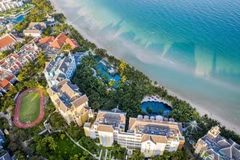
In mid-October, coastal destinations across Lam Dong begin welcoming winter tourists (Photo: VNA)

Lam Dong enhances appeal to long-stay international tourists

Local authorities are upgrading tourism infrastructure and services. Coastal destinations, including Hoa Thang, Phan Thiet, Tien Thanh and La Gi, are promoting local attractions and improving service quality to welcome international visitors.

Healing tourism destinations are often places that offer visitors a pure connection with nature. (Photo: VNA)

Lao Cai seeks breakthroughs with wellness tourism ecosystem

With its cool climate, mountain scenery and rich cultural and natural resources, the northern mountainous province of Lao Cai aims to turn its advantages into a high-quality tourism brand through smart resort services and health care experiences.

Located on Apollo Square in the heart of Sunset Town, Phu Quoc, Apollo Cafe is a distinctive venue designed by renowned architect Bill Bensley.

Coffee beneath an “upside-down” town: A surreal stop in Phu Quoc

With an entire town recreated on its ceiling, sweeping sunset views and a vantage point for watching fireworks after dark, Apollo Cafe in Phu Quoc offers more than a photogenic backdrop. Designed by Bill Bensley, the venue shows how a café can become an experience travellers deliberately build into their itinerary.

Phong Nha-Ke Bang National Park receives two honours at the World Travel Awards 2026 ceremony. (Photo: VNA)

Phong Nha-Ke Bang wins two World Travel Awards 2026 honours

Phong Nha-Ke Bang National Park was named Asia's Leading National Park 2026 and Vietnam's Leading Nature Destination 2026. The awards reaffirm the destination's international appeal, underpinned by its distinctive karst landscapes, spectacular cave and underground river systems, and rich biodiversity.

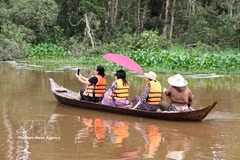
Visitors travel by boat to admire the cajuput forest landscape during the flood season at the Tram Chim tourism site in Dong Thap province. (Photo: VNA)

Dong Thap parlays flood season into tourism opportunity

At the Tram Chim tourism site, part of Tram Chim National Park in Tram Chim commune, visitors can try fishing with nets and hooks, setting traps and dismantling brush piles to catch field rats from August to November, the peak flood season.

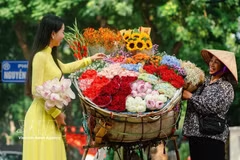
Flower vendors form a distinctive feature of Hanoi’s autumn. (Photo: VNA)

Hanoi builds four-season tourism appeal

Hanoi’s tourism events are increasingly designed to inspire exploration beyond individual festivals. At the Hanoi Tourism Gift Festival, for instance, visitors can make handicrafts with artisans, explore destinations through virtual reality and discover new tours and tourism stimulus programmes.

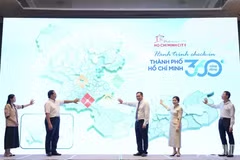
Delegates press the button to launch the “Phong Nha – Hue Ancient Capital: World Heritage Journey” tourist train. (Photo: VNA)

Tourist train linking Phong Nha and Hue heritage sites launched

The 190-km route runs between Hue, Dong Ha, My Trach, Dong Hoi and Tho Loc stations, giving travellers access to destinations including the Complex of Hue Monuments, Quang Tri Ancient Citadel, Vinh Moc Tunnels, Hien Luong–Ben Hai historical site and Phong Nha-Ke Bang National Park.

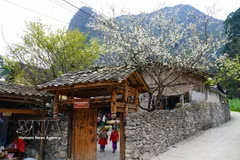
A Lo Lo ethnic minority house in Lo Lo Chai village, Tuyen Quang province. (Photo: VNA)

Tuyen Quang turns cultural heritage into a driver of sustainable tourism

Lo Lo Chai village, beneath the Lung Cu Flag Tower, is a vivid example of how cultural preservation can support tourism development. Traditional rammed-earth houses, costumes, festivals, cuisine and the daily life of the Lo Lo ethnic community have become key elements of the village’s tourism appeal.