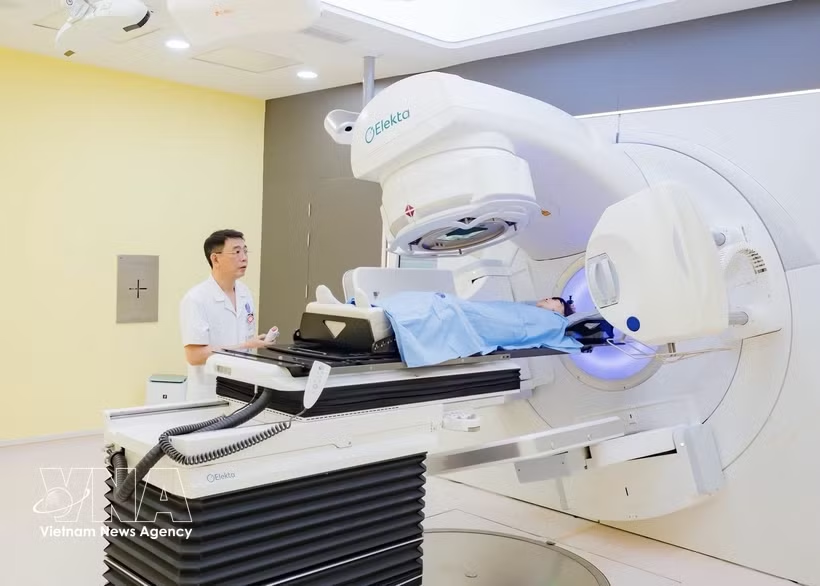
Hanoi (VNA) – Realising the International Atomic Energy Agency (IAEA)'s Rays of Hope initiative, Vietnam reaffirms its consistent policy of developing and applying nuclear energy for peaceful purposes to serve socio-economic development, ensure energy security and promote sustainable development, according to Deputy Director of the Vietnam Atomic Energy Institute (Vinatom) Phan Viet Cuong.
Accordingly, Vietnam is implementing its Strategy for the Development and Application of Atomic Energy for Peaceful Purposes through 2035, with a vision to 2050, while preparing for the Nuclear Science and Technology Research Centre project, which will include a new research reactor in the southern city of Dong Nai, he said.
Vietnam has mastered the production of various radiopharmaceuticals and radioisotopes for cancer diagnosis and treatment, helping reduce reliance on imports, he noted.
To strengthen its radiopharmaceutical production capacity, Vinatom is expanding cooperation with the Korea Institute of Radiological & Medical Sciences (KIRAMS) in cyclotron technology, radiopharmaceutical production and human resources training. The cooperation aims to upgrade the fluorodeoxyglucose (FDG) radiopharmaceutical production capacity at the Hanoi Irradiation Centre.
Under the Rays of Hope initiative, KIRAMS will also train Vinatom personnel in accelerator operation and radiopharmaceutical production. The two sides will coordinate in organising workshops in Vietnam on the research and production of new radiopharmaceuticals and preclinical trials, helping strengthen the country's capacity for research and production of radiopharmaceuticals for disease diagnosis and treatment.
Cuong said Vietnam will participate in the International Research Centre based on the Multipurpose Research Reactor (MBIR), enabling Vietnamese scientists to access advanced experimental facilities and participate in international research on fuel, materials and next-generation reactor technologies.
He added that promoting the Dong Nai research centre project, along with joint research programmes, personnel training and access to modern facilities, will enhance Vietnam's capacity in nuclear materials, fuel and reactor technologies, while expanding the application of nuclear science and technology.
The IAEA estimates that the world will record 30 million new cancer cases and 16 million related deaths over the next two decades, with low- and middle-income countries expected to bear more than 70% of cancer deaths.
Against this backdrop, projects under the Rays of Hope initiative focus on strengthening infrastructure and legal frameworks for radiation safety, while providing quality assurance services, guidance, training and equipment.
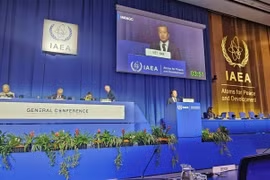
Launched by the IAEA, the initiative helps low- and middle-income countries narrow gaps in access to cancer diagnosis and treatment. More than 100 countries are participating in the initiative, which mobilises international resources to strengthen cancer care capacity, particularly in countries facing shortages of infrastructure and skilled personnel.
The IAEA has worked for six decades with countries and the World Health Organisation (WHO) to combat cancer, supporting the development of radiation medicine, including radiotherapy, medical imaging and nuclear medicine, while promoting safety, security and effectiveness./.