Ho Chi Minh City (VNA) – The Ho Chi Minh City People’s Committee has issued a report on the results of the Politburo’s Resolution 72-NQ/TW dated September 9, 2025 on breakthrough solutions to strengthen public health protection, care and improvement.
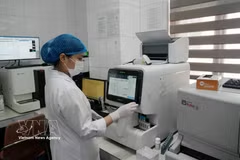
As of July 2026, 163 of the city's 164 hospitals, or 99.4%, adopted electronic medical records, the report said. About 64% of public hospitals and 65% of private hospitals now run the technology across their entire operations. The shift marks a milestone in eliminating paper records and building a large-scale health data repository.
Notably since July 1, residents have been able to track their health on smartphones through the Electronic Health Records built into the city's digital citizen app. Interoperable data links between the community health platform and hospitals mean exam results are no longer stuck in isolated paper files. Results are now stored as lifelong health data, letting residents track their own health while helping doctors build more accurate treatment plans.
Ho Chi Minh City also became the first in Vietnam to use artificial intelligence (AI) in public administration, deploying it to scan social media for fraudulent medical advertising. A new Department of Health dashboard has digitised the intake, classification and handling of public complaints, adding transparency and accountability.
To make healthcare more proactive, the sector launched a 150-day-and-night campaign on July 16 to speed up universal health checkups. By July 20, the campaign issued electronic health records and screened 732,873 residents.
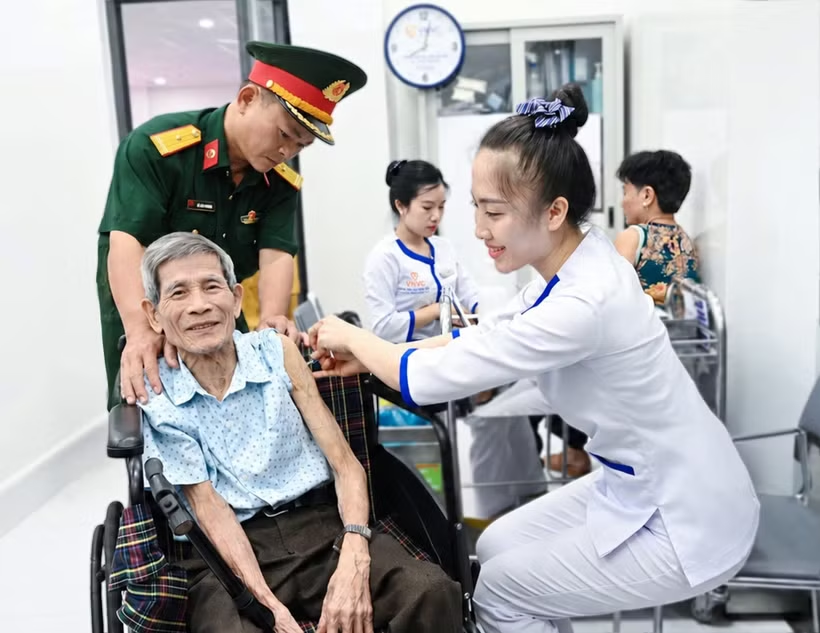
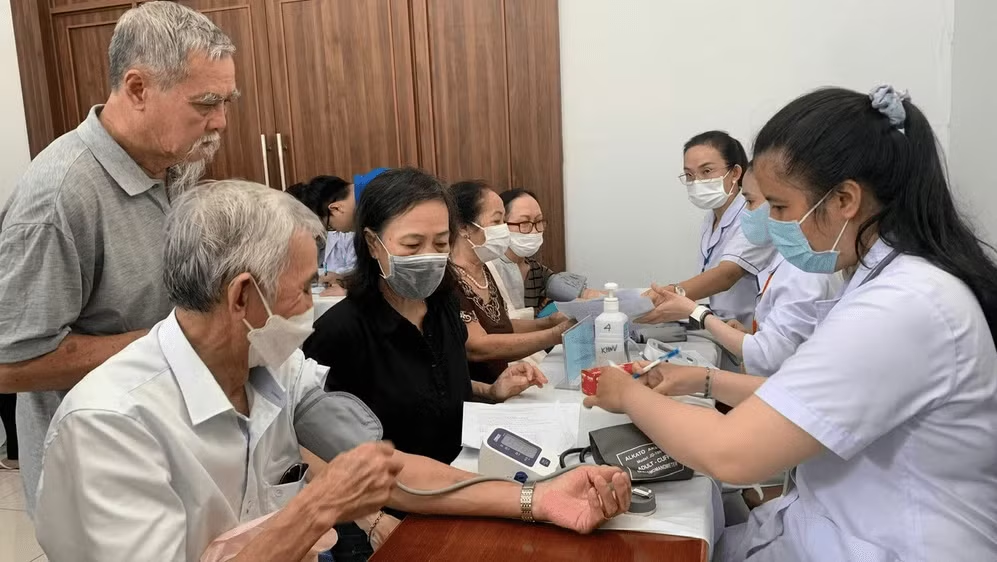
The city also rolled out a health checkup programme unbound by administrative boundaries, aiming for maximum convenience. Public and private hospitals, together with mobile medical teams, fanned out across all 168 communes and wards to reach elderly and disadvantaged residents. A separate free checkup drive on National Health Day, April 5, screened more than 41,000 people and caught thousands of early-stage hypertension and diabetes cases.
The city is also overhauling its healthcare system alongside the digital push. Since January 1, all 168 commune- and ward-level health stations have been placed under local People's Committees. A "continuous healthcare team" model is being piloted in 21 localities to improve primary care. Separately, 11 regional medical centres are drawing up plans to convert into basic-level general hospitals, easing pressure on higher-tier facilities.
The city's health infrastructure is also expanding under a "multi-tier, multi-polar, multi-centre" model, pushing new facilities toward its northern and eastern areas. Tertiary hospitals continue posting internationally comparable results in specialised fields such as organ transplants, robotic laparoscopic surgery and fetal intervention.
Beyond serving domestic patients, Ho Chi Minh City's healthcare sector is positioning itself to become an ASEAN regional healthcare hub, meeting practical needs while supporting global integration.
According to Director of the municipal Department of Health Tang Chi Thuong, a strong healthcare system requires qualified doctors not only at top-level hospitals but also at regional facilities and grassroots health stations.The city is working to build a more interconnected healthcare system, supported by rotational training programmes and professional knowledge transfer, to bring quality healthcare services closer to residents./.