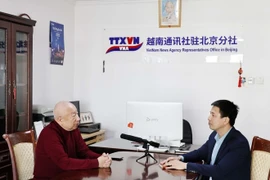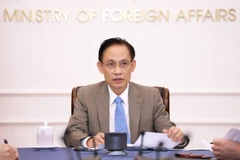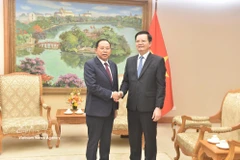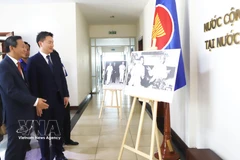
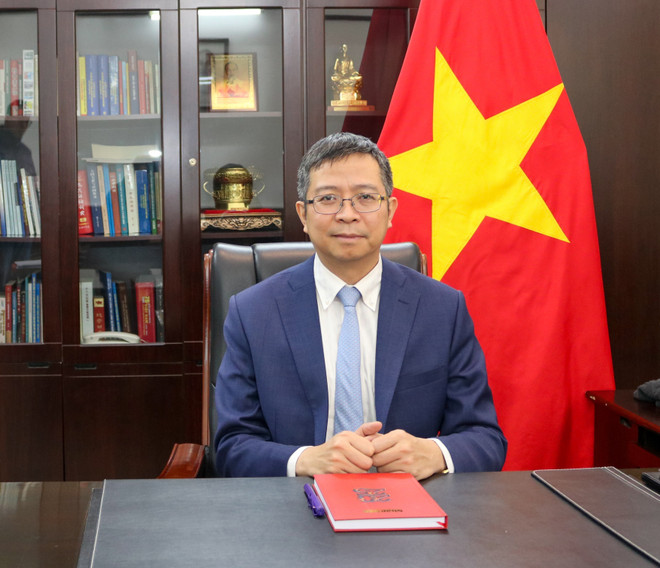
Hanoi (VNA) – Vietnamese Ambassador to China Pham Thanh Binh speaks to the Vietnam News Agency’s correspondents in Beijing about the outstanding achievements in bilateral relations and expectations for future cooperation on the occasion of the 75th anniversary of diplomatic ties between the two nations (January 18, 1950 –2025) and the Year of Vietnam-China Humanistic Exchange.
Reporter: 2025 marks a significant milestone as Vietnam and China are celebrating the 75th anniversary of diplomatic relations. What are the prominent achievements in the relationship between the two countries over the past 75 years?
Ambassador Pham Thanh Binh: China was the first country in the world to establish diplomatic relations with the Democratic Republic of Vietnam (now the Socialist Republic of Vietnam) on January 18, 1950, marking an important milestone in the history of the two countries' relations.
Over the 75-year journey, the bilateral relationship has experienced ups and downs, but the two Parties, governments, and people of the two countries have stood shoulder to shoulder, offering immense and invaluable support to one another, contributing to the success of national liberation and construction and development of each country. The friendship of being both comrades and brothers, built and nurtured by President Ho Chi Minh and Chairman Mao Zedong, along with generations of the two countries' leaders, has become a valuable asset of both nations.
Especially since the normalisation of relations in 1991, the relationship between the two Parties and two countries has been continuously promoted to new heights, obtaining important achievements and milestones.
On politics, the leaders of the Party, State, Government, National Assembly and Fatherland Front of the two countries regularly meet to promote traditional friendship, strengthen political trust and deepen cooperation across various fields while well controlling disagreements, orienting and promoting the healthy and long-term stable development of Vietnam-China relations. The two sides have determined to develop bilateral relations with the motto of friendly neighbourliness, comprehensive cooperation, long-term stability and looking toward the future (1999) and the spirit of good neighbours, good friends, good comrades, good partners (2005), and agreed to establish the Vietnam-China comprehensive strategic cooperative partnership (2008) - the highest cooperation framework in Vietnam's relations with countries around the world.
Following General Secretary of the Communist Party of Vietnam Central Committee Nguyen Phu Trong's official visit to China in October 2022, during the state visit to Vietnam by General Secretary of the Communist Party of China (CPC) Central Committee and President of China Xi Jinping in December 2023, both sides agreed to continue deepening and elevating the comprehensive strategic partnership between the two countries, and building a Vietnam-China community with a shared future that carries strategic significance. They outlined six major orientations comprising stronger political trust, more substantial cooperation in defence-security, deeper and more practical cooperation, more solid social foundation, closer multilateral coordination, and better management and settlement of differences, for the well-being of the people of both countries and for peace and progress of humankind.
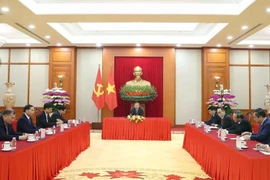
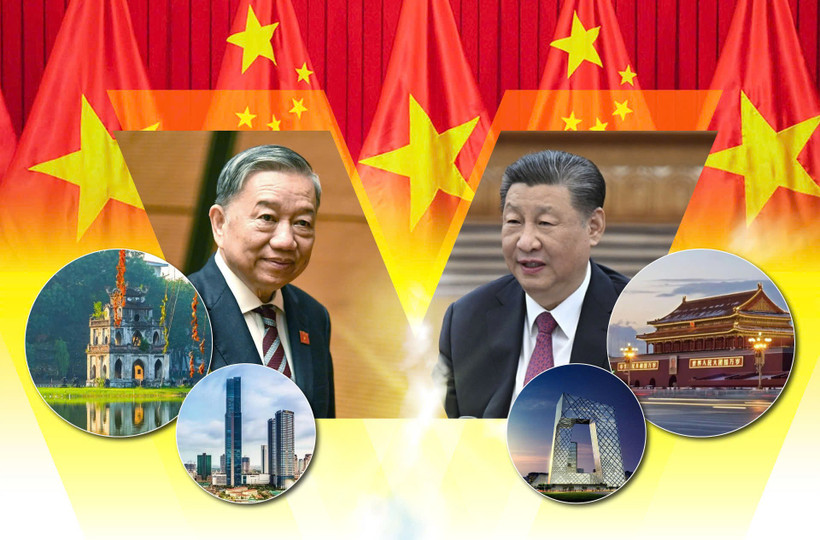
During the successful state visit to China by Party General Secretary and State President To Lam in August 2024, the the two countries's leaders continued to affirm that developing bilateral relations is a priority in each country's foreign policy, and agreed to further strengthen the Vietnam-China comprehensive strategic cooperative partnership.
The economic and trade ties between Vietnam and China have seen robust development. China remains Vietnam's largest trading partner, its top import market, and its second-largest export market. In 2024, the first year of the two countries implementing agreements and common perceptions after the upgrade of bilateral ties, bilateral trade surpassed 200 billion USD. Vietnam is currently China’s fourth-largest trading partner globally.
Since the normalisation of relations in 1991, bilateral trade has increased more than 6,400 times, from 32 million USD to 200 billion USD. In terms of investment, China has become Vietnam's third-largest foreign investor, with total registered capital amounting to 31.8 billion USD. This figure marks significant growth from 2014, when China ranked ninth, with cumulative registered capital of about 8 billion USD.
People-to-people, cultural, educational, and tourism exchanges between the two countries have also gained notable attainments. Over 23,000 Vietnamese students are currently living and studying in China. Chinese tourist arrivals to Vietnam have been on a steady rise. In 2019, before the COVID-19 pandemic broke out, Vietnam welcomed 5.8 million Chinese visitors, accounting for 30% of all international tourist arrivals. In 2024, Vietnam accommodated approximately 3.7 million Chinese tourists, up 214.4% increase from 2023, making China Vietnam's second-largest source of tourists after the Republic Korea.
The two countries have resolved two of the three border and territorial issues with the signing of the Land Border Agreement in 1999 and completing the land border demarcation work in 2008, and signing the agreement on the demarcation of the Gulf of Tonkin in 2000.
Regarding maritime disputes, senior leaders of the two Parties and countries have reached significant common perceptions on well managing disagreements and maintaining peace and stability in the East Sea.
The two sides signed an agreement on basic principles guiding the settlement of sea-related issues between Vietnam and China (2011), established and maintained the government-level negotiation mechanism on border and territorial issues as well as three expert-level mechanisms on the area off the mouth of the Tonkin Gulf and on cooperation in less sensitive areas at sea and cooperation for joint development at sea.
The valuable lessons learned from the negotiations to settle border issues on land and the delimitation of the Gulf of Tonkin, along with the agreement on basic principles guiding the settlement of sea-related issues and the common perceptions reached by the two countries’ senior leaders, will serve as a foundation and source of trust for both sides to continue negotiations for peaceful settlement of the East Sea issue, based on friendly relations, mutual respect for each other's legitimate rights and interests, and in line with international law, particularly the 1982 United Nations Convention on the Law of the Sea (UNCLOS) and the Declaration on the Conduct of Parties in the East Sea (DOC) signed between the Association of Southeast Asian Nations (ASEAN) and China.
It can be said that the ongoing emphasis on fostering, expanding, and deepening bilateral relations reflects the strategic vision of leaders of both Parties and countries. This approach has brought significant practical benefits to both nations' people, while creating a peaceful and stable environment conducive to mutual development, contributing to peace, stability, and development in the region and the world.
Reporter: In your opinion, where should Vietnam and China focus their cooperation as they enter a new phase of development? What are your expectations for the future development of bilateral relations?
Ambassador Pham Thanh Binh: This is an opportune moment to advance the relations between the two countries to a higher, deeper, and more substantive level. Both sides should focus on implementing and concretising the high-level common perceptions aimed at deepening and elevating the comprehensive strategic partnership, and building the Vietnam-China aommunity with a shared future that carries strategic significance following the “six major orientations,” focusing following specific tasks:
First, the two sides should coordinate effectively to prepare for future high-level exchanges and meetings.
Second, they should continue deepening cooperation across various sectors to achieve tangible results. This includes boosting investment, trade, and expanding the import of goods, especially Vietnamese agricultural products, along with implementing major projects that are the symbol of the growing Vietnam-China cooperation, and broadening cooperation in areas that China has strength and Vietnam has demand such as science and technology, innovation, digital transformation, green growth, and clean energy.
Third, Vietnam and China should enhance people-to-people exchange, reinforcing the social foundation for bilateral ties. The year 2025 has been chosen as the Year of Vietnam – China Humanistic Exchange, and this should be seen as an opportunity to strengthen people-to-people exchange and promote friendship, encourage tourism recovery, and make effective use of revolutionary landmarks to educate the younger generations in both countries about the traditional friendship between the two Parties and two nations. We should also effectively implement the Vietnam-China Cultural and Tourism Cooperation Plan for the 2023-2027 period.
Fourth, the two countries should coordinate closely in managing the land border, enhance exchanges, and seek solutions to promote cooperation and development, while strengthening infrastructure connections, especially railway connections between the two countries, turning the border into an area of peace, stability, cooperation, and development. It is also essential to control maritime disagreements effectively, promote negotiation mechanisms, and respect each other's legitimate rights and interests in accordance with international law, particularly UNCLOS 1982 and DOC.
I am confident that when both sides work together to implement the important common perceptions reached by the two countries' senior leaders, and focus on these key areas of cooperation, Vietnam-China relations will continue to strengthen and develop comprehensively and practically, bringing tangible benefits to both countries' people.
Reporter: Could you please outline activities and events that the Vietnamese Embassy in China plans to implement during the Year of Vietnam – China Humanistic Exchange to promote friendship and enhance people-to-people exchange?
Ambassador Pham Thanh Binh: In 2025, both countries will commemorate the 75th anniversary of the establishment of diplomatic relations. This year will also be designated the Year of Vietnam – China Humanistic Exchange. It is an occasion for both sides to organise meaningful activities, including cultural, artistic, and people-to-people exchanges, aimed at enhancing mutual understanding, fostering and promoting the traditional friendship between the people of our two countries, particularly among the younger generations.
Currently, the embassy is actively coordinating with relevant agencies from both sides to organise humanistic exchange activities as part of a banquet marking the 75th anniversary of the establishment of diplomatic relations between Vietnam and China in the host country. The event is expected to feature distinguished individuals from various sectors in China, along with a variety of meaningful and special events, such as photo exhibitions promoting the image of Vietnam and its people, presentations on Vietnamese culture and tourism, performances by artists from both countries, and stalls showcasing Vietnamese cuisine and agricultural products.
I am confident that these activities will further strengthen the friendship between our two countries and open up new opportunities for cooperation in the future.
Reporter: Thank you very much!