Vietnam committed to building world-class financial centre

With strong policy direction, local political determination, a clear action roadmap, and collaboration with reputable international partners, HCM City and Da Nang are making steady headway toward establishing a world-class financial centre. Although the goal of launching operations by the end of 2025 is a challenge, it is still feasible.

The International Financial Centre to begin operations by end of 2025. (Photo: baochinhphu.vn)

Hanoi (VNA) - Developing an international financial centre (IFC) has been designated a national strategy with Ho Chi Minh City and Da Nang implementing concrete steps to prepare for the centre’s development.

Strategic vision backed by clear policy frameworks

The initiative to build the IFC has been affirmed as a strategic priority through key Party and Government documents, including the Politburo's Resolution 43-NQ/TW, Conclusion 79-KL/TW, and Announcement 47-TB/TW. The Central Steering Committee has issued a detailed action plan outlining the creation of a comprehensive legal framework and policies aimed at attracting capital, advanced technologies, talents, and innovation.

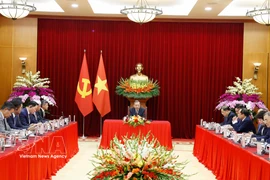
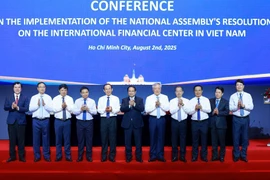
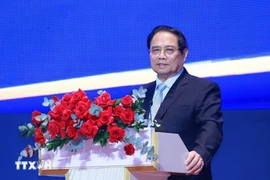
Addressing a national conference on August 2, Prime Minister Pham Minh Chinh underscored the urgency of the task, describing the IFC as critical not only for financial and monetary activities but also as broader hubs for capital mobilisation, technological advancement, skilled human resources, and modern governance. This centre will operate under a specialised legal regime to ensure international competitiveness.

HCM City, Da Nang fast-track deployment steps

In HCM City, plans are underway to locate the IFC in the Thu Thiem new urban area and parts of Sai Gon and Ben Thanh wards, covering a total of 793 ha. The project is expected cost 172 trillion VND (around 7 billion USD), with the core zone alone accounting for 16 trillion VND over the next two to three years.

Experts have emphasised the need for robust legal frameworks, investor-friendly policies, and modern infrastructure to support the centre’s operations.

Meanwhile, Da Nang has formed a preparatory committee led by Chairman of the municipal People’s Committee Luong Nguyen Minh Triet to direct the development of its IFC. The city has approved detailed zoning and land clearance plans for the 793-ha Bac My An–Son Tra zone, while also accelerating infrastructure development and investment promotion.

The core area of the IFC in Da Nang will be located on Vo Van Kiet street, covering 6.17 ha. Major upgrades to transport infrastructure, including the expansion of Lien Chieu Port and Chu Lai Airport, are also being planned to support large-scale logistics operations.

Developing high-quality human resources

Human resource development has been identified as a critical success factor. Chairman of the HCM City People’s Committee Nguyen Van Duoc noted that the city is working to improve training in finance, technology, digital transformation, and international law through partnerships with leading universities and global institutions. These collaborations will provide targeted academic programmes and real-world experience for future professionals.

Da Nang is also enhancing its international cooperation in education. A significant milestone was marked in July with the signing of a memorandum of understanding for a joint venture between the city and Terne Holdings Corporation and One Destination. As part of this effort, 100 scholarships will be granted to local students to pursue studies in Singapore starting in August 2025.

Secretary of the Da Nang Party Committee Nguyen Van Quang affirmed the city’s readiness in terms of infrastructure and human resources, adding that the IFC project aligns closely with the development of a free trade centre. Priority sectors include logistics, finance, insurance, and international trade, all of which are expected to drive investment from both domestic and international sources.

With strong policy direction, local political determination, a clear action roadmap, and collaboration with reputable international partners, HCM City and Da Nang are making steady headway toward establishing a world-class financial centre. Although the goal of launching operations by the end of 2025 is a challenge, it is still feasible./.
VNA

See more

Phin Ho Tra – a national five-star OCOP product. (Illustrative photo: VNA)

Hanoi to host Vietnam OCOP Festival 2025

The festival is seen a practical activity celebrating the achievements made by the capital and the country in 2025, affirming OCOP’s role in rural economic development, contributing to realising Vietnam’s aspiration for strong economic growth in the context of deep integration.

The expanded Hoa Binh Hydropower Plant (Photo baochinhphu.vn)

EVN launches major power projects

Among the flagship projects inaugurated was the expanded Hoa Binh Hydropower Plant with a total installed capacity of 480MW per year and average annual output of about 488 million kWh.

An ultra-intensive shrimp farming model linked with environmental protection in Ca Mau province. (Photo: VNA)

Fisheries take the lead in the Mekong Delta’s green transition

Across the Mekong Delta, leading aquaculture producers, processors and exporters, along with suppliers of inputs, are transitioning to circular, high-tech and clean production models that cut greenhouse gas emissions and comply with international certification standards.

A perspective view of the Red River Landscape Boulevard project in Hanoi (Photo: VNA)

Works starts on Hanoi’s Red River Landscape Boulevard Axis project

The project is among the 234 key works and projects being launched, inaugurated or technically opened simultaneously across 34 cities and provinces nationwide to mark the 14th National Party Congress. Its launch contributes to implementing the country’s strategic development orientations while concretising Hanoi’s development goals in the new period.

The ground-breaking ceremony of the Yen Bai 1 biomass power plant in Lao Cai province on December 19. (Photo: VNA)

Work starts on 114-million-USD biomass power plant in Lao Cai

The project, developed by Erex Yen Bai Biomass Power Co. Ltd. is located in Dong Cuong commune, Lao Cai province. It is backed by Japan’s Erex Group and falls under the Joint Crediting Mechanism, a bilateral initiative between Vietnam and Japan to reduce greenhouse gas emissions.

At the inauguration ceremony (Photo: VNA)

Vietnam Railways Corporation unveils upgraded coaches, digital tools

These moves reflect the VNR's commitment to fulfilling six priority tasks set by the Prime Minister, including leading in innovation and digital transformation, applying sci-tech in line with the Politburo’s Resolution No. 57-NQ/TW, and spearheading advances in digital, green and circular economy.

Producing MDF panels for export at Hai Duong MDF Construction and Manufacturing Co., Ltd., in Ho Chi Minh City (Photo: VNA)

HCM City targets 15 billion USD in wood exports by 2035

The merger of HCM City with Binh Duong and Ba Ria – Vung Tau is expected to give the local wood industry a strong boost into a phase of high-quality growth driven by linkages, innovation, sustainability, and deeper integration into global value chains.

Delegates cut a ribbon to inaugurate the expanded Terminal T2 at Noi Bai International Airport in Hanoi on December 19, 2025. (Photo: VNA)

Expanded Terminal T2 at Noi Bai International Airport makes debut

The project expands the terminal’s floor area to over 200,000 sq.m, increases passenger capacity from 10 million to 15 million, even up to 18 million per year, and boosts operational capacity with boarding gates rising from 17 to 30 and jet bridges from 14 to 27, meeting strong growth in international travel demand.

A section of Can Tho - Ca Mau Expressway (Photo: VNA)

Can Tho – Ca Mau travel time halves from December 19

Stretching more than 110 km with a total investment of over 27.5 trillion VND (1.04 billion USD), the project not only resolves long-standing traffic bottlenecks in the Mekong Delta, but also opens up new development opportunities for the entire region - especially Ca Mau, the last locality in the country to be directly connected to the eastern North–South expressway axis.