Vietnam, Czech Republic enhance law enforcement cooperation

To deepen cooperation, Deputy Minister of Public Security Senior Lieutenant General Le Quoc Hung proposed regular exchanges of delegations and experience in combating organised and transnational crime, drug-related offences, money laundering, high-tech crime and environmental crime.

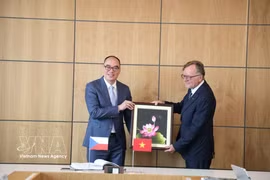
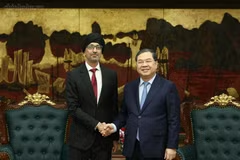
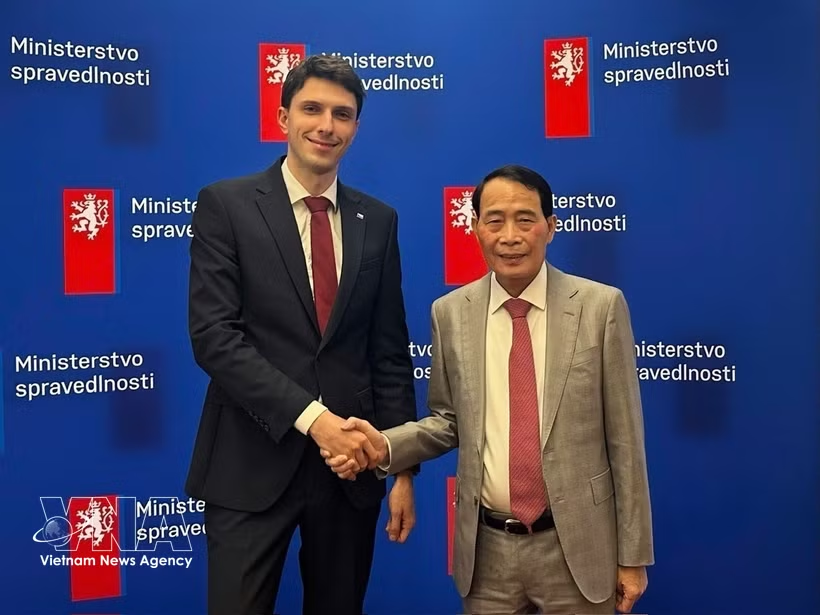
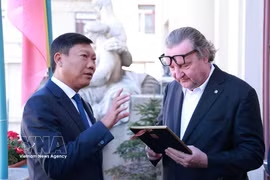
Deputy Minister of Public Security Senior Lieutenant General Le Quoc Hung (right) and Czech Deputy Justice Minister Adam Šimice (Photo: VNA)

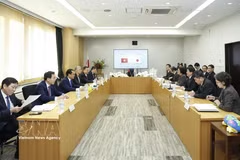
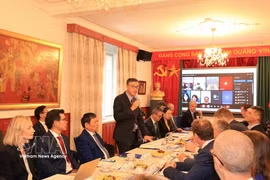
Prague (VNA) – Vietnam and the Czech Republic have agreed to step up cooperation in law enforcement, crime prevention and criminal sentence enforcement, while promoting collaboration on labour and visa matters during a working visit by Deputy Minister of Public Security Senior Lieutenant General Le Quoc Hung to the European country on October 11–12.

Working with representatives of the Czech Ministry of Justice on measures to enhance cooperation, Hung highlighted the positive development of relations between the two countries under the Strategic Partnership framework and existing agreements on crime prevention and control, the transfer of sentenced persons and the readmission of citizens, which provide a legal foundation for cooperation between law enforcement agencies.

The two sides have enhanced information exchange and verification concerning transnational crime, drug and human trafficking, money laundering and high-tech crime. They have also coordinated through Interpol channels and the Czech Police Liaison Officer’s Office in Vietnam to exchange information on Vietnamese nationals who committed crimes in the Czech Republic and are believed to be hiding in Vietnam.

Hung said around 100,000 Vietnamese nationals live, work, study and do business in the Czech Republic. The Vietnamese Ministry of Public Security had recently received no cases involving Vietnamese citizens illegally entering, leaving or migrating to the European nation, he noted, adding that citizens of both countries generally comply with the laws of their host countries.

To deepen cooperation, Hung proposed regular exchanges of delegations and experience in combating organised and transnational crime, drug-related offences, money laundering, high-tech crime and environmental crime. He also called for broader collaboration in digital transformation, cybersecurity, artificial intelligence applications in maintaining security and order, law enforcement training, criminal sentence enforcement and anti-corruption policymaking.

He urged both sides to effectively implement existing agreements, particularly the 2019 agreement on crime prevention and control and the 2017 agreement on the transfer of sentenced persons, and begin negotiations on an extradition treaty soon to meet practical needs.

Hung also proposed closer coordination in information verification, joint investigations and the apprehension of wanted persons, as well as considering a hotline to promptly address issues concerning the protection of senior leaders, representative offices and immigration management. He stressed the need to ensure the safety and security of each other’s citizens and representative offices and prevent any organisation or individual from using either country’s territory for activities directed against the other.

Czech Deputy Justice Minister Adam Šimice, who oversees European law and international cooperation, welcomed Vietnam’s attention to crime prevention and control, particularly anti-corruption efforts, stressing that corruption poses serious risks to national and global economies and requires enhanced international cooperation.

Šimice said the Czech Republic combines strict penalties for corruption with preventive measures, including public awareness campaigns and education. Its experience in developing and enforcing regulations on conflicts of interest, whistleblower protection and lobbying transparency could provide useful material for bilateral exchanges between the two countries.

He noted that existing agreements on police cooperation and crime-related information exchange provide a foundation for expanding collaboration. Regarding Vietnam’s proposal to send workers to the Czech Republic, he stressed that labour and immigration policies must address security risks, including forged documents and qualifications and recruitment scams run by organised criminal networks.

However, he reaffirmed his country’s commitment to supporting the Vietnamese community’s residence, employment and integration in line with local laws.

On this occasion, Vietnamese Ambassador to the Czech Republic Duong Hoai Nam called on the Czech Ministry of the Interior to advise the government on facilitating the recruitment of Vietnamese workers.

The diplomat also proposed visa exemptions for Vietnamese holders of official passports to facilitate delegation exchanges and cooperation between agencies. He expressed hope that this proposal could be considered during Czech Prime Minister Andrej Babiš’s expected visit to Vietnam, helping deliver tangible outcomes in bilateral relations./.
​

VNA

See more

At the talks between Vietnamese Minister of Agriculture and Environment Trinh Viet Hung and Japanese Minister of the Environment Sasagawa Hiroyoshi (Photo: VNA)

Vietnam, Japan fortify cooperation in environment, agriculture, marine economy

The Vietnamese and Chinese environment ministries will run policy dialogues, expert exchanges, human resources training, feasibility studies and technology transfer, aiming to pull companies and research institutes from both countries into environmental projects, particularly in areas where Vietnam needs capital and technology.

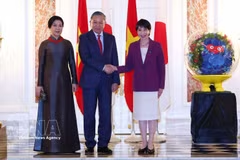
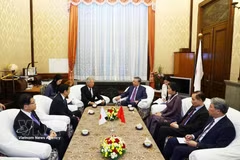
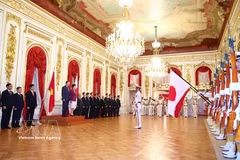
Japanese Prime Minister Takaichi Sanae hosts a welcome ceremony for General Secretary of the Communist Party of Vietnam Central Committee and President To Lam and his spouse in Tokyo on November 9. (Photo: VNA)

Vietnam, Japan issue Joint Vision Statement

The leaders of Vietnam and Japan affirmed that bilateral cooperation in areas including defence, security, the economy, economic security, energy resources, trade, investment, science, technology, agriculture, the environment, ocean management, education and training, labour, culture, sports, tourism, law and justice, locality cooperation and people-to-people exchanges has developed substantially and has continued to strengthen and broaden.

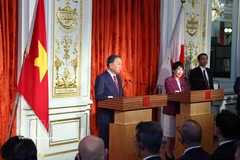
General Secretary of the Communist Party of Vietnam Central Committee and President To Lam and Japanese Prime Minister Takaichi Sanae meet the press in Tokyo on November 9 evening (local time) (Photo: VNA)

Top Vietnamese leader, Japanese PM meet the press after talks

The two sides agreed to issue the Vietnam–Japan Joint Vision Statement, lifting the Comprehensive Strategic Partnership to a new height as equal partners that accompany and co-create together on mutual benefit, for quality growth, strategic autonomy and self-reliance.

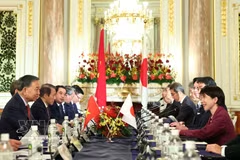
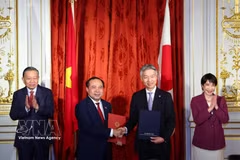
General Secretary of the Communist Party of Vietnam Central Committee and President To Lam and Japanese Prime Minister Takaichi Sanae witness the exchange of cooperation documents (Photo: VNA)

Vietnamese, Japanese leaders witness exchange of cooperation deals

General Secretary of the Communist Party of Vietnam Central Committee and President To Lam and Japanese Prime Minister Takaichi Sanae witnessed the exchange of nine cooperation documents out of 11 signed in total in Tokyo on November 9 evening (local time), as part of the top Vietnamese leader’s official Japan visit.

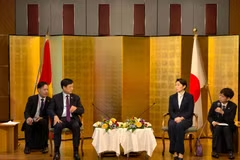
At the welcome ceremony for General Secretary of the Communist Party of Vietnam Central Committee and President To Lam (Photo: VNA)

Top Vietnamese leader welcomed in Japan on official visit

The visit is expected to turn agreements and commitments reached by high-ranking leaders into practical cooperation schemes and projects across various fields, and make positive contributions to each country’s development goals as well as global and regional peace, cooperation and development.

Vietnamese leaders extend congratulations on Cambodia’s 73rd Independence Day

Vietnamese leaders extend congratulations on Cambodia’s 73rd Independence Day

In its congratulatory message, the CPV Central Committee warmly congratulated Cambodia on its major achievements over the past 73 years. It expressed its confidence that under the wise reign of King Norodom Sihamoni and the leadership of the Senate, National Assembly, and Government, with the CPP led by President Hun Sen, playing a central role, Cambodia will continue to achieve new and more comprehensive successes.

Security forces and police are deployed outside the home of a shooting suspect in the town of Ostrowiec Świętokrzyski, Poland, on November 8. (Photo: PAP)

Vietnamese leaders send condolences over shooting in Poland

General Secretary of the Communist Party of Vietnam Central Committee and President To Lam and Prime Minister Le Minh Hung on November 9 sent messages of condolences to Polish President Karol Nawrocki and Prime Minister Donald Tusk over a recent mass shooting in the city of Krakow.

☕ Afternoon briefing on November 9

☕ Afternoon briefing on November 9

The Vietnam-Japan Public-Private Forum on Economic, Science and Technology Cooperation, the 2027 state budget plan approved, and the 9th Vietnam–Australia defence policy dialogue are among news highlights on November 9.

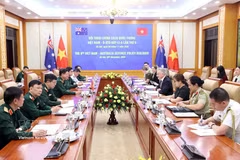
The 9th Vietnam–Australia defence policy dialogue in Hanoi on November 9, 2026 (Photo: VNA)

Vietnam, Australia hold 9th defence policy dialogue

The two sides agreed to effectively implement the common perceptions reached by the two countries' senior leaders and defence ministries, as reflected in the joint statement on deepening the Vietnam–Australia Comprehensive Strategic Partnership and the updated joint vision statement on further defence cooperation between the Australian Department of Defence and the Vietnamese Ministry of National Defence.

The plenary sitting during the 16th National Assembly's second session. (Photo: VNA)

NA debates amendments to Social Insurance Law, focusing on fund safety, risk control

Several deputies supported expanding compulsory social insurance coverage to include digital platform workers and those without formal employment contracts, particularly informal workers, delivery workers and technology-based drivers. However, they stressed the need for an appropriate roadmap and clear regulations on contribution obligations, calculation methods and the responsibilities of digital platforms.

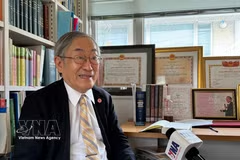
Prof. Furuta Motoo, former Rector of the Vietnam–Japan University (Photo: VNA)

President Ho Chi Minh’s 1946 diplomacy combines steadfastness, flexibility: Japanese expert

In 1946, as President of the Democratic Republic of Vietnam, Ho Chi Minh pursued efforts to ease tensions through both official and informal channels. In addition to official diplomatic negotiations with French government leaders, he met leaders of political parties and forces across the political spectrum, held press conferences, gave interviews, and engaged with the French public.