Government issues mechanisms to attract experts, young talent to data innovation, exploitation

Decree No. 386/2026/ND-CP dated October 12, comprises five chapters and 54 articles specifying mechanisms to attract experts, young talent and breakthrough initiatives; access to and exploitation of data; financing and venture capital; dedicated data innovation spaces; and the development of data products and services, and the data economy.

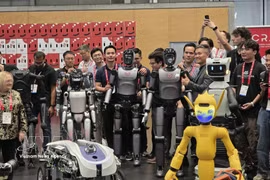
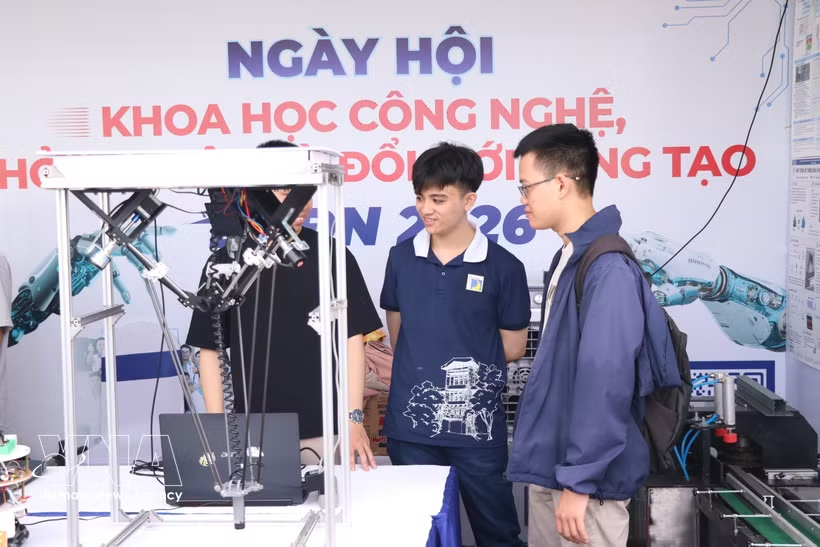
Students from the University of Science and Technology under the University of Da Nang showcase their technology products at the 2026 Technology, Entrepreneurship, and Innovation Festival (Photo: VNA)

Hanoi (VNA) - Deputy Prime Minister Ho Quoc Dung has signed a decree stipulating breakthrough development mechanisms for innovation and the exploitation of national data, as well as activities at the Data Innovation and Exploitation Centre under the National Data Centre.

Decree No. 386/2026/ND-CP dated October 12, comprises five chapters and 54 articles specifying mechanisms to attract experts, young talent and breakthrough initiatives; access to and exploitation of data; financing and venture capital; dedicated data innovation spaces; and the development of data products and services, and the data economy.

The decree applies to the centre, Vietnamese and foreign agencies, organisations and individuals involved in innovation and data exploitation activities in Vietnam.

Particularly, along with providing detailed criteria for experts and young talents, Article 5 of the decree sets out mechanisms for attracting them to innovation and data exploitation activities. Accordingly, eligible experts and young talent will be entitled to one or more preferential policies, including those in recruitment, financial support, training, and scientific research.

According to the decree, agencies and organisations may enter into special agreements with experts and young talent on salaries, bonuses, intellectual property rights, rights to exploit research results, and the sharing of benefits generated by products, services, initiatives and added value from data innovation and exploitation. Such arrangements must ensure transparency and a balance of interests among the State, employing organisations and the experts or young talent concerned.

Income will be determined according to the performance of assigned tasks, positions held, products delivered, level of contribution and output results. Heads of agencies and organisations are authorised to approve income, bonuses and benefit-sharing rates after obtaining opinions from relevant professional units or evaluation councils. For tasks funded by the state budget, approval authority must comply with laws on state budget management, science and technology, innovation and other relevant legislation.

Funding may come from state budget allocations for assigned tasks, lawful revenues of the relevant units, or socialised funding, sponsorships and aid in accordance with the law. Expenditure must be used for its intended purposes, remain within approved estimates, be supported by documentation and be subject to internal controls.

Experts and young talent will receive the most favourable personal income tax incentives available under tax legislation, including personal income tax exemptions equivalent to those provided under the financial policy framework for international financial centres in Vietnam.

Those receiving incentives must commit to fulfilling assigned tasks, delivering specified products and results, meeting implementation schedules, and complying with the law, agreements, contracts or task-assignment decisions.

Incentives may be terminated, adjusted or withdrawn in accordance with the relevant agreement, contract, incentive decision and applicable law if recipients fail to meet their output commitments, breach their obligations, misuse the incentives, cease to satisfy eligibility conditions, or commit fraud or deliberate violations of the law.

However, incentives will not be withdrawn for objective risks that have been identified, reported and handled in accordance with the prescribed procedures, or for failed experiments falling within the accepted risk parameters for science and technology and innovation activities under Article 52 of the decree and other relevant legislation.

The decree will take effect on December 1, 2026./.

VNA

See more

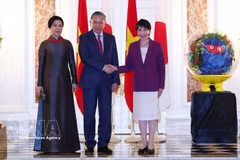
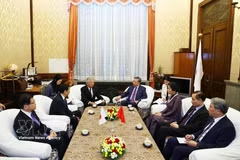
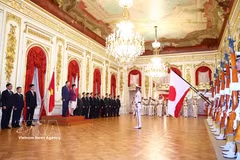
Japanese Prime Minister Takaichi Sanae hosts a welcome ceremony for General Secretary of the Communist Party of Vietnam Central Committee and President To Lam and his spouse in Tokyo on November 9. (Photo: VNA)

Vietnam, Japan issue Joint Vision Statement

The leaders of Vietnam and Japan affirmed that bilateral cooperation in areas including defence, security, the economy, economic security, energy resources, trade, investment, science, technology, agriculture, the environment, ocean management, education and training, labour, culture, sports, tourism, law and justice, locality cooperation and people-to-people exchanges has developed substantially and has continued to strengthen and broaden.

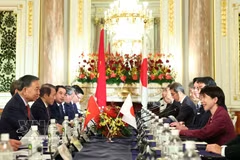
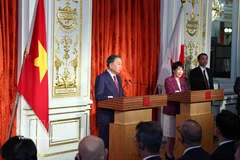
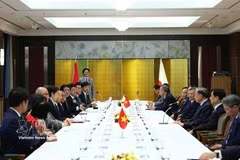
General Secretary of the Communist Party of Vietnam Central Committee and President To Lam and Japanese Prime Minister Takaichi Sanae meet the press in Tokyo on November 9 evening (local time) (Photo: VNA)

Top Vietnamese leader, Japanese PM meet the press after talks

The two sides agreed to issue the Vietnam–Japan Joint Vision Statement, lifting the Comprehensive Strategic Partnership to a new height as equal partners that accompany and co-create together on mutual benefit, for quality growth, strategic autonomy and self-reliance.

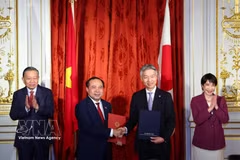
General Secretary of the Communist Party of Vietnam Central Committee and President To Lam and Japanese Prime Minister Takaichi Sanae witness the exchange of cooperation documents (Photo: VNA)

Vietnamese, Japanese leaders witness exchange of cooperation deals

General Secretary of the Communist Party of Vietnam Central Committee and President To Lam and Japanese Prime Minister Takaichi Sanae witnessed the exchange of nine cooperation documents out of 11 signed in total in Tokyo on November 9 evening (local time), as part of the top Vietnamese leader’s official Japan visit.

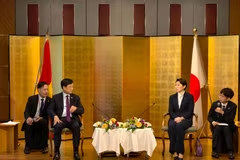
At the welcome ceremony for General Secretary of the Communist Party of Vietnam Central Committee and President To Lam (Photo: VNA)

Top Vietnamese leader welcomed in Japan on official visit

The visit is expected to turn agreements and commitments reached by high-ranking leaders into practical cooperation schemes and projects across various fields, and make positive contributions to each country’s development goals as well as global and regional peace, cooperation and development.

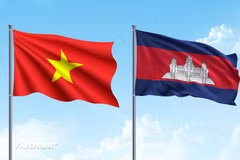
Vietnamese leaders extend congratulations on Cambodia’s 73rd Independence Day

Vietnamese leaders extend congratulations on Cambodia’s 73rd Independence Day

In its congratulatory message, the CPV Central Committee warmly congratulated Cambodia on its major achievements over the past 73 years. It expressed its confidence that under the wise reign of King Norodom Sihamoni and the leadership of the Senate, National Assembly, and Government, with the CPP led by President Hun Sen, playing a central role, Cambodia will continue to achieve new and more comprehensive successes.

Security forces and police are deployed outside the home of a shooting suspect in the town of Ostrowiec Świętokrzyski, Poland, on November 8. (Photo: PAP)

Vietnamese leaders send condolences over shooting in Poland

General Secretary of the Communist Party of Vietnam Central Committee and President To Lam and Prime Minister Le Minh Hung on November 9 sent messages of condolences to Polish President Karol Nawrocki and Prime Minister Donald Tusk over a recent mass shooting in the city of Krakow.

☕ Afternoon briefing on November 9

☕ Afternoon briefing on November 9

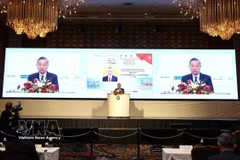
The Vietnam-Japan Public-Private Forum on Economic, Science and Technology Cooperation, the 2027 state budget plan approved, and the 9th Vietnam–Australia defence policy dialogue are among news highlights on November 9.

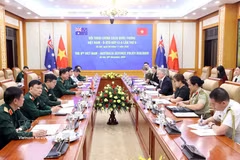
The 9th Vietnam–Australia defence policy dialogue in Hanoi on November 9, 2026 (Photo: VNA)

Vietnam, Australia hold 9th defence policy dialogue

The two sides agreed to effectively implement the common perceptions reached by the two countries' senior leaders and defence ministries, as reflected in the joint statement on deepening the Vietnam–Australia Comprehensive Strategic Partnership and the updated joint vision statement on further defence cooperation between the Australian Department of Defence and the Vietnamese Ministry of National Defence.

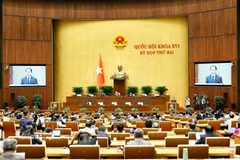
The plenary sitting during the 16th National Assembly's second session. (Photo: VNA)

NA debates amendments to Social Insurance Law, focusing on fund safety, risk control

Several deputies supported expanding compulsory social insurance coverage to include digital platform workers and those without formal employment contracts, particularly informal workers, delivery workers and technology-based drivers. However, they stressed the need for an appropriate roadmap and clear regulations on contribution obligations, calculation methods and the responsibilities of digital platforms.

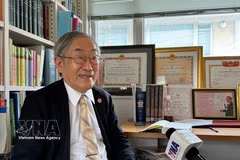
Prof. Furuta Motoo, former Rector of the Vietnam–Japan University (Photo: VNA)

President Ho Chi Minh’s 1946 diplomacy combines steadfastness, flexibility: Japanese expert

In 1946, as President of the Democratic Republic of Vietnam, Ho Chi Minh pursued efforts to ease tensions through both official and informal channels. In addition to official diplomatic negotiations with French government leaders, he met leaders of political parties and forces across the political spectrum, held press conferences, gave interviews, and engaged with the French public.