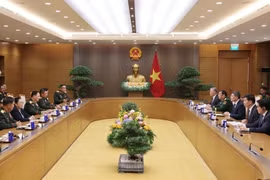
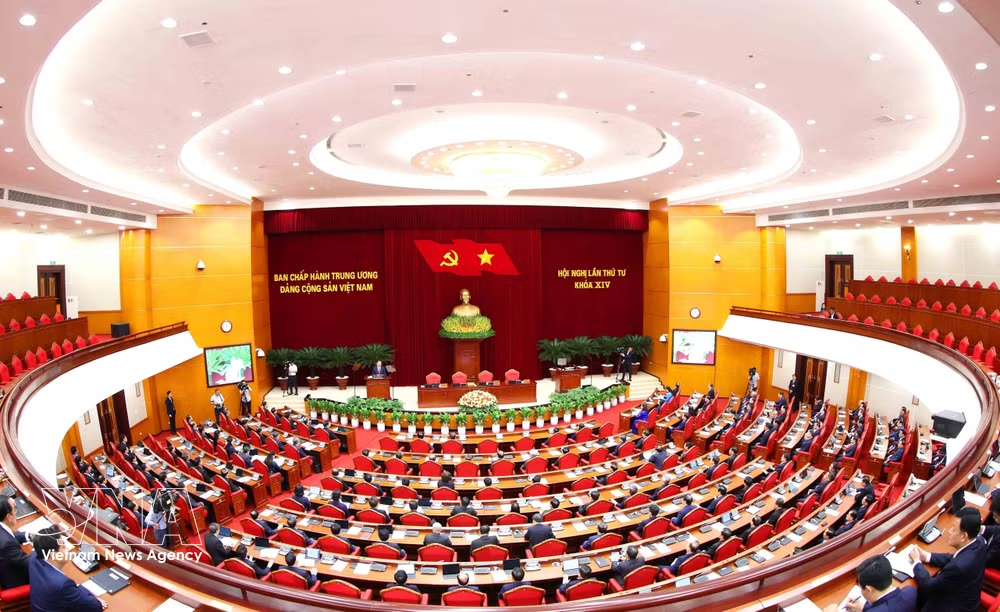
Hanoi (VNA) – The fourth plenum of the 14th Communist Party of Vietnam Central Committee, held from October 5 to 8, 2026, discussed a draft national strategy for attracting and making effective use of talented people in key sectors and fields to support the country’s fast and sustainable development.
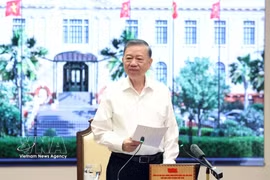
At a working session with the Government’s Party Committee on August 24, General Secretary of the Party Central Committee and President To Lam stressed that developing, attracting and effectively utilising talent must be part of the country’s overall development strategy, with national interests and the requirements of strategic tasks serving as the paramount guiding principles.
The draft strategy identifies talent as a special strategic resource closely linked to reform of personnel work. Its overall goal is to place Vietnam among ASEAN’s top three countries in global talent competitiveness by 2030.
Specific targets include ensuring that talented people account for at least 20% of new recruitment in the public sector, with 100% of them remaining in their jobs after five years. Talented people trained in science and technology are expected to account for 60% by 2030 and 100% by 2050.
Key measures include reforming recruitment, assessing performance based on practical results rather than formal qualifications, granting authority while protecting those willing to think big and take action, and improving incentive policies.
What, then, defines talent? Under the Prime Minister's Decision No. 899/QD-TTg, dated July 31, 2023, approving the national strategy on attracting and making effective use of talent through 2030, with a vision to 2050, talented people are identified by several core criteria. These include strong moral character and a proper lifestyle; a commitment to serving the Fatherland and the people; outstanding professional qualifications, thinking and creativity; and proven research, inventions, achievements or contributions that advance a sector, locality or the country.
The strategy focuses on four main groups: school and university students with high academic results; young people with valuable scientific research and independent, creative research capabilities; talented people in culture, arts, sports and other professions; and outstanding entrepreneurs, managers and leaders.
Attracting and making effective use of talent is a specialised national strategy. However, it must be understood as “a specialised part of a broader whole” because talent is a valuable national resource and talent policies are closely linked to the country’s overall socio-economic development strategy.
In essence, the talent strategy forms part of the national development strategy. People must be identified, assigned tasks and given authority according to the country’s development needs and goals at each stage.
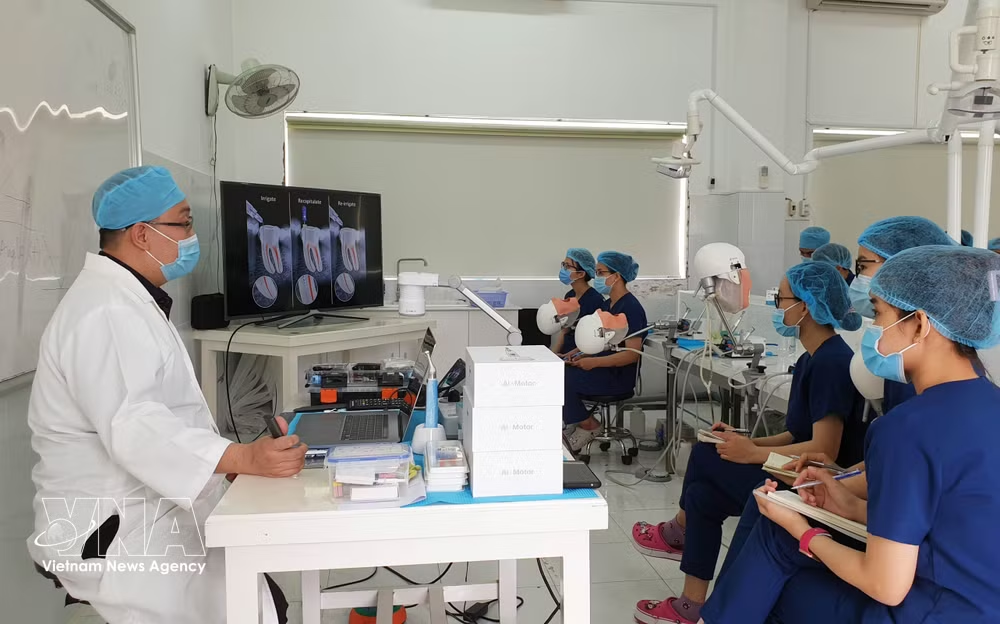
The Party and State have consistently attached importance to attracting and using people who are both politically committed and professionally capable. As Vietnam enters the digital era and faces new development requirements, however, a coordinated and comprehensive national strategy for developing its human resources has become increasingly urgent.
National governance and business management are changing rapidly, requiring creative thinking, digital technology and high-quality human resources to achieve breakthroughs. The legal framework and mechanisms for attracting talent have also been broadened.
New economic thinking is prompting the State, organisations and businesses to move beyond waiting for talented people to approach them and instead actively seek high-quality personnel.
Talent policies are also moving beyond short-term incentives towards three key factors: “the right person, the right job and the right environment”.
However, attracting talented people and retaining them for long-term contributions has never been easy. In addition to fierce competition in the labour market, organisations need genuinely attractive salaries and benefits, as well as transparent performance evaluation criteria, to meet candidates’ increasingly high expectations of their working environments.
Experts have proposed breakthrough mechanisms to identify, attract and make effective use of talent. These should ensure that the Party’s guidelines and policies are translated into State laws and regulations, meet the demand for high-quality personnel across organisations in the political system, and establish clear priorities for long-term talent development and recruitment.
Such mechanisms must include substantive evaluation criteria that go beyond qualifications to assess intellectual ability, practical competence, work performance and outstanding moral qualities.
Cooperation should be strengthened among Party agencies, State management bodies and educational institutions. Mechanisms should also enable the public to play a greater role in recommending and nominating talented people.
The effective use of talent requires scientific and appropriate placement, ensuring that people are assigned jobs suited to their abilities. This should improve organisational performance while encouraging talented individuals to devote themselves fully to the Party and their respective organisations and agencies. Their responsibilities and authority must be matched by appropriate resources, duties and measurable results.
Legal documents should establish specific regulations that take into account the staffing, financial and resource conditions of individual ministries, sectors and localities, while ensuring fair competition and a balanced allocation of resources.
The draft national strategy must also address the shortcomings identified by General Secretary and President Lam, who noted that despite numerous Party and State policies and laws on training, developing, attracting, using and protecting talent, efforts to identify, attract and make effective use of talented people remain limited and inadequate, falling short of the country’s development needs in the new period./.