Hanoi (VNA) – Vietnam has highlighted three internationally recognised community-based tourism models at an international conference in Azerbaijan, sharing its experience in promoting sustainable tourism through community empowerment and cultural preservation.
Nguyen Thi Hoa Mai, Deputy Director-General of the Vietnam National Authority of Tourism (VNAT), led a Vietnamese delegation to the international conference “Circular Green Tourism in the CICA countries”, where she presented Vietnam's experience in developing community-based tourism.
The event was organised by the State Tourism Agency of Azerbaijan as part of the country’s chairmanship of the Conference on Interaction and Confidence-Building Measures in Asia (CICA). It brought together over 120 participants, including high-level delegations from 18 CICA member states, tourism authorities, government agencies, academia, hospitality groups, and civil society organisations.
In her speech at the event, Mai said a key question facing the global tourism industry is how tourism can help create destinations where local culture, community life and visitor experiences reinforce one another.
For Vietnam, she said, tourism is not merely about attracting visitors but also serves as a driver of local development, heritage preservation, livelihood improvement and greater intercultural understanding.
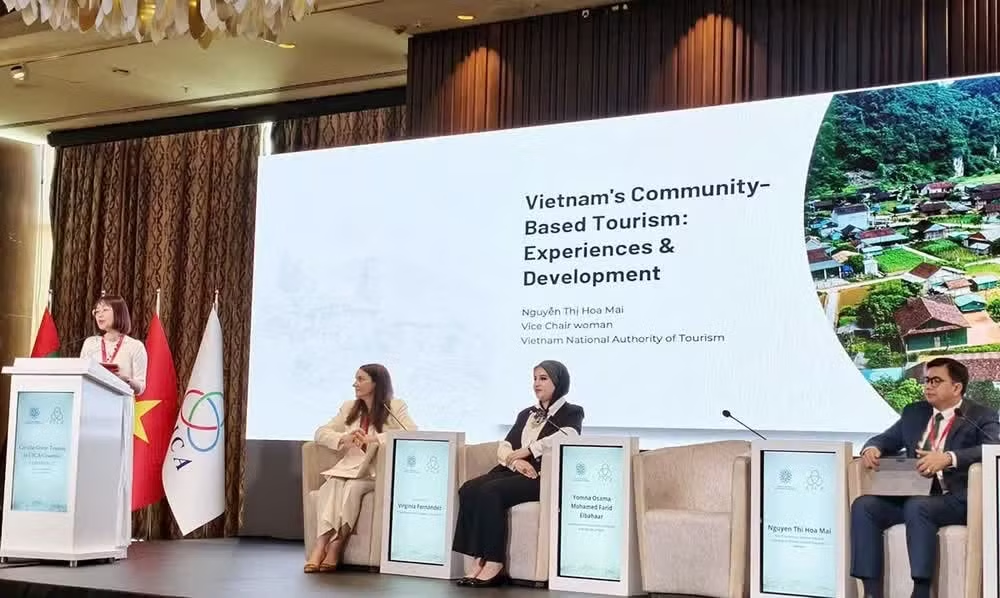
The official noted that the Vietnamese Government considers community-based tourism an important pillar of sustainable tourism development. This orientation has been institutionalised through the Law on Tourism, the Vietnam Tourism Development Strategy to 2030, and the national target programme on new-style rural area development and socio-economic development in ethnic minority and mountainous areas.
Mai stressed that local communities should not remain passive beneficiaries of tourism but should become active participants and decision-makers in destination development.
In line with this approach, Vietnam has introduced a wide range of policies to support local people in infrastructure investment, vocational training, entrepreneurship and greater participation in destination management.
To illustrate the country's people-centred approach, she introduced three outstanding tourism models.
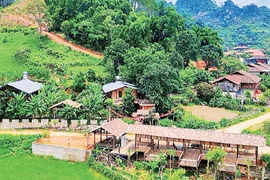
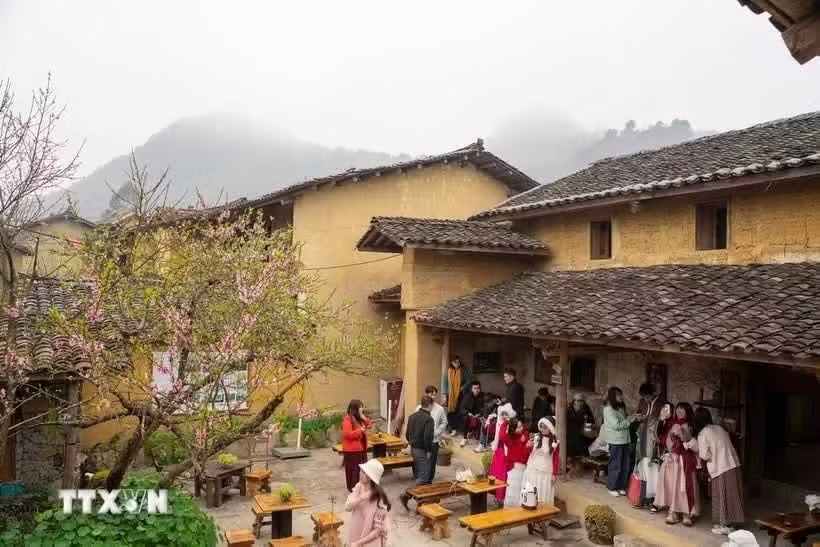
The Thai Hai Ecological Stilt House Village in the northern province of Thai Nguyen was highlighted as a successful example of preserving living heritage through its "three together" model – sharing meals, sharing income and living together in a communal space. The model has helped safeguard the cultural identity of the Tay ethnic group while creating sustainable livelihoods for local residents.
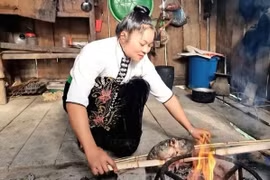
The Lo Lo Chai Community-based Cultural Tourism Village in the northern province of Tuyen Quang demonstrates how tourism can foster cultural pride and strengthen ethnic identity. By placing the local community at the centre of tourism development, the village has turned the preservation of traditional Lo Lo ethnic architecture and cultural practices into a foundation for sustainable prosperity.
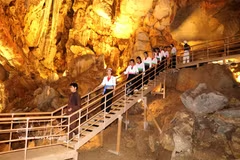
Mai also introduced a model of climate-adaptive tourism in Tan Hoa of the central province of Quang Tri. Frequently affected by floods, the local community has developed floating houses that enable residents to adapt to climate change while combining them with tourism activities linked to the Tu Lan cave system. The model exemplifies how tourism can contribute to strengthening resilience to environmental challenges.
Drawing on these examples, she said tourism should never turn communities into tourism products. Instead, it should empower local people to tell their own stories, preserve their own heritage and shape their own future. Tourism, she added, should be viewed as a partnership between host communities and visitors.
"When local people benefit from tourism, they have stronger momentum to protect their cultural and natural heritage. When communities take pride in their heritage, visitors enjoy more authentic and meaningful experiences. And when visitors respect local culture and the environment, destinations become more sustainable," the Deputy Director-General said.
The official discussed Vietnam's belief that the future of tourism lies in placing communities at the centre, culture as the foundation and sustainability as the target, thereby creating distinctive destinations and promoting inclusive growth./.