After Hanoi, Ho Chi Minh City and Da Nang, what new chapter will Phu Quoc bring to Vietnam’s Michelin map?

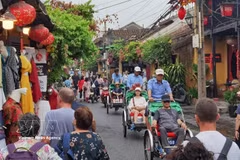
From 2023 to 2026, the Michelin Guide helped define Vietnam’s culinary landscape through three distinct destinations: Hanoi, refined and deeply rooted in heritage and traditional flavours; Ho Chi Minh City, dynamic, diverse and endlessly inventive; and Da Nang, approachable yet rich in the distinctive tastes of central Vietnam.

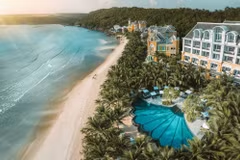
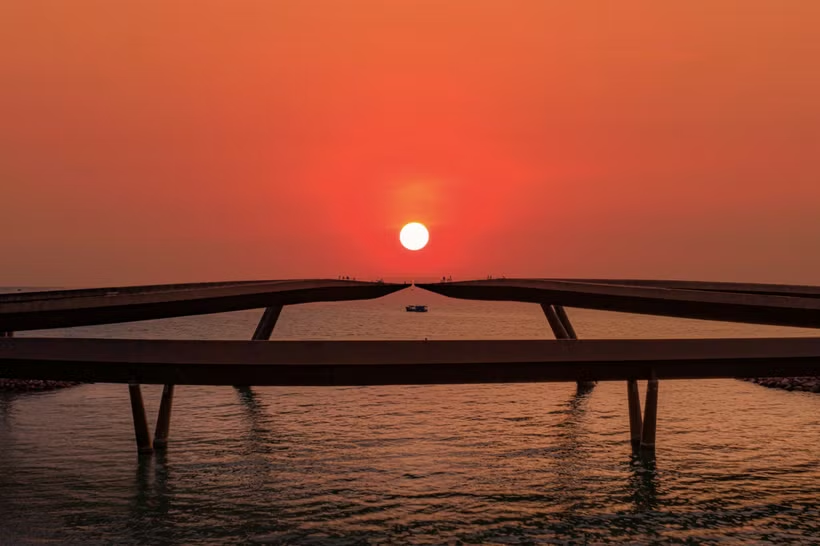
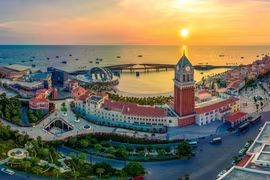
In Phu Quoc, even the island’s sunset can become part of the sensory experience of dining.

Hanoi (VNA) - After Hanoi, Ho Chi Minh City and Da Nang, the Michelin Guide is heading offshore in Vietnam for the first time, turning its attention to Phu Quoc - an island where the dining experience is shaped not only by what is on the plate, but also by the sea, local produce, fishing-village traditions and internationally inspired resort dining.​

An island terroir the mainland cannot replicate​

From 2023 to 2026, the Michelin Guide helped define Vietnam’s culinary landscape through three distinct destinations: Hanoi, refined and deeply rooted in heritage and traditional flavours; Ho Chi Minh City, dynamic, diverse and endlessly inventive; and Da Nang, approachable yet rich in the distinctive tastes of central Vietnam.

What all three have in common, however, is that they are mainland cities, where dining is largely woven into the pace and energy of urban life.

Phu Quoc’s inclusion in the Michelin Guide’s 2027 selection marks a departure from that familiar trajectory. For the first time in Vietnam, Michelin is venturing onto an island. Away from the confines of the city, dining in Phu Quoc is inseparable from its natural surroundings, where the sea, the breeze and even the sunset become part of the flavor, atmosphere and emotion of a meal.

For food lovers, “terroir” - the influence of soil, climate and environment on the character of ingredients - is what gives a culinary destination an identity that is difficult to reproduce elsewhere.

Phu Quoc possesses that advantage naturally, set between the warm waters of the Gulf of Thailand and stretches of primeval forest. It can be tasted in the deep salinity and lingering sweetness of fish sauce aged in wooden barrels, the pungent heat of Phu Quoc pepper, and the freshness of Ham Ninh crab, sea urchin and herring brought in straight from the ocean.

On the island, the distance from sea to table can sometimes be measured in footsteps, allowing dishes to retain an unmistakable taste of the ocean.

The vitality of Phu Quoc’s fishing-village culture is equally evident in local staples. There is bun quay, with fresh shrimp and fish paste spread along the side of a steaming bowl before being cooked with hot broth, and bun ken, a rich, aromatic noodle dish made with coconut milk.

Commenting on Phu Quoc’s culinary scene, Michelin Guide International Director Gwendal Poullennec said: “What particularly caught the inspectors’ attention was the harmonious combination of rustic fishing-village food culture and an evolving culinary scene shaped by international gastronomic talent".​

From rustic fishing villages to world-class resort dining​

If Phu Quoc’s seafood and fishing-village traditions are the island’s raw gems, its luxury resort ecosystem, particularly in the south is helping polish them for an international audience.

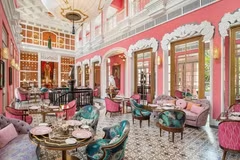
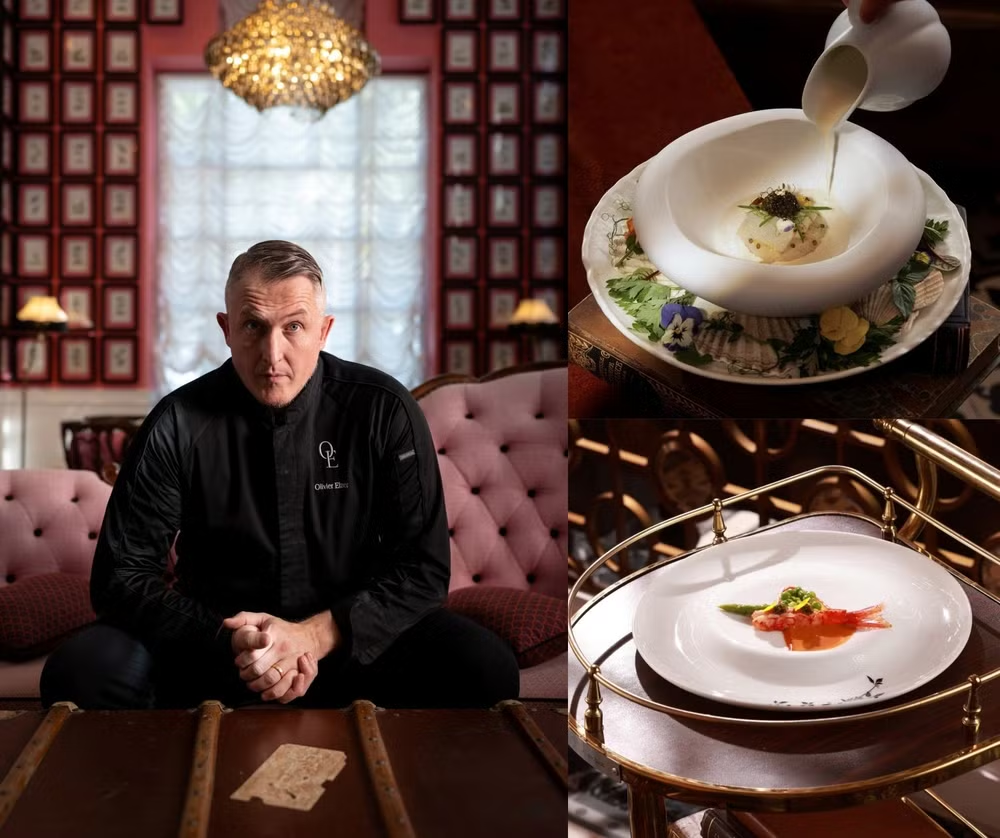
One of the clearest examples is Pink Pearl by Olivier E. at JW Marriott Phu Quoc Emerald Bay, where acclaimed chef Olivier Elzer brings together French-Mediterranean cuisine with fresh seafood and ingredients from the island.

Dining inside the pink mansion, inspired by 1920s aristocratic architecture and designed by celebrated architect Bill Bensley, turns the fine-dining experience into a story in itself.
am-thuc-jw-marriot.jpg
At Pink Pearl by Olivier E. at JW Marriott Phu Quoc, French-Mediterranean cuisine is paired with the fresh seafood and distinctive flavors of the island.

Along the shores of Khem Beach and Ong Doi Cape, the spirit of fishing-village cuisine is being reinterpreted by international chefs in five-star surroundings.

At Herring Bar at Premier Residences Phu Quoc Emerald Bay, local favourites such as herring salad, baby squid and sun-dried mackerel are given a refined presentation in a beachfront setting.

COCO Beach House at New World Phu Quoc Resort celebrates Vietnamese-style grilled seafood beneath the elegant thatched roofs of the resort, while Corallo at Premier Village Phu Quoc Resort takes a more freewheeling approach, pairing island seafood with premium imported ingredients.

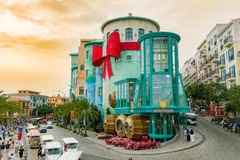
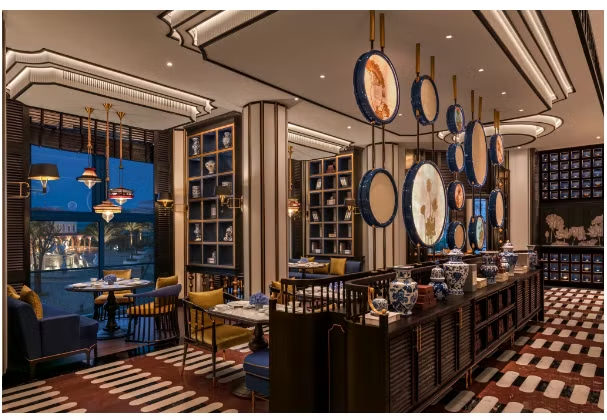
In Sunset Town, meanwhile, La Festa Phu Quoc – Curio Collection by Hilton offers a more cosmopolitan culinary journey. Seta specializes in refined contemporary Cantonese cuisine, while Mare channels the flavors of Italy’s Amalfi Coast, bringing a touch of the Mediterranean to Phu Quoc’s seaside setting.
screenshot-2026-10-09-182325.png
Seta at La Festa Phu Quoc – Curio Collection by Hilton is known for its refined take on contemporary Cantonese cuisine.

Across these dining experiences, the line between “local” and “international” is increasingly blurred. The island’s fresh ingredients inspire celebrated chefs, while world-class culinary techniques, in turn, give Phu Quoc’s local produce a new platform on the international dining stage.

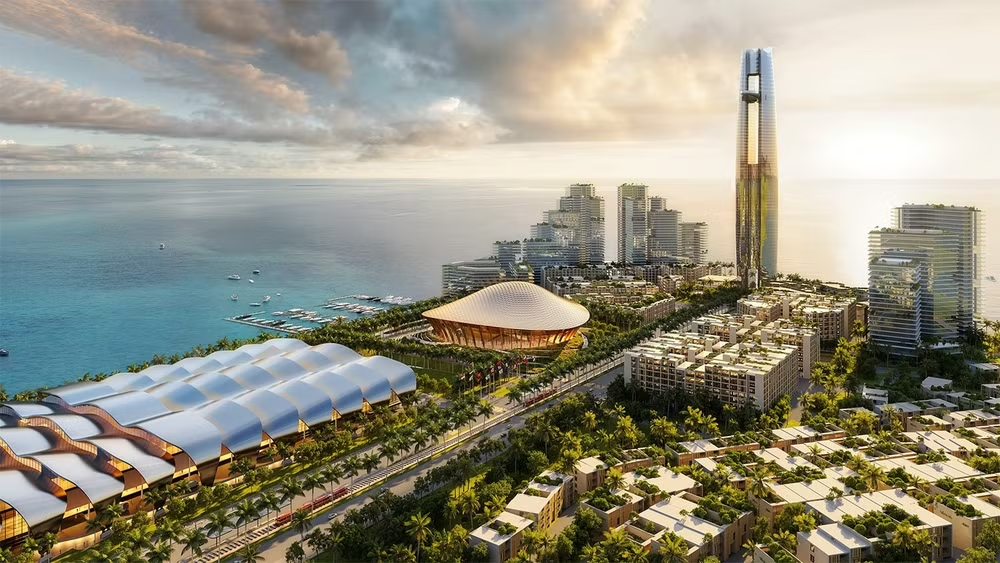
The Michelin Guide’s arrival in Phu Quoc ahead of the 2027 APEC Economic Leaders’ Week also carries broader significance.

As affluent travelers, business leaders and international political figures arrive on the island, food has the potential to serve as a form of soft diplomacy - telling the story of a Phu Quoc that remains deeply rooted in local identity while embracing a more cosmopolitan future.
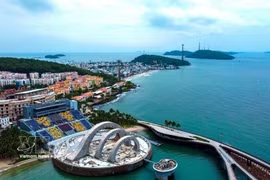
trung-tam-hoi-nghi-apec-1.jpg
As Phu Quoc hosts APEC 2027, its cuisine could become a “soft ambassador” for an island that is both deeply rooted in tradition and increasingly international in outlook.

So what might persuade travelers who have already eaten their way through Hanoi, Ho Chi Minh City and Da Nang to take another flight, this time to Phu Quoc?

The answer lies in an experience where dining is not a standalone activity, but part of a broader, multisensory island escape.

A day might begin with a steaming bowl of bun quay, followed by herring salad beneath the coconut palms of Khem Beach at lunchtime. By late afternoon, travelers could sip Italian wine at Mare while watching the sun set behind Kiss Bridge, before ending the evening with refined French cuisine inside Pink Pearl’s distinctive pink mansion, accompanied by the sound of waves outside.

If Hanoi, Ho Chi Minh City and Da Nang have demonstrated the breadth of Vietnam’s urban culinary landscape, Phu Quoc adds another dimension: that of an island destination where food, nature and resort living are deeply intertwined.

The Michelin Guide’s 2027 milestone is therefore about more than recognising outstanding kitchens. It also has the potential to position Phu Quoc as one of the region’s emerging “culinary islands” - a destination where discerning travelers come not only to unwind, but to taste, explore and immerse themselves in the flavors of a place./.
​

VNA

See more

Sun Group’s resort in Da Nang tops the Asian resort category at Condé Nast Traveler’s 2026 Readers’ Choice Awards. (Photo: Sun Group)

Condé Nast Traveler names InterContinental Danang Best Resort in Asia for 2026

On October 6, Condé Nast Traveler announced its “Top 15 Resorts in Asia” list as part of the 2026 Readers’ Choice Awards. InterContinental Danang Sun Peninsula Resort ranked first with a score of 98.76, ahead of Wildflower Hall, Shimla - an Oberoi resort in India - which placed second with 98.56. The Oberoi Vindhyavilas Wildlife Resort, Bandhavgarh, took third place with 98.36.

Tourists experience the buckwheat flower season on the Dong Van Karst Plateau. (Photo: VNA)

Buckwheat blossoms help extend tourism season in stone plateau

Phan Duc Nam, Chairman of the Dong Van commune People's Committee, said the locality is focusing not only on flower cultivation but also on improving landscapes, environmental sanitation and tourism services. The goal is to give visitors more reasons to stay longer and return at other times of the year.

For leisure travellers, a dining venue worth experiencing can be a decisive factor in choosing a destination. (Photo: New World Phu Quoc)

From APEC to Michelin: New opportunities for Phu Quoc to extend stays, boost spending

Gwendal Poullennec, International Director of the Michelin Guide, has observed that Phu Quoc’s culinary identity is shaped by the interplay between fishing-village food culture and restaurants with an international character. This provides a foundation for the island to develop itineraries offering a variety of experiences and price points.

Pu Luong community-based ecotourism site in Thanh Hoa province attracts visitors during National Day holiday. (Photo published by VNA)

Travel firms drive tourist flows, boost tourism value

Travel companies should play a key role in directing tourist flows and linking the tourism value chain, thus enhancing the competitiveness of the tourism sector. They should go beyond selling tours to understand market demand, design products, connect services, organise tourist flows, manage risks and contribute to shaping destination images.

The picturesque scenery outside Phong Nha Cave (Phong Nha-Ke Bang National Park) (Photo published by VNA)

Vietnam steps up tourism promotion on global markets

Experts say that to turn advantages into high-value tourist arrivals, tourism promotion needs to move beyond fragmented activities towards large-scale, long-term campaigns tailored to target markets and closely linked to actual visitor experiences.

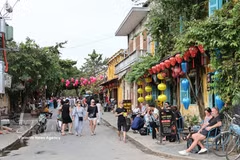
Visitors tour Hoi An Ancient Town in Da Nang city. (Photo: VNA)

Vietnam’s tourism targets 12% of GDP by 2030

Resolution 26-NQ/TW targets a direct GDP contribution of 10–12% by 2030, 45–50 million foreign arrivals, 160 million domestic visitors, and total revenue of 80–90 billion USD.

Located on Apollo Square in the heart of Sunset Town, Phu Quoc, Apollo Cafe is a distinctive venue designed by renowned architect Bill Bensley.

Coffee beneath an “upside-down” town: A surreal stop in Phu Quoc

With an entire town recreated on its ceiling, sweeping sunset views and a vantage point for watching fireworks after dark, Apollo Cafe in Phu Quoc offers more than a photogenic backdrop. Designed by Bill Bensley, the venue shows how a café can become an experience travellers deliberately build into their itinerary.

Vietnam is named Asia's Leading Destination for the eighth time and Asia's Leading Heritage Destination for the fourth time at the 2026 World Travel Awards. (Photo: VNA)

Vietnam strengthens tourism profile with WTA 2026 honours

The awards demonstrate that Vietnam's tourism appeal is being recognised across a broad range of areas, from national, urban and heritage destinations to nature-based attractions and tourism products and services, further strengthening the country's presence on the regional and international tourism map

Terraced fields shimmering with water create a picturesque scene in Lang Sang Village, Ta Xua Commune. (Photo: VNA)

Ta Xua named Asia’s leading emerging tourism destination 2026

In recent years, Ta Xua, dubbed "the paradise of clouds", has emerged as one of the mountainous destinations attracting strong interest from young travellers, particularly for its spectacular sea of clouds stretching across the mountains in the northwestern region.

AirAsia highlights Kem Beach as a family-friendly destination, where children can play on the sand while parents enjoy a little more time relaxing by the sea. (Photo: VNA)

AirAsia recommends Phu Quoc as ideal destination for family travel

A familiar low-cost airline among Southeast Asian travellers, AirAsia describes Phu Quoc in its blog guide to travelling with young children as a destination that feels almost tailor-made for families, with beaches for relaxation, leisure attractions and a wide range of activities to engage children of different ages.

Ho Chi Minh City Central Post Office remains a popular attraction for domestic and international tourists. (Photo: VNA)

Ho Chi Minh City wins three top Asian tourism awards in 2026

The 2026 honours add to the city’s impressive streak at international tourism awards. In the 2025 WTA, the southern metropolis took home four titles, including business travel and festival and event destination awards, which it had won for four years from 2022 to 2025.