Vietnam steps up tourism promotion on global markets

Experts say that to turn advantages into high-value tourist arrivals, tourism promotion needs to move beyond fragmented activities towards large-scale, long-term campaigns tailored to target markets and closely linked to actual visitor experiences.

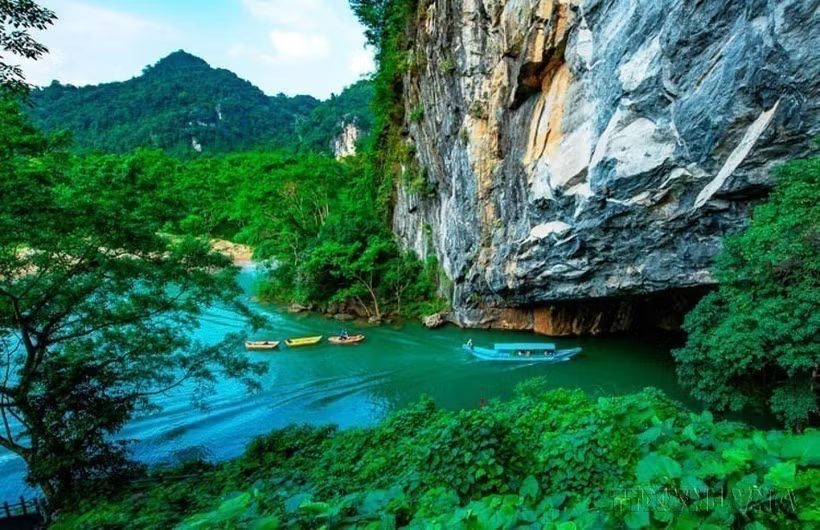
The picturesque scenery outside Phong Nha Cave (Phong Nha-Ke Bang National Park) (Photo published by VNA)

Hanoi (VNA) – Vietnam has abundant natural landscapes, cultural heritage and cuisine that can compete with many destinations in the region. However, experts say that to turn these advantages into high-value tourist arrivals, tourism promotion needs to move beyond fragmented activities towards large-scale, long-term campaigns tailored to target markets and closely linked to actual visitor experiences.

With a target of welcoming 45–50 million international visitors by 2030, Politburo Resolution No. 26-NQ/TW calls for more effective promotion of Vietnam’s tourism brand and a sustained presence in key markets. Tourism promotion is therefore no longer simply about participating in fairs, organising roadshows or producing promotional videos, but should become part of a destination competitiveness strategy.

The resolution calls for stronger coordination among ministries, sectors and localities, while promoting the role of Vietnamese representative agencies, cultural centres and tourism ambassadors overseas. It also encourages the use of diplomatic events and Vietnamese cultural programmes abroad to promote tourism, as well as the establishment of tourism promotion offices in key and potential markets where appropriate.

The resolution also calls for a unified national tourism promotion programme with consistent and professional messages, linking tourism promotion with national image, investment and trade opportunities, cultural identity, heritage and people.

Tang Thong Nhan, Deputy Head of the Faculty of Tourism and Hospitality Management at Ho Chi Minh City University of Technology, said Vietnam already has a national tourism brand, logo, slogan and development orientation, but needs specific campaigns built around clear messages. Promoting too many products and experiences simultaneously could dilute the destination’s identity, he noted.

Experiences from regional destinations show the importance of turning media campaigns into actual travel demand. Earlier this year, the Tourism Authority of Thailand (TAT) launched its “Feel All the Feelings” campaign with artist Lisa as an Amazing Thailand Ambassador, connecting promotional content with specific destinations, cultural experiences and tourism services. By mid-September, TAT reported more than 448 million impressions and over 89.4 million TV commercial views.
tourism-2.jpg
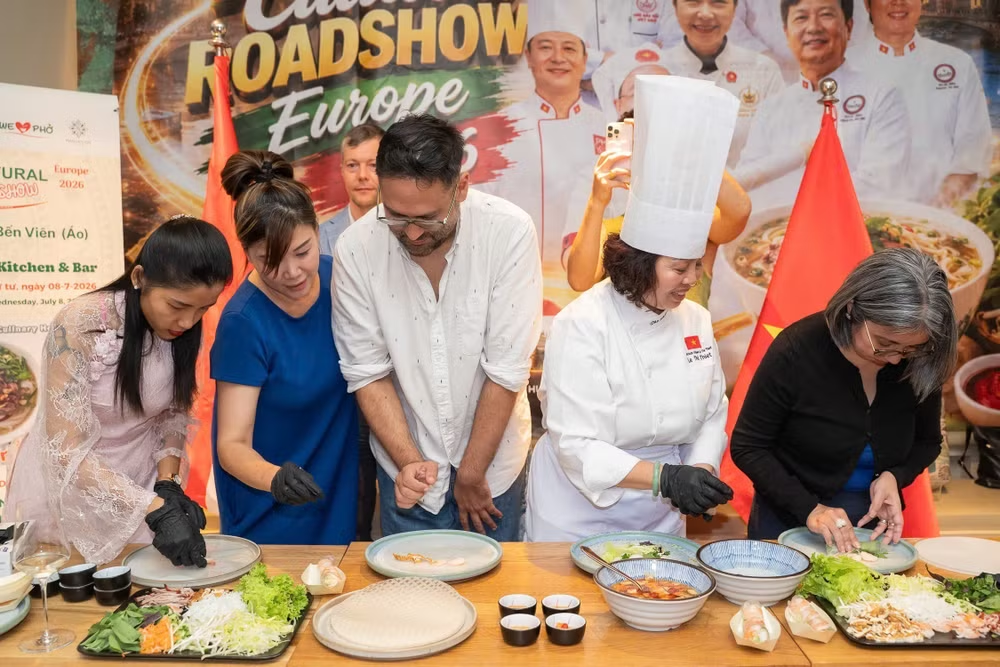
Diners take part in making pho cuon (fresh rice noodle rolls) at an event promoting pho and Vietnamese culinary culture held at Pho Saigon Restaurant in Vienna, Austria, on July 8, 2026. (Photo puplished by VNA)

Vu Nguyen Quan, Marketing Director of Klook Vietnam, said digital platforms, influencers and content creators are increasingly important in shaping international travellers’ choices. However, he stressed that promotional campaigns must be backed by quality infrastructure, services and human resources.

Meanwhile, Thong highlighted Vietnam’s potential in nature-based and culinary tourism. Its caves, mountains, beaches and islands offer distinctive experiences, while Vietnamese cuisine could further tap the high-end market by combining traditional dishes, local ingredients and cultural stories.

To achieve its 2030 tourism targets, Vietnam needs sustained, market-specific campaigns that clearly communicate what makes the country distinctive and, crucially, deliver experiences that match the image created by those campaigns./.
VNA

See more

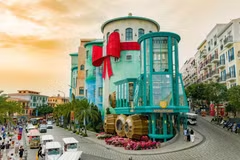
Located on Apollo Square in the heart of Sunset Town, Phu Quoc, Apollo Cafe is a distinctive venue designed by renowned architect Bill Bensley.

Coffee beneath an “upside-down” town: A surreal stop in Phu Quoc

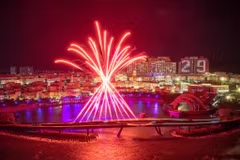
With an entire town recreated on its ceiling, sweeping sunset views and a vantage point for watching fireworks after dark, Apollo Cafe in Phu Quoc offers more than a photogenic backdrop. Designed by Bill Bensley, the venue shows how a café can become an experience travellers deliberately build into their itinerary.

Terraced fields shimmering with water create a picturesque scene in Lang Sang Village, Ta Xua Commune. (Photo: VNA)

Ta Xua named Asia’s leading emerging tourism destination 2026

In recent years, Ta Xua, dubbed "the paradise of clouds", has emerged as one of the mountainous destinations attracting strong interest from young travellers, particularly for its spectacular sea of clouds stretching across the mountains in the northwestern region.

AirAsia highlights Kem Beach as a family-friendly destination, where children can play on the sand while parents enjoy a little more time relaxing by the sea. (Photo: VNA)

AirAsia recommends Phu Quoc as ideal destination for family travel

A familiar low-cost airline among Southeast Asian travellers, AirAsia describes Phu Quoc in its blog guide to travelling with young children as a destination that feels almost tailor-made for families, with beaches for relaxation, leisure attractions and a wide range of activities to engage children of different ages.

Ho Chi Minh City Central Post Office remains a popular attraction for domestic and international tourists. (Photo: VNA)

Ho Chi Minh City wins three top Asian tourism awards in 2026

The 2026 honours add to the city’s impressive streak at international tourism awards. In the 2025 WTA, the southern metropolis took home four titles, including business travel and festival and event destination awards, which it had won for four years from 2022 to 2025.

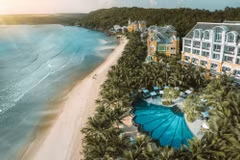
Phu Quoc is building its capacity to host MICE tourism, with international resorts, event venues, world-class shows and an expanding flight network. (Photo: Sunset Town)

Why does Travel + Leisure call Phu Quoc Asia’s next MICE hotspot?

According to the magazine, Phu Quoc was once known primarily for its beaches and relaxed holiday atmosphere. Over the past two years, alongside that appeal, the island has gradually developed its capacity to serve the MICE market, with international resorts, event venues, world-class shows and an expanding flight network.

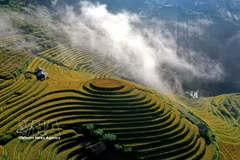
Every year, from September to October, terraced rice fields in Mu Cang Chai and Pung Luong communes, Lao Cai province, turn a golden yellow, creating a spectacular landscape across the northwestern mountains. (Photo: VNA)

Indigenous culture becomes tourism asset in northern highlands

With growing recognition of indigenous knowledge, customs and cultural values as unique assets, ethnic communities in the northern mountainous region are shifting from simply providing tourism services to becoming creators and owners of tourism products, confidently telling their own cultural stories

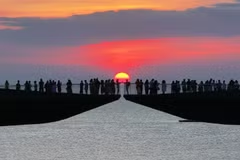
Tourists watch the sunset from the Kiss Bridge in Phu Quoc special zone, An Giang province. (Photo published by VNA)

An Giang's tourism sector grows, prepares for APEC 2027

Phu Quoc remains the biggest contributor to An Giang's international arrivals and tourism revenue. The special zone welcomed more than 1.92 million foreign visitors during the nine-month period, accounting for over 99% of all international arrivals in the province.

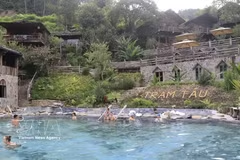
Wellness tourism is gradually becoming a high-value-added segment, extending international visitors' length of stay in Vietnam. (Photo: VNA)

Vietnam leans on wellness tourism to unlock higher-value segment by 2030

Vietnam has the abundant natural resources, including beaches, forests, mineral springs, mineral mud and a wide range of medicinal plants, backed by a long-lasting traditional medicine and the cultural identity of its ethnic communities. Together, they form the base for wellness tourism products that are both competitive and distinctly Vietnamese.

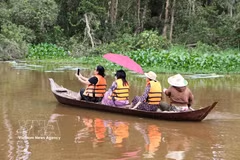
Visitors travel by boat to admire the cajuput forest landscape during the flood season at the Tram Chim tourism site in Dong Thap province. (Photo: VNA)

Dong Thap parlays flood season into tourism opportunity

At the Tram Chim tourism site, part of Tram Chim National Park in Tram Chim commune, visitors can try fishing with nets and hooks, setting traps and dismantling brush piles to catch field rats from August to November, the peak flood season.

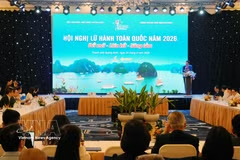
The national travel conference in Quang Ninh city on September 24, 2026. (Photo: VNA)

Vietnam’s travel sector shifts focus towards quality, value chains

The conference served as an important forum to assess changes and bottlenecks facing the tourism sector, while identifying breakthrough solutions to realise the goal of making tourism a key economic sector, as set out in Politburo Resolution No. 26-NQ/TW and Government Resolution No. 263/NQ-CP.

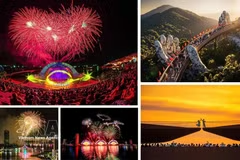
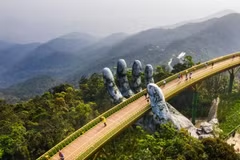
The iconic Golden Bridge at Sun World Ba Na Hills was chosen by Lonely Planet as the feature image when naming Da Nang among the top destinations for 2027.

Lonely Planet names Da Nang among the Best in Travel 2027, choosing Golden Bridge as the feature image

The city’s allure, as suggested by Lonely Planet, lies in its ability to combine diverse experiences in a single trip: relaxing by My Khe Beach, exploring nature, savouring local cuisine, and dedicating time to cultural and entertainment destinations. This versatility enables Da Nang to attract both leisure travelers seeking a relaxed getaway and those looking for an activity-packed itinerary.