Hanoi (VNA) - For large conference and event groups, the destination experience does not end when the final session wraps up. Checking out, consolidating luggage and transporting hundreds of delegates to the airport at the same time can be a major test of an organiser’s capabilities.
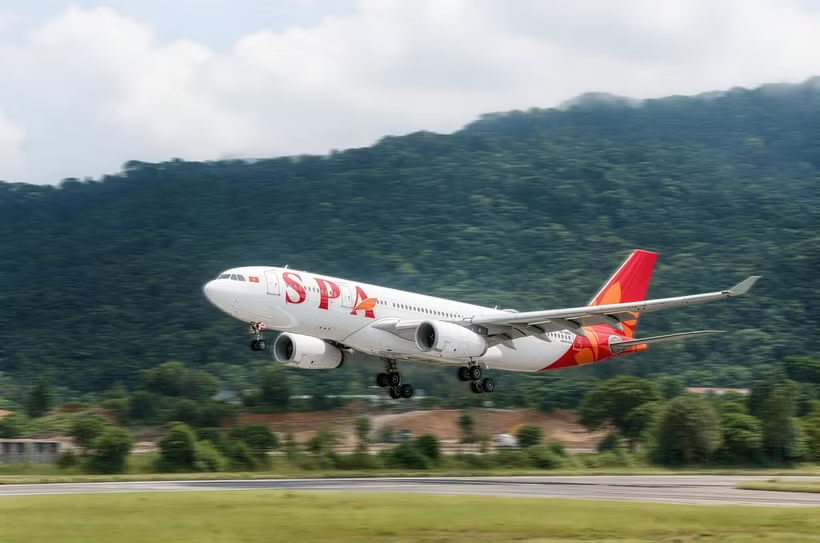
By bringing flight check-in and checked-baggage services directly to hotels, Sun PhuQuoc Airways is offering Phu Quoc a new solution to one of the most challenging stages of the MICE journey: departure.
Bringing airline check-in to the hotel
After a multi-day conference, the final morning is often governed by a tightly choreographed schedule. Delegates check out, luggage is assembled, and coaches depart in waves to match different flight times. A delay at just one stage can disrupt the schedule for an entire group. That is why MICE organisers pay close attention not only to how smoothly guests are welcomed, but also to how efficiently they can be seen off at the end of their stay.
The concept of off-airport check-in is not entirely new. In Dubai, Emirates has offered a Home Check-in service that allows passengers to complete check-in procedures at their home, hotel or office, receive their boarding passes and hand over checked baggage for transfer to the airport. While operating models and eligibility requirements vary, these services share a common principle: moving part of the airport process closer to where passengers begin the final leg of their journey.
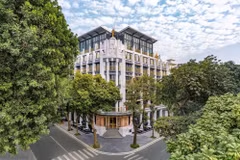
In Phu Quoc, Sun PhuQuoc Airways began offering hotel-based flight check-in at La Festa Phu Quoc and New World Phu Quoc Resort in April 2026. Passengers can receive their boarding passes and check in their luggage directly at the hotel. The baggage is then transferred to the airport and undergoes security screening in accordance with aviation regulations. The service is currently available during designated time slots aligned with flight departure schedules.
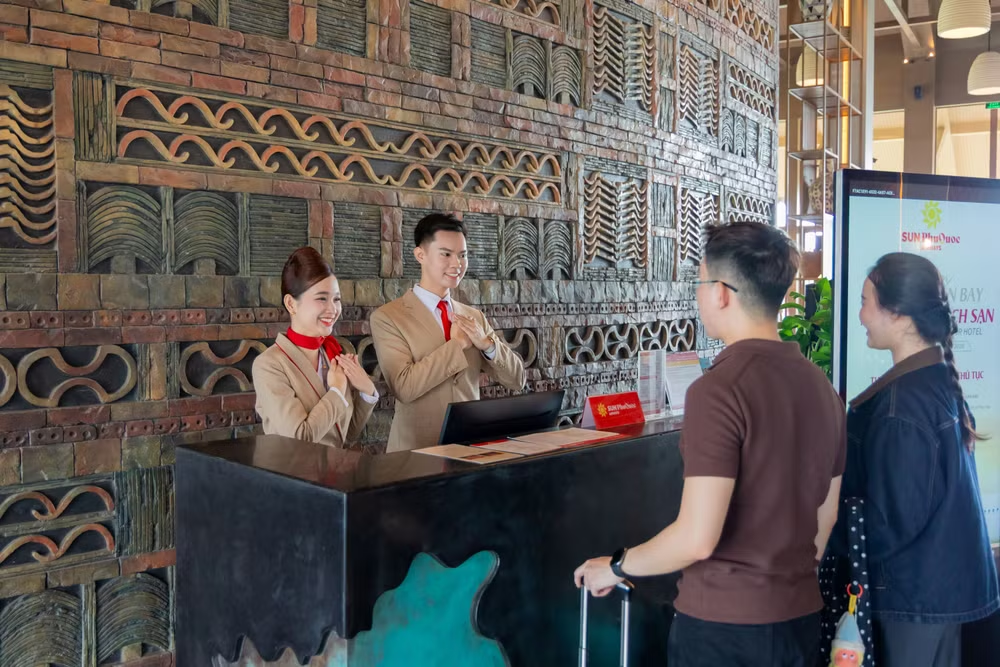
For individual travellers, the most immediate benefit is simple: they no longer need to carry their checked baggage to the airport counter themselves. For conference or incentive groups, however, the operational value is considerably greater.
Organisers can arrange for delegates to complete check-in procedures in smaller groups at their accommodation, cross-check passenger lists against flight schedules, and coordinate airport transfers accordingly. This provides greater flexibility during departure, rather than funnelling hundreds of passengers and their luggage through the terminal at the same time.
Hotel check-in does not, of course, mean passengers can arrive at the airport immediately before departure. They must still allow sufficient time for transportation, security checks and boarding procedures. The practical benefit lies in removing one step from the airport journey and making departure logistics easier to manage.
An added advantage in the MICE race
MICE groups — encompassing meetings, incentives, conferences and exhibitions or events — have different requirements from conventional leisure travellers. Delegates may follow the same event programme but return home on several different flights. Organisers need to keep the event running on schedule while also allowing time for networking, business meetings and destination experiences.
As a result, the quality of a MICE trip is determined by more than conference halls, hotel rooms or gala dinners. It also depends on how effectively different services connect to ensure the smooth movement of hundreds of people.
If flight check-in and baggage handling are completed at the hotel in advance, the group's final day can become considerably more flexible. Depending on departure times, some groups may be able to fit in a closing lunch, a brief post-conference meeting or an experience in southern Phu Quoc before heading to the airport.
Not every itinerary will have enough time for an additional attraction. The real advantage is that organisers have more options, rather than automatically having to move the entire group out of the resort early and leave delegates waiting at the airport.
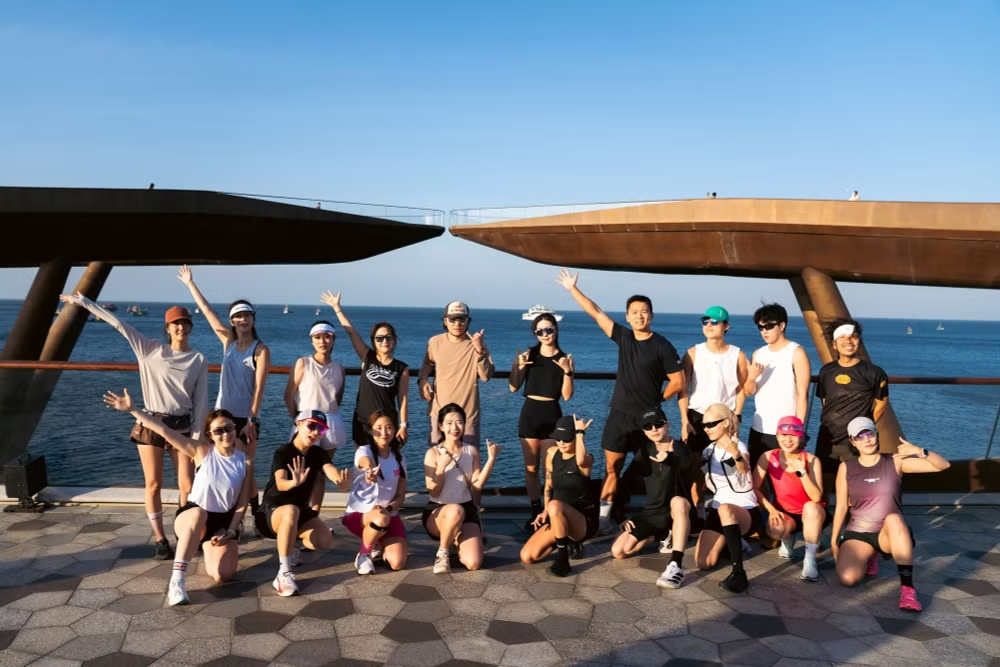
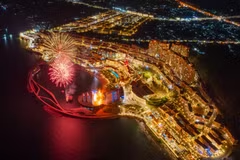
This is also where Phu Quoc’s broader tourism offering comes into play. In the south of the island, resorts sit within easy reach of Sunset Town, Kiss Bridge, seaside performances and Hon Thom Island. These experiences can be incorporated into conference and incentive programmes according to each group’s size and schedule.
When air travel, accommodation and destination activities are planned as parts of the same journey, Phu Quoc has a stronger opportunity to offer event organisers a seamless end-to-end experience, rather than a collection of separate services they must piece together themselves.
For now, hotel-based check-in is available at only two properties and exclusively to Sun PhuQuoc Airways passengers. It would therefore be premature to suggest that the model has solved the logistical challenge of moving large MICE groups off the island or significantly eased pressure across the airport as a whole.
Even at this early stage, however, the service points to a broader direction for improving destination quality: treating the departure process as an integral part of the MICE experience that deserves the same careful planning as arrival and the event itself.
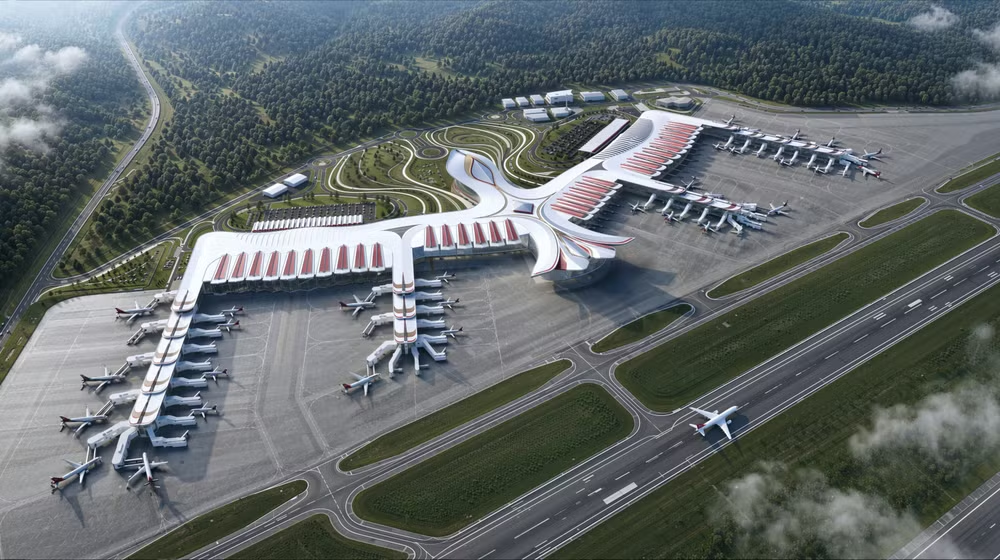
Ahead of APEC 2027, Phu Quoc is stepping up the development of its conference, accommodation and transport infrastructure. Major projects are strengthening the island’s capacity to host international-scale events, but its long-term competitiveness will also depend on how effectively individual services work together on a day-to-day basis.
Resort-based flight check-in is one tangible example of that coordination. For event organisers, an attractive destination is not only one that makes a strong impression when delegates arrive. It is also one that ensures the journey home is smooth, efficient and on schedule./.