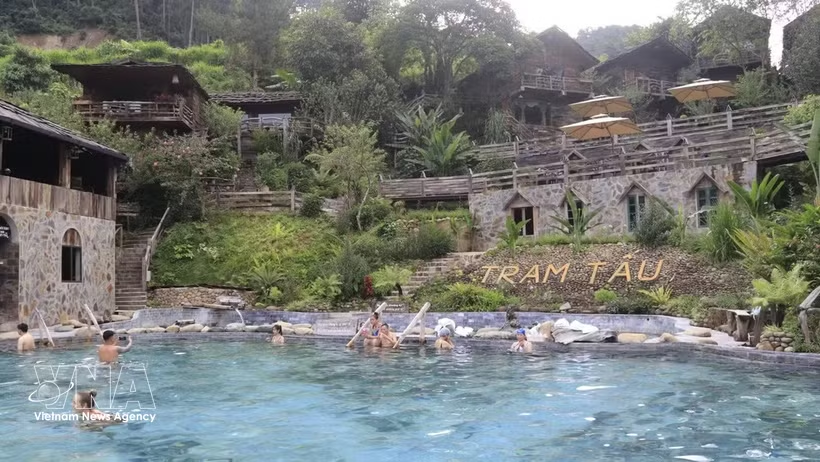
Hanoi (VNA) – Vietnam is rolling out a national scheme to build a professional health and wellness tourism industry by 2030, betting that distinctive products, better service quality and stronger value chains can turn the sector into one of tourism's highest-value segments.
Chasing a higher-value tourism segment
Demand for health and wellness travel has surged in recent years, tracking a broader push for better quality of life and physical and mental balance.
This isn't just a passing trend. It's becoming a high-value segment that extends visitor stays, lifts spending and pulls related industries along with it", said Deputy Director General of the Vietnam National Authority of Tourism Ha Van Sieu.
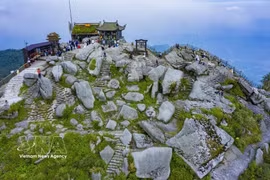
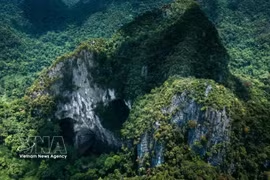
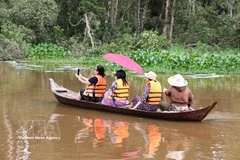
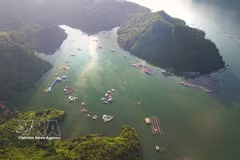
Vietnam has the abundant natural resources, including beaches, forests, mineral springs, mineral mud and a wide range of medicinal plants, backed by a long-lasting traditional medicine and the cultural identity of its ethnic communities. Together, they form the base for wellness tourism products that are both competitive and distinctly Vietnamese.
In fact, that potential hasn't translated into products or economic value. Products remain fragmented in many places, with models limited to standalone resorts, spas or one-off services.
Links among medical tourism, traditional medicine, medicinal plants, culture, sports, nutrition, and science and technology remain weak. Specialised workers are scarce, and regulatory standards, quality management systems and coordination among sectors and localities all need to be improved.
Dr. Nguyen Anh Tuan, Director of the Institute for Tourism Development Research, said Vietnam is emerging as a branded destination for health and wellness tourism, with plenty of room to grow.
Wellness tourism models are already expanding fast. Hotels and resorts in mountain and coastal areas have folded in wellness services and drawn large crowds, while regions with hot mineral springs have built premium resort and wellness offerings, generating returns for investors and revenue for local budgets alike.
Building seamless, quality tourist experiences
The scheme aims for more than new tourism products. It's designed to build an economic ecosystem around tourism and wellness services.
Building that ecosystem will require the tourism sector to assess where things stand, clear key bottlenecks and define the core elements of wellness tourism products. The bigger task is treating the segment as a value chain linking tourism with healthcare, sports, culture, agriculture, medicinal plants, science-technology, indigenous knowledge, businesses and local communities.
Tuan proposed a framework built around one ecosystem, three product tiers and six policy pillars.
The three tiers include pure wellness tourism, wellness services involving specialised medical expertise, and medical tourism. Tiering lets regulators apply oversight based on risk level, protecting safety without burdening companies with unnecessary red tape.
The six pillars comprise institutional mechanisms and standards; resources and destinations; products and value chains; investment, businesses and communities; workforce and science-technology; and markets, branding and data.
On medical tourism's potential across Southeast Asia, Tuan said Vietnam's existing advantages leave it well placed to compete and, if leveraged properly, to go head-to-head with countries that already run mature medical tourism industries.
Traditional Eastern medicine is another edge. Pairing resorts and wellness services with herbal treatments rooted in Eastern medicine holds considerable promise, he said.
Customers respond well and will pay reasonable prices for attentive services that match what they spend, Tuan said. But he added that clearer, more specific policies are still needed to develop the sector systematically./.