Hanoi (VNA) - Vietnam is pushing the tourism industry to overhaul its growth model and governance, trading a volume-first approach for one focused on quality and value, a shift essential to the country's next phase of rapid, sustainable growth.
Record arrivals build the case for change
Vietnam welcomed 21.2 million foreign visitors in 2025, surpassing the pre-pandemic peak of 18 million set in 2019. Arrivals climbed 20.4% from 2024, five times the global average growth rate.
That puts Vietnam among the fastest-recovering tourism markets in Asia-Pacific. For 2026, the sector is targeting 25 million foreign arrivals, 150 million domestic trips and total revenue of 1.125 quadrillion VND (43 billion USD).
Against that backdrop, the Politburo issued Resolution 26-NQ/TW, aimed at turning tourism into a spearhead economic sector, according to the Vietnam National Authority of Tourism (VNAT). It said the resolution sets higher targets and lays out a more comprehensive approach built around breakthrough solutions.
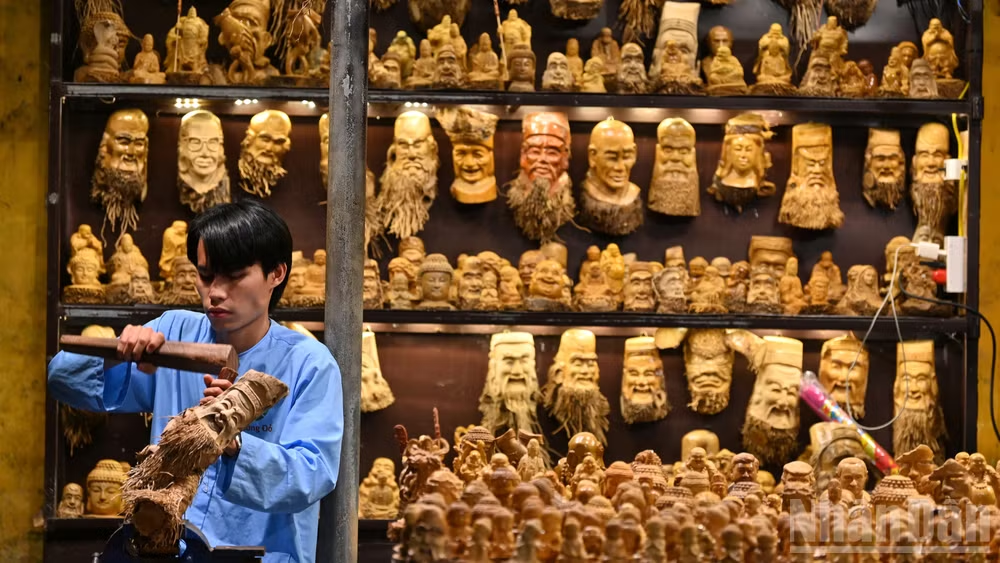
The Politburo is calling on Party committees, officials and the public to recognise tourism's role as a comprehensive economic sector, one it sees as key to the country's shift toward a growth model built on technology, innovation, digital transformation and green, sustainable development, while driving economic restructuring and job creation.
That means moving away from growth driven by visitor numbers and resource extraction, toward a model built on depth, quality, efficiency and higher value-added, backed by more creative and distinctive tourism products. Governance needs to shift too, from managing individual pieces to overseeing an integrated service economy across the entire value chain.
The resolution spells out the responsibilities of Party committees, authorities and local officials, and folds tourism targets into broader strategies, master plans and socio-economic and cultural development plans. It also ties tourism development to culture, environmental protection, national defence - security, social order and safety, external relations and global integration.
It calls for building up fields and sectors that support tourism, while using tourism itself to generate spillover effects across the wider economy. Stronger regional coordination, along with cultural and sports promotion and national branding, are also flagged as resources to tap.
The Politburo also wants sustained communication campaigns and action plans to spread a tourism-friendly culture, plus a bigger role for businesses, industry associations and local communities in keeping destinations safe, clean and welcoming.
Unlocking capital, cutting red tape
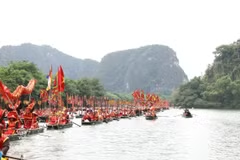
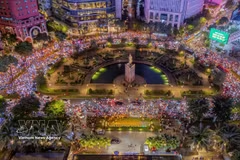
The resolution calls for turning Party policies and guidelines on tourism into consistent, enforceable rules. It singles out new tourism models for breakthrough treatment, including the sharing economy, digital platforms, night-time economy, riverfront and coastal tourism, and entertainment-culture-sports complexes. It also targets value-added tax refunds at malls and major shopping destinations, aiming to grow shopping tourism and get visitors to spend more.
Coming as digital technology reshapes every sector, the resolution pushes for better oversight of cross-border online travel platforms and encourages innovation across smart tourism, green tourism and digital business models.
It also wants more public-private partnerships to manage and develop destinations with high ecological value or that require heavy investment and conservation, and aims to lure strategic investors into building tourism infrastructure, access roads and other supporting infrastructure tied to major projects.
The VNAT said one notable change is that tourism now qualifies for investment incentives reserved for high-impact projects, including those tied to growth poles, tourism corridors, heritage zones, strategic tourism centres, major infrastructure, green transition, night-time economy and culture-sports-tourism-entertainment-shopping complexes, as well as underdeveloped areas with tourism potential.
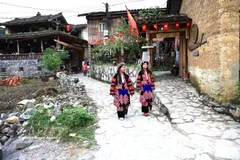
That is accompanied by support policies on investment, land, finance, administrative procedures, taxes, fees and business operations for medical tourism, conferences and events, sports, agrotourism, ecotourism, landscape conservation, and shopping and nightlife in national tourism hubs. Officials will also study financial policies for green space and public land not used directly for business purposes.
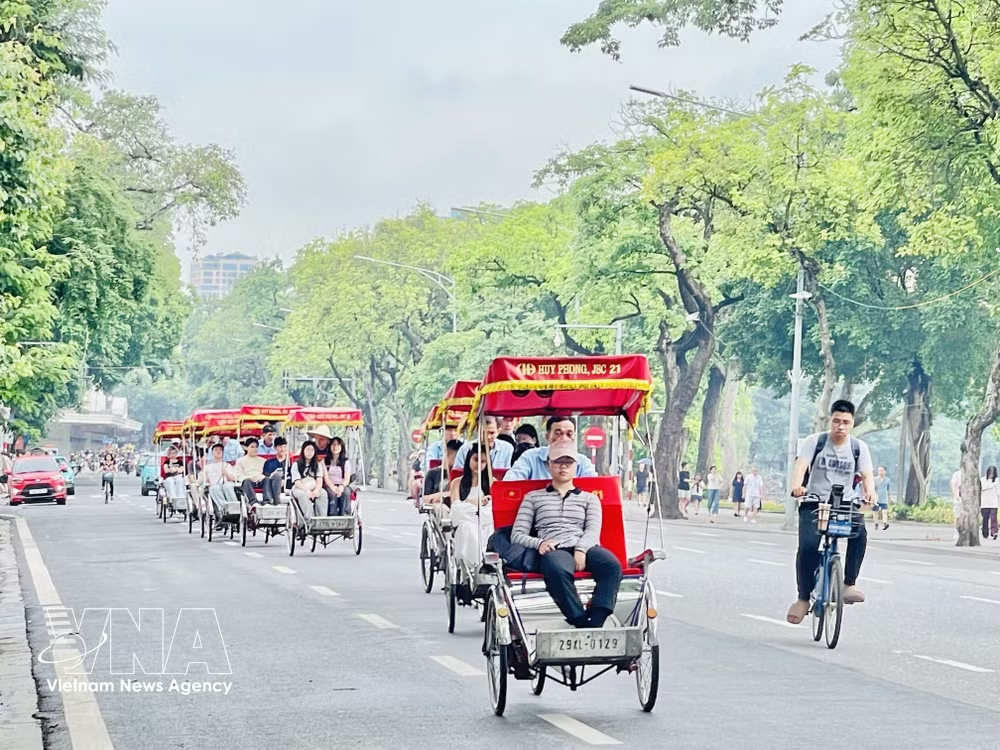
On entry policy, the resolution urges continued study of more favourable visa rules, wider bilateral visa exemptions and flexible visa terms for key markets without compromising national security and interests. High-value visitor segments will get preferential visa treatment, while accommodation and sightseeing procedures in border and island areas will be streamlined, and foreign visitors will be required to carry insurance.
To unlock capital, the resolution expects studying ways to convert tourism resources into development assets using capital market tools, alongside a bigger state budget allocation for tourism.
The state-run tourism development support fund should run more flexibly, the resolution said, and existing credit guarantee funds and financing tools for small and mid-sized tourism firms should be put to better use. It also anticipates preferential state credit, startup support and interest rate subsidies for green and sustainable tourism projects, plus a state-backed insurance mechanism to cover natural disasters, epidemics and other major disruptions.
It also calls for controlled pilot mechanisms to attract long-stay visitors, remote workers and foreign capital into tourism and resort development within the bounds of existing land, housing, real estate and national security laws.
Finally, it wants special policies for national tourism zones and large-scale hubs aiming for global competitiveness. For urgent issues where no legal framework yet exists or where existing rules need to bend, pilot schemes should move forward, backed by oversight, inspection and post-implementation review./.