Why does Travel + Leisure call Phu Quoc Asia’s next MICE hotspot?

According to the magazine, Phu Quoc was once known primarily for its beaches and relaxed holiday atmosphere. Over the past two years, alongside that appeal, the island has gradually developed its capacity to serve the MICE market, with international resorts, event venues, world-class shows and an expanding flight network.

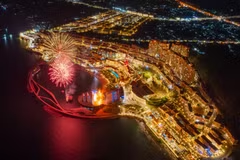
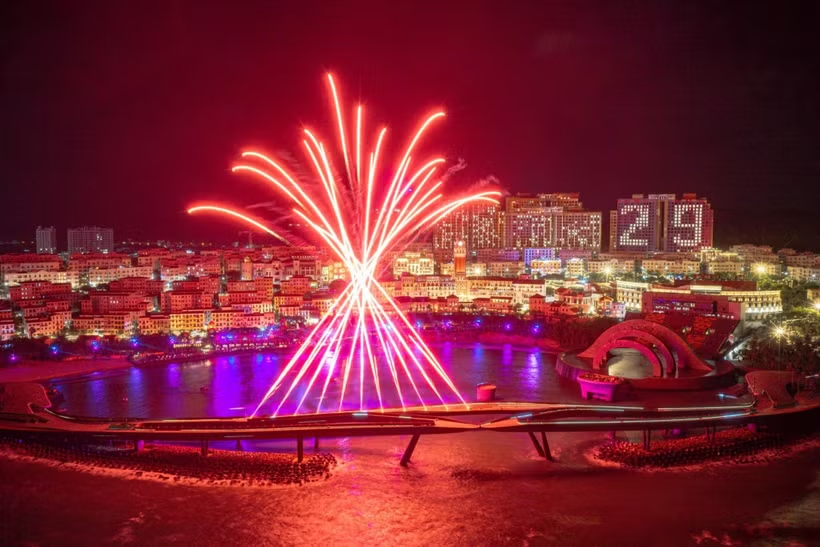
Phu Quoc is building its capacity to host MICE tourism, with international resorts, event venues, world-class shows and an expanding flight network. (Photo: Sunset Town)

Hanoi (VNA) – “From the conference room to the beach” is how Travel + Leisure envisions the MICE experience in Phu Quoc. In a new article, the magazine suggests that the Pearl Island has an opportunity to compete on the international events stage through a distinctive advantage: combining large-scale conference infrastructure with the appeal of a tropical island.

A morning meeting with partners, an afternoon ride on an overwater cable car, and an evening banquet beside a stage lit up by fireworks. The itinerary sounds more like a holiday than a business trip, yet it is precisely the kind of experience that drew Travel + Leisure’s attention to Phu Quoc in an article Everyone's Talking About Phu Quoc as Asia's Next MICE Hotspot – Here's Why.
pq2.jpg
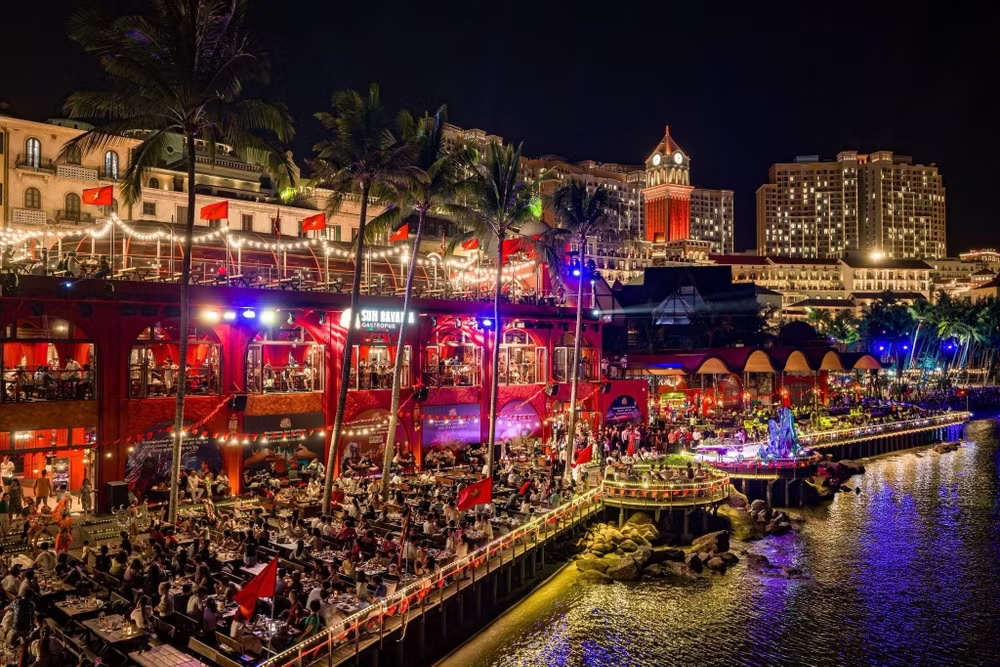
Sun Bavaria GastroPub, the world’s largest beachfront beer hall, provides additional space for large-scale events.

According to the magazine, Phu Quoc was once known primarily for its beaches and relaxed holiday atmosphere. Over the past two years, alongside that appeal, the island has gradually developed its capacity to serve the MICE market, with international resorts, event venues, world-class shows and an expanding flight network.

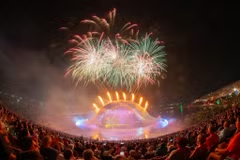
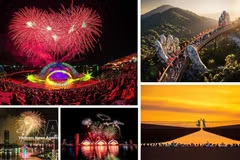
Travel + Leisure describes Sunset Town as an “open-air events district”, where Kiss of the Sea, Symphony of the Sea, Kiss Bridge and fireworks can become part of an itinerary for corporate groups. Sun Bavaria GastroPub, recognised by Guinness World Records as the world’s largest beachfront beer hall, adds another venue for large-scale events. For indoor programmes, Sun Signature Gallery and Sun Tropical Ballroom allow organisers to choose a venue suited to the scale and nature of each gathering.

What makes Phu Quoc more appealing than a destination with an abundance of meeting rooms is the experience awaiting guests once the conference ends. The magazine cites Hon Thom as an example: an overwater cable car ride, Aquatopia Water Park, the Exotica Village entertainment zone and beach activities can be brought together into a full day of incentive travel. As Travel + Leisure observes, the appeal lies in “weaving the destination experience into the event programme itself”.

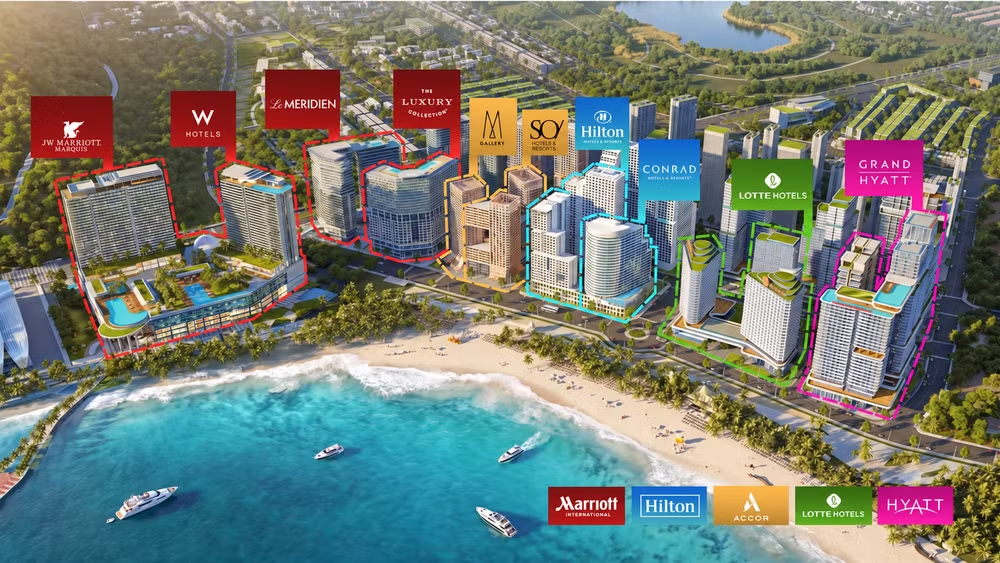
Accommodation is another part of the equation. Resorts such as JW Marriott Phu Quoc Emerald Bay, New World Phu Quoc, Premier Residences Phu Quoc Emerald Bay and Premier Village Phu Quoc cater to different groups, from private executive meetings to large incentive travel parties. As more international hotels are developed on Hon Thom and at Bai Dat Do (Ruby Beach), organisers will have greater choice when accommodating multiple groups attending the same event. At Bai Dat Do (Ruby Beach), a hotel boulevard is taking shape ahead of APEC 2027. Its first phase is expected to comprise 17 hotel buildings with more than 7,000 rooms; subsequent phases will expand the development to a total of nearly 20,000 rooms.
pq3.png
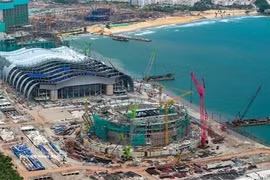
A hotel boulevard is taking shape at Bai Dat Do (Ruby Beach) ahead of APEC 2027.

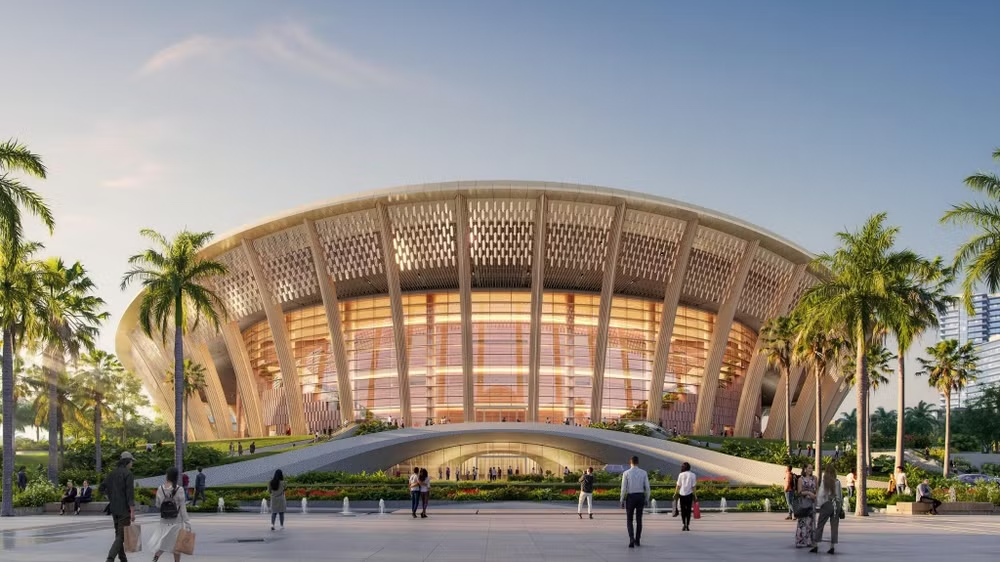
While its existing attractions allow Phu Quoc to host MICE programmes in its own distinctive way, the infrastructure being developed for APEC 2027 will take that capability to a new scale. The APEC Convention and Exhibition Centre is planned to feature an 11,050-square-metre column-free ballroom with an anticipated capacity of up to 10,000 people, alongside a 2,000-seat dinner show venue and an international media centre. This will be an important addition for large conventions, exhibitions and events requiring multiple activities to run simultaneously, rather than a single meeting session in a hotel.

Adjacent to the convention centre, the APEC Multipurpose Theatre is expected to offer more than 4,000 seats and a 30-metre-wide stage, enabling it to host arts performances, concerts, film festivals and major corporate events. Phu Quoc International Airport is being expanded, while the DT.975 road and a light rail system are also being developed to connect the airport with the conference district. For MICE visitors, these projects address a very practical challenge: getting thousands of delegates from their flights to their accommodation, meetings and events on time.

Travel + Leisure sees APEC 2027 as a turning point that will strengthen Phu Quoc’s capacity to host large-scale international events. But the magazine is more interested in what comes next: once the summit is over, what will keep organisers choosing Phu Quoc?
pq4.jpg
The infrastructure being developed for APEC 2027 will provide additional capacity for conventions, exhibitions and events with multiple activities taking place simultaneously.

The answer lies in the legacy of APEC and how its different elements work together. The convention centre can accommodate major gatherings, while theatres, hotels, flight connections and experiences in the south of the island enable organisers to design a complete programme, from meeting sessions to evening banquets and incentive itineraries.

According to Travel + Leisure, Phu Quoc therefore “does not need to imitate Singapore, Bangkok or Hong Kong to compete”: the island can deliver the scale expected of an international MICE destination while offering a coastal and island setting that “invites” visitors to stay longer./.
VNA

See more

Every year, from September to October, terraced rice fields in Mu Cang Chai and Pung Luong communes, Lao Cai province, turn a golden yellow, creating a spectacular landscape across the northwestern mountains. (Photo: VNA)

Indigenous culture becomes tourism asset in northern highlands

With growing recognition of indigenous knowledge, customs and cultural values as unique assets, ethnic communities in the northern mountainous region are shifting from simply providing tourism services to becoming creators and owners of tourism products, confidently telling their own cultural stories

Tourists watch the sunset from the Kiss Bridge in Phu Quoc special zone, An Giang province. (Photo published by VNA)

An Giang's tourism sector grows, prepares for APEC 2027

Phu Quoc remains the biggest contributor to An Giang's international arrivals and tourism revenue. The special zone welcomed more than 1.92 million foreign visitors during the nine-month period, accounting for over 99% of all international arrivals in the province.

Wellness tourism is gradually becoming a high-value-added segment, extending international visitors' length of stay in Vietnam. (Photo: VNA)

Vietnam leans on wellness tourism to unlock higher-value segment by 2030

Vietnam has the abundant natural resources, including beaches, forests, mineral springs, mineral mud and a wide range of medicinal plants, backed by a long-lasting traditional medicine and the cultural identity of its ethnic communities. Together, they form the base for wellness tourism products that are both competitive and distinctly Vietnamese.

Visitors travel by boat to admire the cajuput forest landscape during the flood season at the Tram Chim tourism site in Dong Thap province. (Photo: VNA)

Dong Thap parlays flood season into tourism opportunity

At the Tram Chim tourism site, part of Tram Chim National Park in Tram Chim commune, visitors can try fishing with nets and hooks, setting traps and dismantling brush piles to catch field rats from August to November, the peak flood season.

The national travel conference in Quang Ninh city on September 24, 2026. (Photo: VNA)

Vietnam’s travel sector shifts focus towards quality, value chains

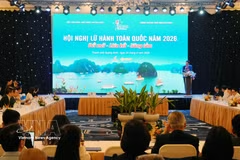
The conference served as an important forum to assess changes and bottlenecks facing the tourism sector, while identifying breakthrough solutions to realise the goal of making tourism a key economic sector, as set out in Politburo Resolution No. 26-NQ/TW and Government Resolution No. 263/NQ-CP.

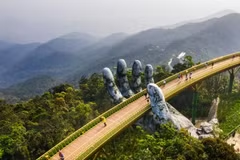
The iconic Golden Bridge at Sun World Ba Na Hills was chosen by Lonely Planet as the feature image when naming Da Nang among the top destinations for 2027.

Lonely Planet names Da Nang among the Best in Travel 2027, choosing Golden Bridge as the feature image

The city’s allure, as suggested by Lonely Planet, lies in its ability to combine diverse experiences in a single trip: relaxing by My Khe Beach, exploring nature, savouring local cuisine, and dedicating time to cultural and entertainment destinations. This versatility enables Da Nang to attract both leisure travelers seeking a relaxed getaway and those looking for an activity-packed itinerary.

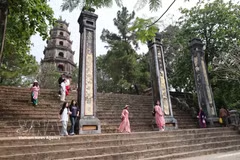
Tourists visiting Hue city often choose temples, pagodas and spiritual tourism, with tranquil experiences emerging as a key tourism trend in the city (Photo: VNA)

Vietnam tourism poised for breakthrough growth

Vietnam welcomed nearly 16 million international visitors in the first eight months of 2026, up 14.4% year on year and reaching 63.6% of the full-year target. Long-haul markets also recorded strong growth, including Russia (up 165.7%), Europe (53.4%), the Americas (20.7%) and Australia (23.3%).

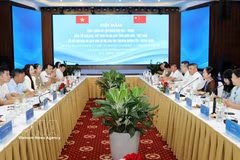
An overview of the talks in Lang Son province on September 19 (Photo: VNA)

Vietnam, China border tourism seeks to tap cultural potential

Lang Son and Guangxi both boast rich and diverse tourism resources spanning culture, history, ecology and leisure, an official said, expressing her hope to connect these resources into attractive cross-border tourism routes and destinations while developing caravan tours, cultural and spiritual tourism, and border shopping tourism.

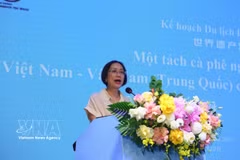
A forum themed “MICE Tourism in the New Era: Sustainability – Connectivity – Opportunity” in Ho Chi Minh City on August 27, 2026. (Photo: VNA)

Vietnam prioritises MICE tourism as strategic product

For the MICE tourism sector in both Ho Chi Minh City and Vietnam, growth can no longer be driven merely by increasing the number of events; instead, the focus must shift to enhancing the value of each event and the competitiveness of each destination.

Phu Quoc is emerging as a new MICE destination with growing international ambitions. (Photos: Sun Group)

What will it take for Phu Quoc to become the world’s next MICE tourism hub?

For Phu Quoc, MICE represents more than simply another high-potential source of visitors. The segment could help the island evolve from a largely seasonal resort destination into a year-round tourism hub, while increasing spending per visitor and strengthening its ability to attract corporate groups, investors and international professionals.

A corner of Da Nang city (Photo: VNA)

Vietnam aims to build internationally competitive tourism growth poles

A notable feature of Resolution No. 26-NQ/TW is its focus on developing three major tourism growth poles – Hanoi, Ho Chi Minh City and Da Nang – while gradually turning Phu Quoc into a new growth pole. It also calls for the development of 10 key tourism centres and 20 national tourism areas.

Russian arrivals are emerging as a standout feature of Vietnam’s international tourism growth in the closing months of 2026. (Photo: Sun Group)

Why Phu Quoc is winning over high end Russian travellers

For a long-haul holiday, the journey itself can be the greatest hurdle, especially for families travelling with young children or older relatives. Vietnam’s 45-day visa exemption for Russian citizens gives Phu Quoc an immediate advantage, accommodating an extended winter escape with ease.