Hanoi (VNA) – Tourism directly contributed nearly 8.8% of Vietnam's GDP in 2025 and supported about 4.41 million jobs, or 8.5% of the workforce, as strong natural and cultural assets and a robust post-pandemic rebound lifted the sector's weight in the economy.
The industry's reach extends well beyond hotels and airlines. It feeds transport, accommodation, food services, trade, agriculture, culture and entertainment, widening markets for goods and services and generating jobs, income and business opportunities in localities.
Scale builds, and so does contribution to growth
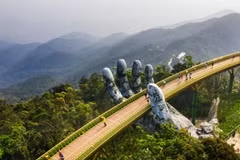
Vietnam has the raw material for a broad product range: over 3,200km of coastline, a network of islands and bays, and ecological zones running from deltas and midlands to highlands. Heritage sites, festivals, craft villages, performing arts and regional cuisine add depth. Together, they set the country apart and support offerings in culture, nature, leisure, community-based travel, ecotourism, food and experiential travel.
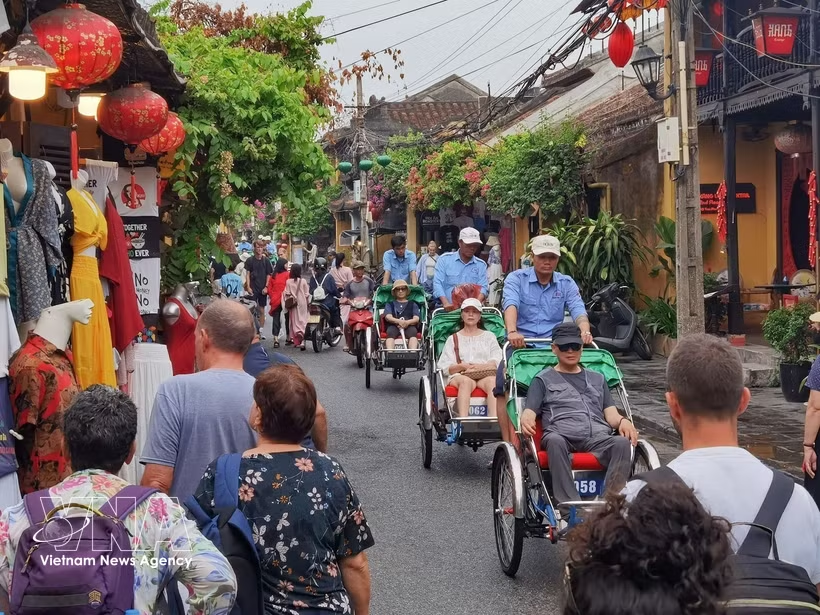
The numbers have moved decisively. Before COVID-19, Vietnam drew about 18 million foreigners and 85 million domestic tourists in 2019, with revenue near 755 trillion VND (29 billion USD at the current exchange rate). In 2025, foreign arrivals rose 20.4% year on year to almost 21.2 million, domestic visitors hit roughly 137 million, and revenue topped 1 quadrillion VND. Foreign arrivals exceeded the 2019 record. Through the first eight months of 2026, about 15.9 million foreigners visited, up 14.4% from a year earlier and the strongest eight-month tally in years.
Years of policy refinement underpin the rebound. On June 13, 2024, the Prime Minister signed Decision 509/QD-TTg approving the tourism system master plan for 2021–2030, with a vision to 2045. It aims to make tourism a true spearhead sector by 2030, driven by green growth. An action plan followed in February 2025, setting the timeline, tasks and resources.
Visa easing has helped. The Government's Resolution 44/NQ-CP, dated March 7, 2025, grantes 45-day visa exemptions to citizens of 12 countries, while Resolution 229/NQ-CP, dated August 8, 2025, extends the 45-day exemption for 12 countries as a stimulus measure, effective from August 15, 2025 to August 14, 2028.
Connectivity is improving, too. The expressway network has expanded between major hubs and destinations, airlines have added routes, and rail, waterway and tourism port systems are drawing more investment. Accommodation, resorts and entertainment complexes have grown quickly, giving visitors more choices.
Operators are also moving past beaches, heritage tours and cultural travel. Many localities now offer community-based, agricultural, ecological, wellness, sports and MICE tourism products, along with night-time economy offerings and experiences tied to cuisine, festivals and craft villages. Tapping local resources to meet new demand has lengthened stays and lifted visitor spending.
Marketing has been retooled to target specific source markets. Vietnam has pushed its image abroad through trade fairs, promotional events, digital platforms and partnerships with international firms and organisations. Digital tools are increasingly used in destination management, information services, promotion and visitor experience.
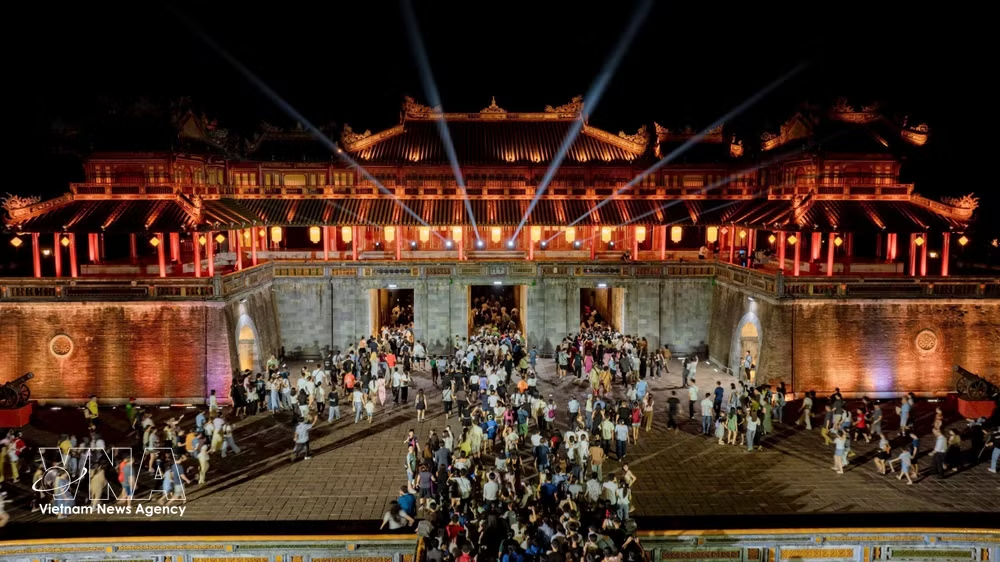
In sum, the sector has shifted from largely exploiting existing resources to reorganising tourism spaces, products, markets and management. That sets the stage for a new growth phase with tougher demands on quality and value.
Quality over quantity in next phase
The Politburo’s Resolution 26-NQ/TW, dated August 22, 2026, urges turning tourism into a spearhead economic sector and shifting the model from volume to quality, efficiency and added value. It targets a direct GDP contribution of 10–12% by 2030, 45–50 million foreign arrivals, 160 million domestic visitors, and total revenue of 80–90 billion USD.
The Government's action plan, issued under the Resolution 263/NQ-CP on September 7, 2026, sets out the means. Priorities include better mechanisms and policies, infrastructure development and high-value products, a stronger workforce, expanded promotion and branding, faster digital transformation, innovation and green transition, and tighter regional linkages and destination management. All are tied to a mandate for fast but sustainable growth and a bigger economic contribution.
Most recently on September 10, the Ministry of Culture, Sports and Tourism released a "double-digit" growth scenario, laying out tasks to speed up expansion in the last months of 2026 and directions for 2027–2030.
Under the scenario, Vietnam aims to serve 25–27 million foreign visitors and 150–153 million domestic tourists in 2026, with earnings of about 1.125–1.23 quadrillion VND. The sector is expected to support the national goal of GDP growth of at least 10% this year./