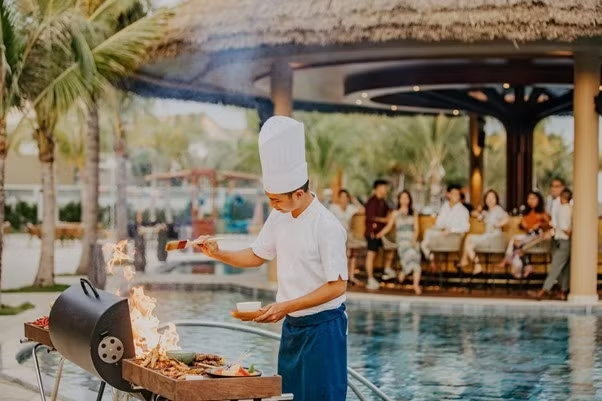
Hanoi (VNA) – The first Michelin selection for Phu Quoc is expected in mid-2027, the same year the Pearl Island hosts APEC. This convergence offers an opportunity to make gastronomy a reason for leisure travellers and conference delegates to spend more, stay longer and return after the event.
On October 1, the Michelin Guide announced that it would extend its selection to Phu Quoc, with the first selection expected to be unveiled in mid-2027. Coinciding with the year the Pearl Island hosts APEC Economic Leaders’ Week, the announcement creates further opportunities to showcase its cuisine as the destination attracts international attention.
The value of this convergence lies in connecting two sources of demand: APEC brings delegations and business travellers to Phu Quoc, while gastronomy can give them another reason to explore the island beyond their working schedules. For leisure travellers, a dining venue worth experiencing can also become a deciding factor in choosing a destination, rather than something considered only after booking a hotel.
However, Michelin’s appeal will translate into revenue only when hotels, event organisers and tour operators incorporate the recommended establishments into bookable offerings. From private dinners and hospitality programmes to journeys exploring local cuisine, each option needs to be compelling and convenient enough to encourage visitors to devote more time and spending to Phu Quoc.
Adding value to holidays and MICE programmes
In the luxury holiday market, gastronomy can set apart destinations that share beautiful beaches and upscale hotels. A dinner defined by a chef’s signature style, local ingredients or a cultural story can become an experience that guests actively seek out and are willing to pay more for.
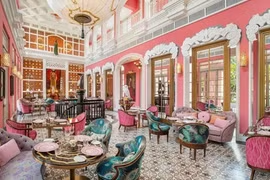
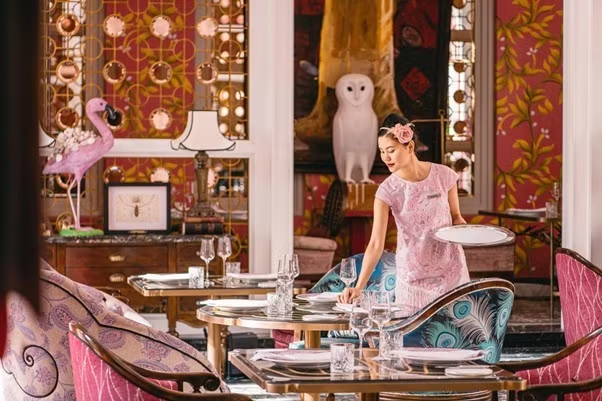
Phu Quoc already has establishments helping to shape this offering, from Pink Pearl at JW Marriott Phu Quoc Emerald Bay to the restaurants at La Festa Phu Quoc – Curio Collection by Hilton in Sunset Town, as well as resorts at Kem Beach and elsewhere on the island. This diversity of dining concepts provides a foundation for hotels to develop distinctive offerings, although Michelin’s selection has yet to be announced.
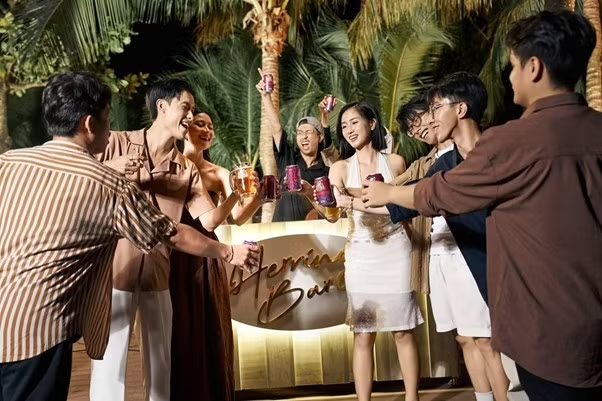
For hotel businesses, the opportunity extends beyond the number of restaurant reservations. Experiences such as seasonal menus, private dinners and packages combining accommodation with culinary exploration can generate additional revenue from each stay. If dining itineraries are varied enough and presented before the trip, guests have further reasons to consider staying longer.
For event organisers, gastronomy can also lend a distinctive character to MICE programmes combining travel with meetings, conferences and exhibitions. After hours of work, a banquet that tells the story of the island and its surrounding sea, fish sauce, pepper and local produce can help visitors better understand the place they are visiting, while creating opportunities for delegates to connect.
Once announced, the Michelin selection could provide an independent reference on food quality when choosing venues for hosting guests. However, a recognised restaurant may not necessarily be suitable for a gala dinner for hundreds of people or an event with stringent security requirements. Organisers will still need to assess capacity, the ability to serve guests simultaneously, dietary requirements, privacy and transport arrangements.
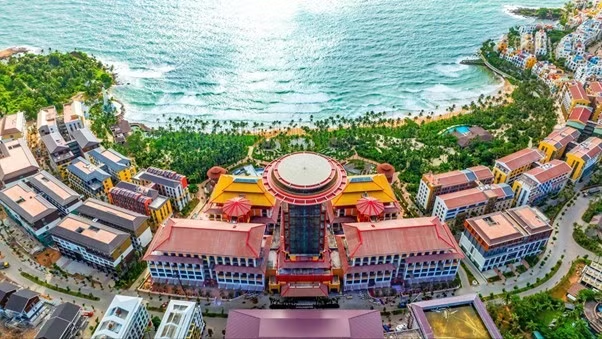
This is also why conference infrastructure, accommodation and restaurant networks need to be developed together. For large-scale developments such as the APEC Convention and Exhibition Centre and the boulevard of upscale hotels at Ruby Beach (Bai Dat Do), the long-term challenge is to connect meeting venues with experiences before and after events. Once open, Rixos Phu Quoc Vietnam could also add to the accommodation and dining options, broadening the scope for programmes tailored to different groups of guests.
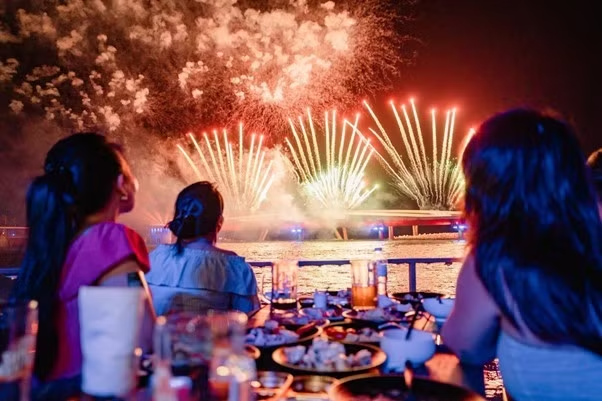
(Photo: Sun Bavaria GastroPub)
If these options are incorporated into itineraries from the initial sales stage, gastronomy can help increase budgets for activities on the sidelines and encourage delegates to extend their business trips with a holiday.
From the dining table to reasons to stay and return
For tour operators, Phu Quoc’s advantage lies in its ability to combine resort restaurants with the island’s local food culture. An itinerary could begin with breakfast in Duong Dong, continue with a visit to a fish sauce producer or pepper farm, and end with dinner by the sea.
Gwendal Poullennec, International Director of the Michelin Guide, has observed that Phu Quoc’s culinary identity is shaped by the interplay between fishing-village food culture and restaurants with an international character. This provides a foundation for the island to develop itineraries offering a variety of experiences and price points.
Ham Ninh swimming crab, herring salad, bun ken (rice noodles in a coconut-based fish broth) and bun quay (freshly prepared rice noodle soup) could become highlights that help visitors explore local life. If local establishments are recommended by Michelin, the international attention will create further opportunities for eateries, restaurants and ingredient suppliers on the island to reach customers.
Even so, a famous venue often generates only one additional visit. To encourage guests to spend another night, tour operators need to connect multiple experiences into a compelling itinerary: tasting dishes, discovering where ingredients come from, meeting local producers and exploring local culture. Ease of booking, multilingual guidance and convenient transport will largely determine whether travellers choose such an itinerary.
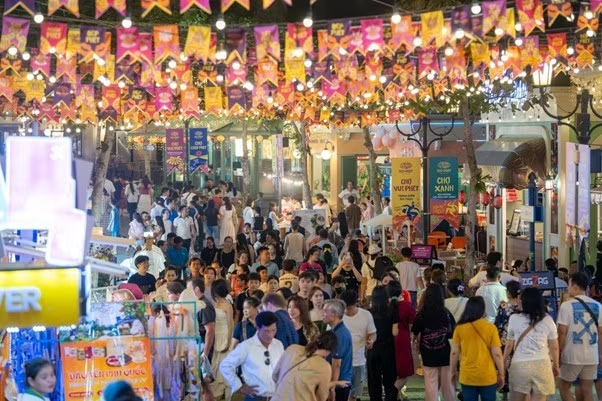
The focus, therefore, is not only on attracting high-spending visitors, but also on increasing the value of each trip. A traveller may budget for both an upscale dinner and affordable local dishes, spreading spending across more businesses and extending the benefits to the community.
After APEC, this will be an important test for Phu Quoc. The event provides a major opportunity for promotion, while experiences that continue to be delivered well can keep attracting visitors after the conference programme has ended. Michelin’s endorsement also needs to be sustained by consistent food quality, rather than relying solely on the impact of the initial announcement.
Phu Quoc’s greatest opportunity is to turn the attention it receives in the APEC year into tourism offerings with lasting appeal. When visitors can easily book a memorable dinner, extend a business trip with a journey around the island and discover new experiences on a return visit, gastronomy will become an additional source of value for the infrastructure now being developed. The benefits of 2027 could then be measured in revenue, length of stay and repeat visits for years to come./.