Michelin comes to Phu Quoc: Which restaurants could win the island’s first star?

Following Hanoi, Ho Chi Minh City and Da Nang, Phu Quoc will become the fourth destination in Vietnam to be covered by the Michelin Guide’s inspectors. Restaurants on the island are set to feature in the Michelin Guide Vietnam 2027, due to be announced in the middle of next year.
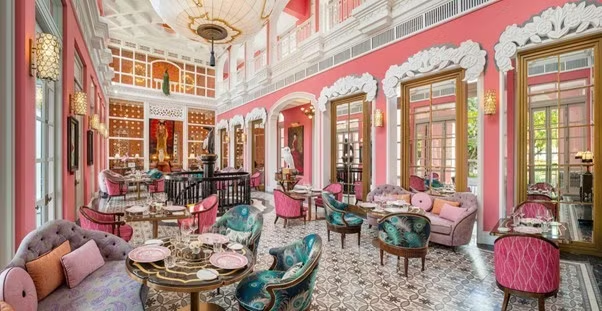
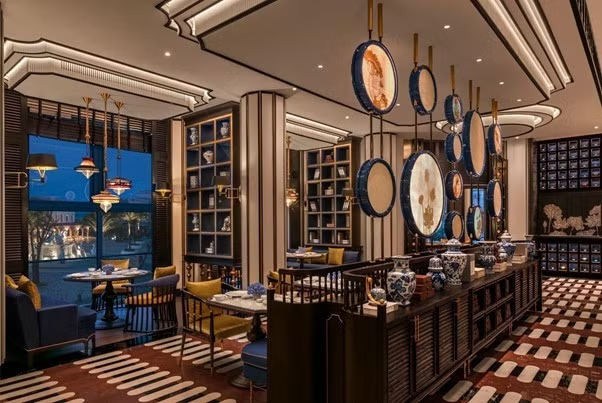
Pink Pearl’s interiors evoke the opulence of The Great Gatsby (Photo: Sun Group)

Hanoi (VNA) – The Michelin Guide announced on October 1 that it would expand its restaurant selection in Vietnam to Phu Quoc. The island’s first listings are expected to be unveiled in mid-2027, opening up new opportunities for culinary tourism in the same year that Phu Quoc hosts APEC.

Following Hanoi, Ho Chi Minh City and Da Nang, Phu Quoc will become the fourth destination in Vietnam to be covered by the Michelin Guide’s inspectors. Restaurants on the island are set to feature in the Michelin Guide Vietnam 2027, due to be announced in the middle of next year.

phu-quoc2.jpg
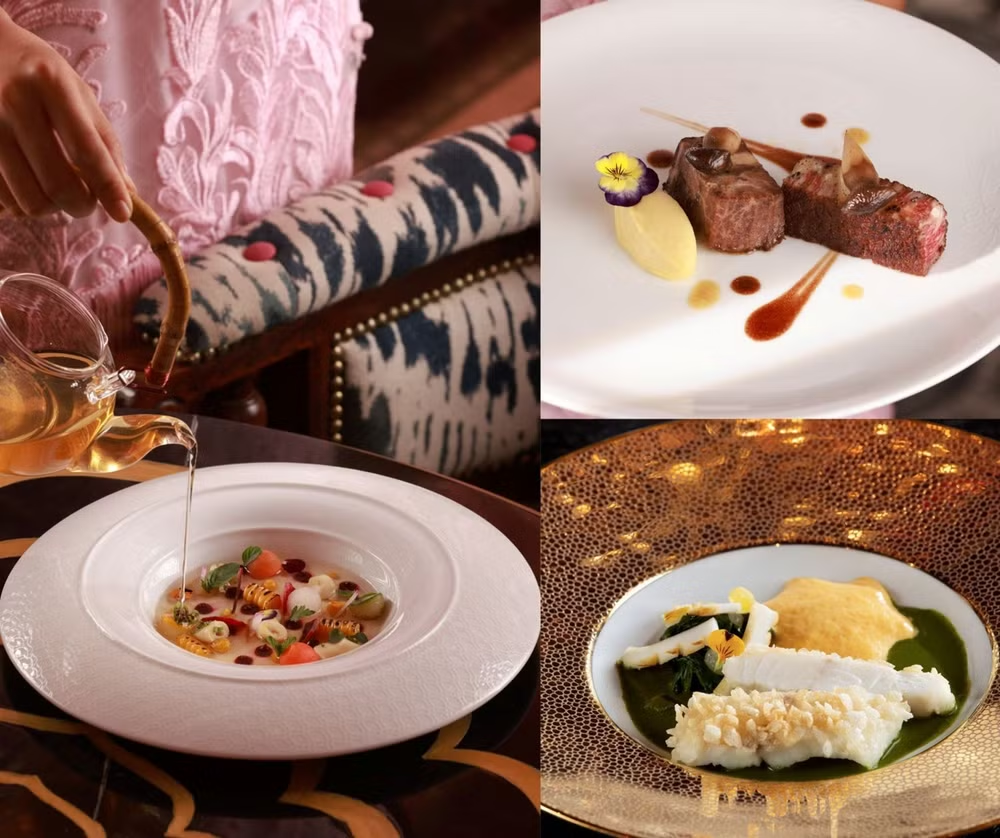
The cuisine at Pink Pearl by Olivier E. combines French cooking with Mediterranean influences, shaped by chef Olivier Elzer. (Photo: Sun Group)

The news has already prompted speculation over which restaurants might earn Phu Quoc’s first Michelin star — and which long-established local eateries could also gain recognition. From fine-dining restaurants to humble noodle shops, the island offers inspectors a broad range of places to explore.

Restaurants to watch

Among Phu Quoc’s fine-dining establishments, Pink Pearl by Olivier E. at JW Marriott Phu Quoc Emerald Bay Resort is one of the more prominent names.

The restaurant occupies a pink mansion designed by Bill Bensley and is built around the fictional story of Madame Pearl Collins, wife of the headmaster of Lamarck University — the imaginary institution that provides the narrative for the resort’s design. The concept creates the sense of dining in a private mansion with a story of its own, in keeping with the hotel’s wider architectural theme and evoking the lavish dinner parties of The Great Gatsby.
phu-quoc3.jpg
Seta at La Festa Phu Quoc – Curio Collection by Hilton specialises in contemporary Cantonese cuisine, including handmade dim sum and roasted meats (Photo: Sun Group)

Pink Pearl serves French cuisine with Mediterranean influences under the direction of Olivier Elzer, a chef whose restaurants have earned Michelin stars during his career. Its clearly defined culinary identity and the experience behind the kitchen make it one of the names likely to attract attention as Michelin begins assessing the island.

At La Festa Phu Quoc – Curio Collection by Hilton in Sunset Town, Seta and Mare offer two very different propositions. Seta specialises in contemporary Cantonese cuisine, with handmade dim sum and roasted meats among its signatures, while Mare focuses on Italian cooking and Mediterranean flavours.

Elsewhere across the island’s resorts, seafood and local produce feature prominently.

Corallo at Premier Village Phu Quoc combines locally sourced seafood with imported ingredients, while COCO Beach House at New World Phu Quoc offers Vietnamese-style grilled seafood. Herring Bar at Premier Residences Phu Quoc Emerald Bay, meanwhile, puts local favourites such as herring salad, roe-filled squid and lightly sun-dried mackerel on the menu.
phu-quoc4.png
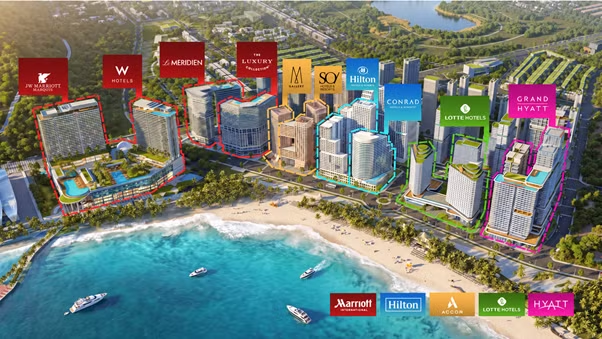
The hotel boulevard at Bai Dat Do (Ruby Beach) is expected to add more noteworthy dining venues to Phu Quoc’s culinary landscape in the coming years. (Photo: Sun Group)

Beyond the hotel sector, The Home Pizza has built a following by combining pizza with Vietnamese ingredients and regional specialities. Its herring salad pizza brings a distinctly Phu Quoc flavour to the Italian staple, alongside more unconventional creations such as H’Mong duck pizza and durian pizza.

At the more casual end of the market, Bun Quay Kien Xay, Thanh Hung and Bun Ken Ut Luom stand out for dishes closely associated with the island.

Bun quay, one of Phu Quoc’s best-known specialities, features freshly made rice noodles, shrimp and fish cakes, accompanied by a dipping sauce that diners mix themselves. Bun ken has its own distinctive profile, combining fish, coconut milk and fresh herbs and vegetables.

If they can maintain consistent quality while remaining good value, such establishments could emerge as candidates for Bib Gourmand or Michelin Selected recognition.

For now, these names remain speculative. The final outcome will depend on Michelin’s independent and anonymous inspection process, and the list of restaurants worth watching could expand further as the Bai Dat Do hotel boulevard and Rixos Phu Quoc Vietnam become operational.

Why Michelin chose Phu Quoc

According to Gwendal Poullennec, International Director of the Michelin Guide, Phu Quoc stands out for the way its fishing-village food culture intersects with an increasingly diverse restaurant scene shaped in part by international culinary talent.
phu-quoc5.jpg
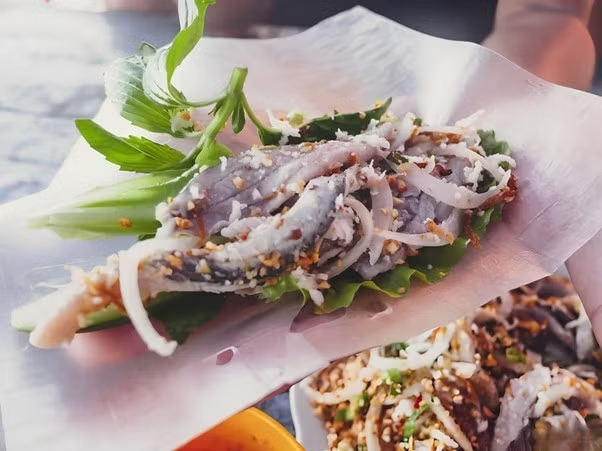
Herring salad wrapped in rice paper is one of Phu Quoc’s signature dishes. (Photo: Sun Group)

The island’s close relationship with the sea, together with local products such as fish sauce and pepper, gives its cuisine a distinctive identity.

That identity comes through in many familiar dishes, from steamed Ham Ninh crab and herring salad wrapped in rice paper to grilled sea urchin and scad. Straightforward cooking techniques allow the natural sweetness of the seafood to remain at the centre of the dish, while fish sauce and pepper add flavours closely associated with Phu Quoc.

Against this local culinary foundation, the growth of the resort sector has brought new techniques and different ways of working with ingredients.

A visitor can start the day with bun quay, eat seafood in a fishing village for lunch and choose a fine-dining restaurant for dinner. That range gives Phu Quoc the potential to develop more travel experiences aimed specifically at food lovers.

Michelin’s arrival could help bring those experiences to a wider international audience.

A Michelin-starred restaurant can become a reason in itself for travellers to plan a trip to the island. Recognition for a modest local eatery, meanwhile, can encourage visitors to venture beyond their resorts, explore surrounding neighbourhoods and spend more within the local economy.

The Michelin Guide’s expansion to Phu Quoc comes as the island prepares to host APEC 2027, giving it an opportunity to present itself to international visitors not only through major infrastructure and resorts, but also through the depth of its food culture.

As fishing-village dishes and internationally influenced restaurants reach a broader global audience, Phu Quoc has a stronger foundation on which to become a destination people are willing to travel to for food alone.

The longer-term value of Michelin’s arrival will lie in whether the island can turn its distinctive flavours into a lasting competitive advantage — one that attracts visitors, supports local businesses and continues to generate tourism revenue well beyond the APEC year./.
VNA

See more

For leisure travellers, a dining venue worth experiencing can be a decisive factor in choosing a destination. (Photo: New World Phu Quoc)

From APEC to Michelin: New opportunities for Phu Quoc to extend stays, boost spending

Gwendal Poullennec, International Director of the Michelin Guide, has observed that Phu Quoc’s culinary identity is shaped by the interplay between fishing-village food culture and restaurants with an international character. This provides a foundation for the island to develop itineraries offering a variety of experiences and price points.

Pu Luong community-based ecotourism site in Thanh Hoa province attracts visitors during National Day holiday. (Photo published by VNA)

Travel firms drive tourist flows, boost tourism value

Travel companies should play a key role in directing tourist flows and linking the tourism value chain, thus enhancing the competitiveness of the tourism sector. They should go beyond selling tours to understand market demand, design products, connect services, organise tourist flows, manage risks and contribute to shaping destination images.

The picturesque scenery outside Phong Nha Cave (Phong Nha-Ke Bang National Park) (Photo published by VNA)

Vietnam steps up tourism promotion on global markets

Experts say that to turn advantages into high-value tourist arrivals, tourism promotion needs to move beyond fragmented activities towards large-scale, long-term campaigns tailored to target markets and closely linked to actual visitor experiences.

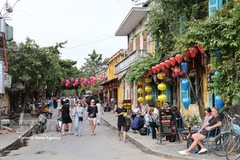
Visitors tour Hoi An Ancient Town in Da Nang city. (Photo: VNA)

Vietnam’s tourism targets 12% of GDP by 2030

Resolution 26-NQ/TW targets a direct GDP contribution of 10–12% by 2030, 45–50 million foreign arrivals, 160 million domestic visitors, and total revenue of 80–90 billion USD.

Located on Apollo Square in the heart of Sunset Town, Phu Quoc, Apollo Cafe is a distinctive venue designed by renowned architect Bill Bensley.

Coffee beneath an “upside-down” town: A surreal stop in Phu Quoc

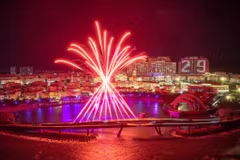
With an entire town recreated on its ceiling, sweeping sunset views and a vantage point for watching fireworks after dark, Apollo Cafe in Phu Quoc offers more than a photogenic backdrop. Designed by Bill Bensley, the venue shows how a café can become an experience travellers deliberately build into their itinerary.

Vietnam is named Asia's Leading Destination for the eighth time and Asia's Leading Heritage Destination for the fourth time at the 2026 World Travel Awards. (Photo: VNA)

Vietnam strengthens tourism profile with WTA 2026 honours

The awards demonstrate that Vietnam's tourism appeal is being recognised across a broad range of areas, from national, urban and heritage destinations to nature-based attractions and tourism products and services, further strengthening the country's presence on the regional and international tourism map

Terraced fields shimmering with water create a picturesque scene in Lang Sang Village, Ta Xua Commune. (Photo: VNA)

Ta Xua named Asia’s leading emerging tourism destination 2026

In recent years, Ta Xua, dubbed "the paradise of clouds", has emerged as one of the mountainous destinations attracting strong interest from young travellers, particularly for its spectacular sea of clouds stretching across the mountains in the northwestern region.

AirAsia highlights Kem Beach as a family-friendly destination, where children can play on the sand while parents enjoy a little more time relaxing by the sea. (Photo: VNA)

AirAsia recommends Phu Quoc as ideal destination for family travel

A familiar low-cost airline among Southeast Asian travellers, AirAsia describes Phu Quoc in its blog guide to travelling with young children as a destination that feels almost tailor-made for families, with beaches for relaxation, leisure attractions and a wide range of activities to engage children of different ages.

Ho Chi Minh City Central Post Office remains a popular attraction for domestic and international tourists. (Photo: VNA)

Ho Chi Minh City wins three top Asian tourism awards in 2026

The 2026 honours add to the city’s impressive streak at international tourism awards. In the 2025 WTA, the southern metropolis took home four titles, including business travel and festival and event destination awards, which it had won for four years from 2022 to 2025.

Phu Quoc is building its capacity to host MICE tourism, with international resorts, event venues, world-class shows and an expanding flight network. (Photo: Sunset Town)

Why does Travel + Leisure call Phu Quoc Asia’s next MICE hotspot?

According to the magazine, Phu Quoc was once known primarily for its beaches and relaxed holiday atmosphere. Over the past two years, alongside that appeal, the island has gradually developed its capacity to serve the MICE market, with international resorts, event venues, world-class shows and an expanding flight network.

Every year, from September to October, terraced rice fields in Mu Cang Chai and Pung Luong communes, Lao Cai province, turn a golden yellow, creating a spectacular landscape across the northwestern mountains. (Photo: VNA)

Indigenous culture becomes tourism asset in northern highlands

With growing recognition of indigenous knowledge, customs and cultural values as unique assets, ethnic communities in the northern mountainous region are shifting from simply providing tourism services to becoming creators and owners of tourism products, confidently telling their own cultural stories

Tourists watch the sunset from the Kiss Bridge in Phu Quoc special zone, An Giang province. (Photo published by VNA)

An Giang's tourism sector grows, prepares for APEC 2027

Phu Quoc remains the biggest contributor to An Giang's international arrivals and tourism revenue. The special zone welcomed more than 1.92 million foreign visitors during the nine-month period, accounting for over 99% of all international arrivals in the province.