Hanoi (VNA) – A new project to manage disaster risk in Vietnam uses weather forecasts to trigger early warnings of potential tragedy. This shifts the focus from responding after disasters occur to offering early financial assistance and taking preventive action before extreme heat reaches dangerous levels.
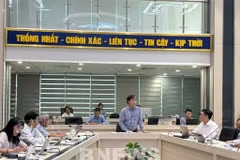
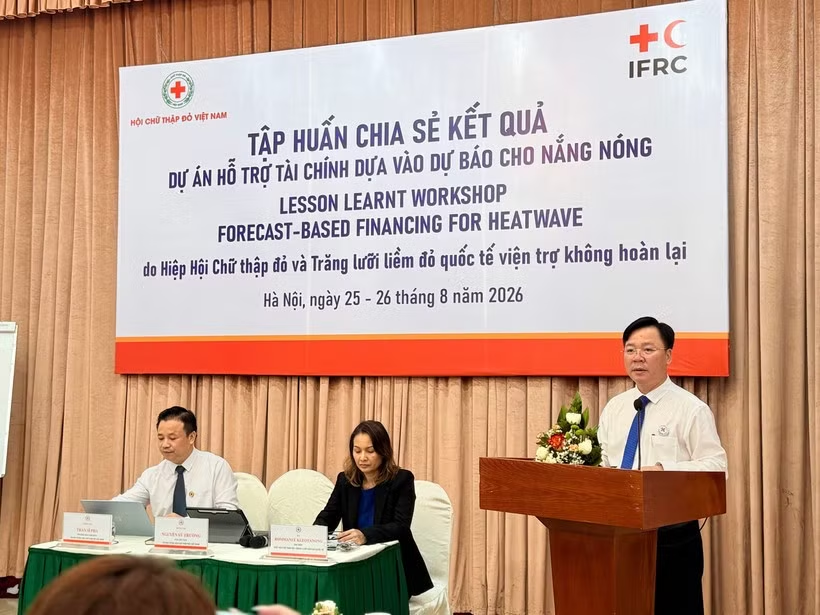
The Vietnam Red Cross Society held a training workshop in Hanoi on August 25–26 to review the “Forecast-based Financing for Heatwaves” project, assess its initial outcomes, and identify solutions to improve early-action procedures.
Implemented by the Vietnam Red Cross Society with support from the International Federation of Red Cross and Red Crescent Societies (IFRC), the project ran from February 2022 to March 2026 and was extended until August 31, 2026.
It was carried out in Hanoi, Hai Phong, and Da Nang, which are big cities where large populations and high numbers of outdoor workers increase exposure to extreme heat. Beneficiaries included construction workers, sanitation workers, street vendors, motorbike taxi drivers, informal workers, and other vulnerable groups.
The project had a total budget of more than 5.138 billion VND and involved 4,136 participants during 2022–2026, 51% of them women.
Building an early-action system
The project aims to establish an early-action framework based on scientifically determined weather thresholds. Instead of waiting for heatwaves to cause serious impacts, the model uses meteorological and hydrological forecasts to trigger early decisions, allocate resources and protect vulnerable communities before risks peak.
Through the project, Red Cross organisations at different levels strengthened their capacity to monitor and analyse forecasts and organise early action. Localities also received support to establish fixed and mobile community cooling shelters.
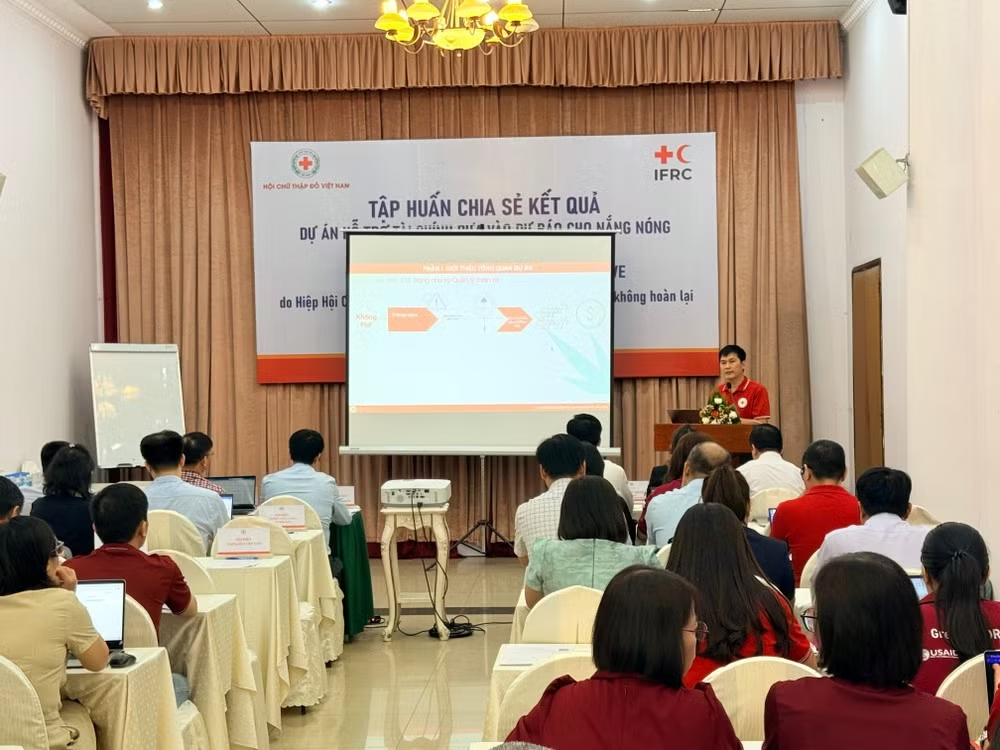
Red Cross branches in the three cities worked with 29 wards to identify suitable shelter locations based on infrastructure, population density, concentrations of outdoor workers and local demand. They also agreed on responsibilities for facilities, equipment, personnel, and operations once the system is activated.
The availability of locations and operational plans in all 29 wards is expected to shorten preparation time and enable faster assistance when heat alerts reach the activation threshold.
However, the early-action mechanism was inactive during the project period because the threshold temperatures established by the Institute of Meteorology, Hydrology, Environment and Marine Sciences were not reached.
Despite this, the project has established important foundations, including a monitoring system, a volunteer network, coordination mechanisms, equipment and cooling shelters, while strengthening the capacity of Red Cross staff.
A pilot in June 2020 also demonstrated the practical value of cooling shelters. Two fixed shelters in Bac Tu Liem and Hoang Mai districts of Hanoi provided assistance for around 2,400 people, offering drinking water, first aid, cooling facilities and health monitoring.
Refining the model for wider use
Nguyen Sy Truong, Vice President of the Vietnam Red Cross Society Central Committee, said the organisation’s 2026–2031 action programme identifies building disaster-resilient communities as a key priority.
He said the society will focus on prevention, early action and forecast-based action. He also called on relevant agencies to continue reviewing and standardising activation thresholds and strengthen forecast monitoring.
Closer coordination with the National Centre for Hydro-Meteorological Forecasting and related research institutions is needed to ensure that thresholds are scientifically sound while remaining practical for local implementation, he said.
Truong also called for streamlined operating procedures, faster funding disbursement and stronger coordination among the Red Cross, civil defence authorities, disaster management agencies and local administrations so that resources can reach communities before disasters occur.
He said assistance packages should be more practical and tailored to different groups, while continuing to incorporate gender equality, child protection and social inclusion and making greater use of local Red Cross volunteers.
Rommanee Kleotanong, Senior Disaster Response Officer at IFRC, said the fact that the extreme-heat early-action mechanism has not been activated is not necessarily a shortcoming, but an opportunity to review and improve the model.
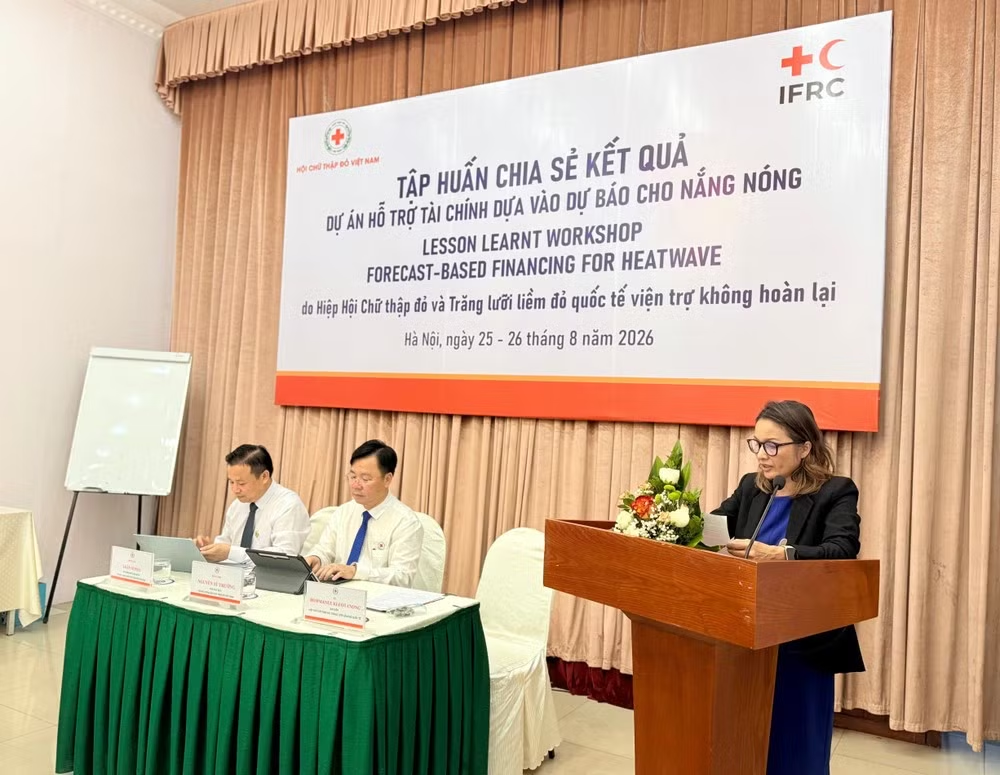
She stressed that an effective early-action system requires smooth information flows, timely decisions, readily available resources, and support reaching people before serious damage occurred.
The experience gained from the project could provide a basis for expanding the forecast-based early-action model for heatwaves beyond Hanoi, Hai Phong and Da Nang to other hazards, including storms, floods, cold spells, droughts and other extreme weather events./.