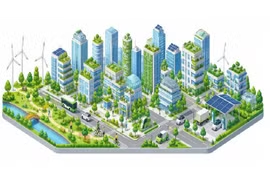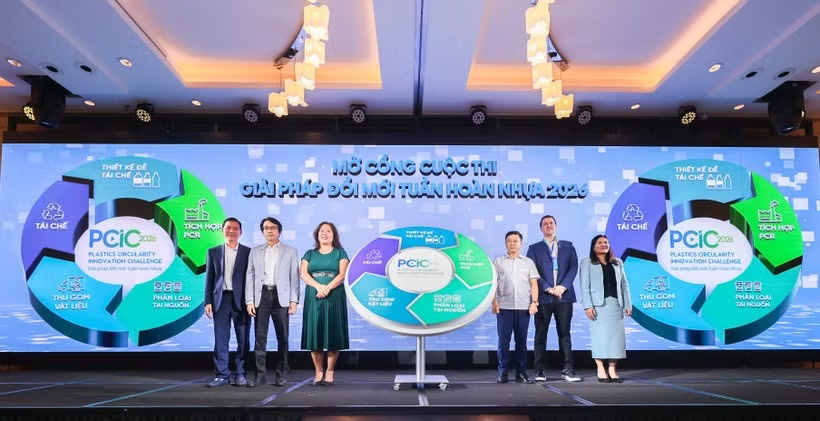
Ho Chi Minh City (VNA) – The “Plastic Circularity Journey 2026” was launched in Ho Chi Minh City on August 26, promoting public-private cooperation to realise the circular economic model by connecting supply chains, innovation, and resources for green growth.
The event was organised by Unilever Vietnam, the municipal Department of Agriculture and Environment, and the Ho Chi Minh City Women’s Union.
At the event, the three parties signed a memorandum of understanding to promote source separation of household solid waste and gradually expand the Material Recovery Facility (MRF) model across the city.
At the same time, Unilever Vietnam, the Department of Environment under the Ministry of Agriculture and Environment, the British Embassy and eight associations officially opened registration for the “Plastic Circularity Innovation Challenge 2026” (PCIC 2026).
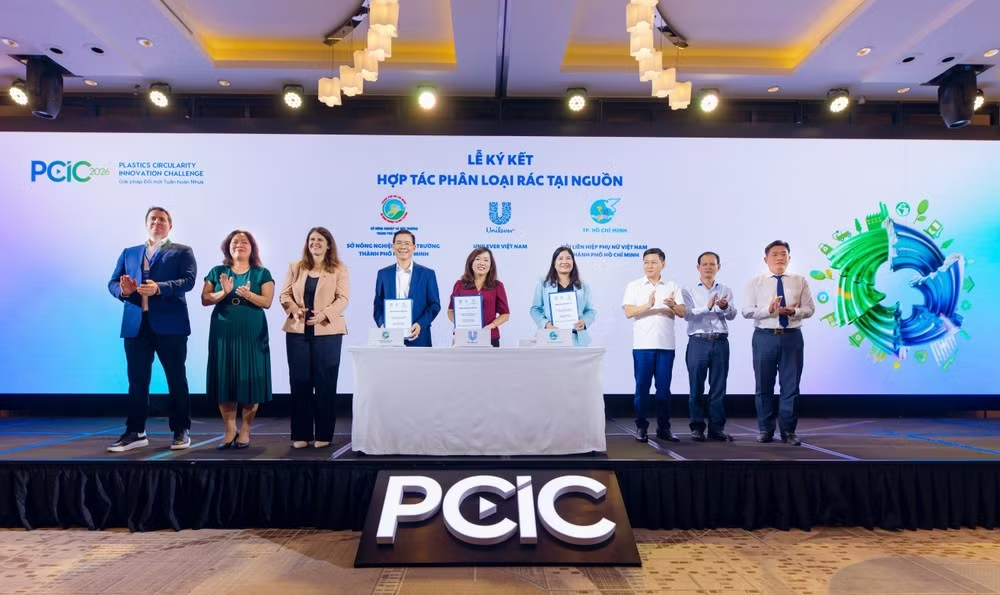
The two activities focus on key stages determining the effectiveness of the circular economy. The cooperation on source separation aims to ensure that solid household waste sorted by residents can be collected and channelled into appropriate recycling processes.
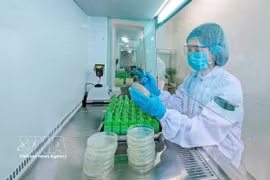
Meanwhile, PCIC 2026 seeks innovative solutions to challenges in plastic sorting, collection, recycling, materials and technology, while creating opportunities for promising solutions to be tested and applied in practice.
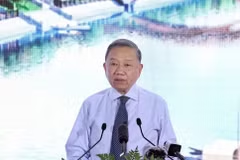
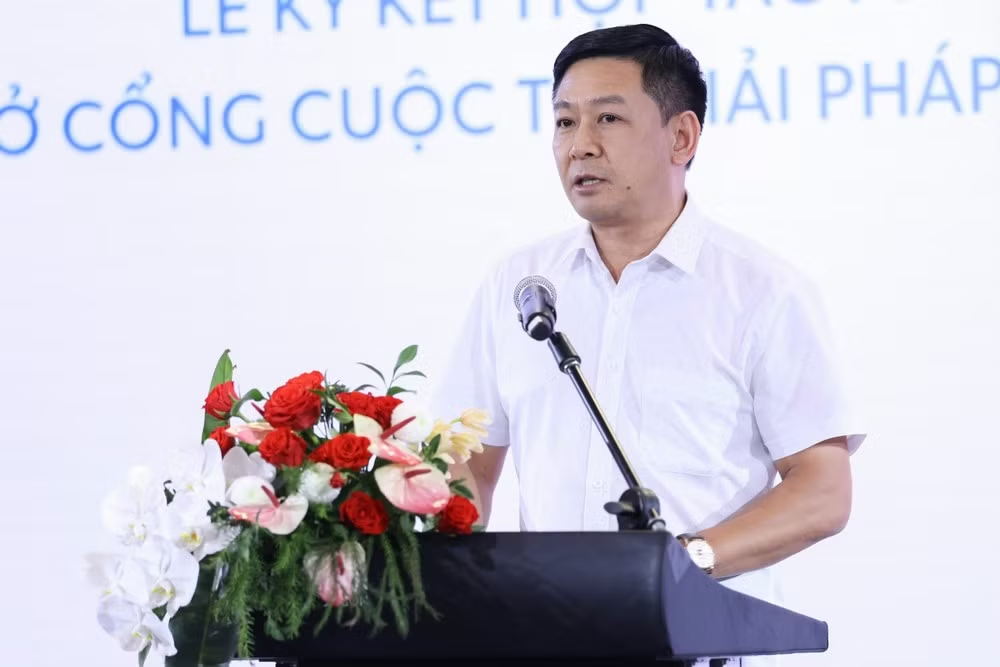
Speaking at the event, Deputy Director of the Department of Environment Vu Dinh Nam stressed that no single stakeholder could develop a circular economy independently.
He said the State had a role in creating institutions and a favourable policy environment, while scientists, research institutes and universities provided knowledge, technology, and solutions. Businesses bring initiatives into production, while investors and organisations supporting innovation provide resources to help promising ideas develop and scale up.
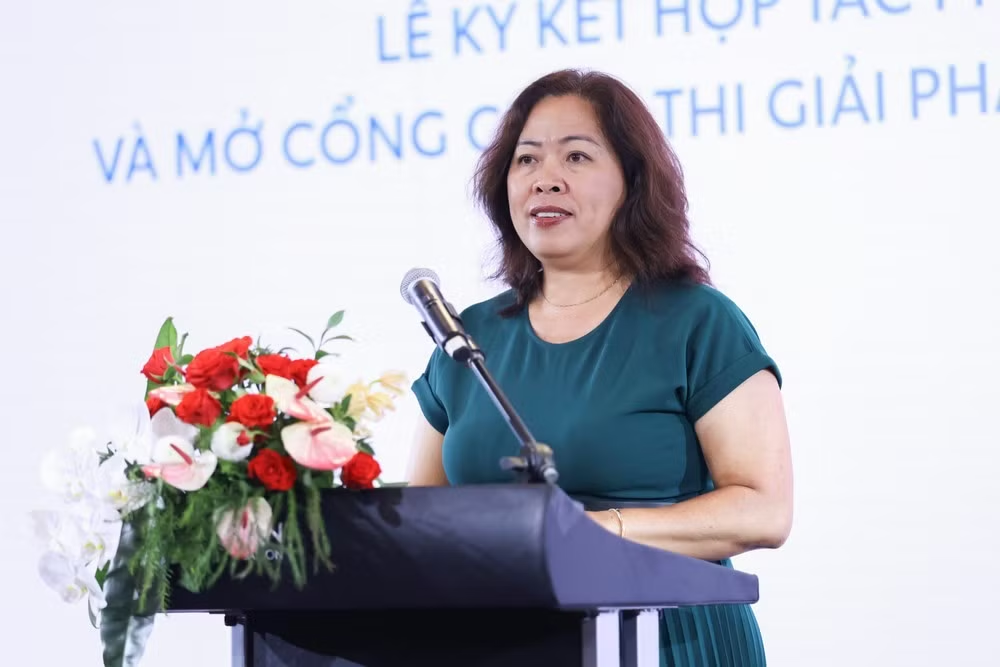
From the business perspective, Unilever Vietnam General Manager Nguyen Thi Bich Van noted that Vietnam had made progress in the recycling market in recent years, but a large amount of post-consumer material remained underutilised.
She said technological initiatives and innovation were needed to remove bottlenecks in the sorting, collection and recycling processes and improve the efficiency of the recycling chain.
Unilever Vietnam will continue increasing the proportion of recycled plastic in its product packaging, thereby helping create additional demand for recycled materials, she added.
Expanding source separation and recycling infrastructure
Under the memorandum of understanding, the Municipal Department of Agriculture and Environment, the Ho Chi Minh City Women’s Union and Unilever Vietnam will coordinate in developing and implementing plans for source separation of solid waste. They will also research and pilot the MRF model in residential areas, traditional markets, schools and other suitable locations.
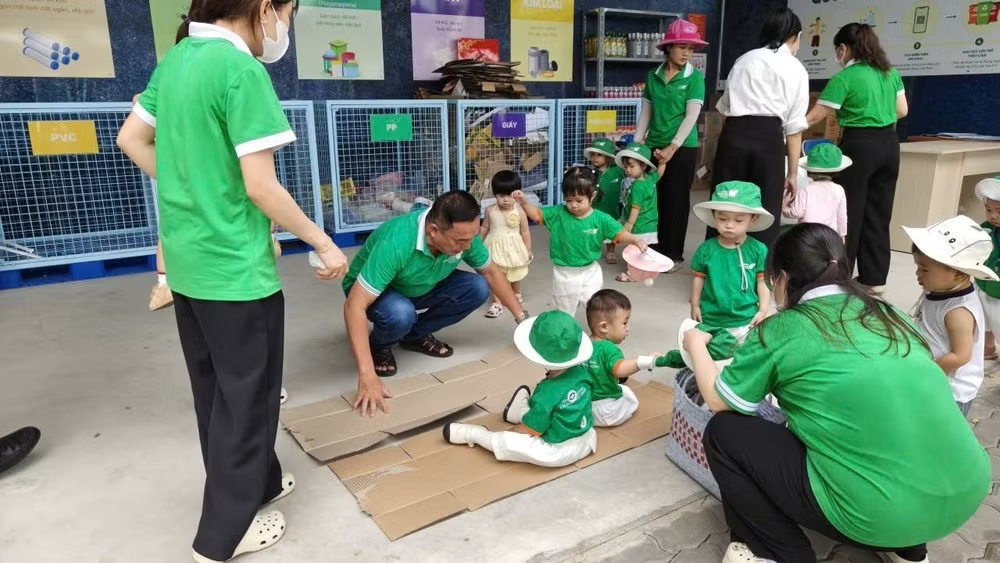
The approach has already been successfully piloted in Tan My Ward, where an MRF operates on a digital platform that enables the entire journey of recyclable materials to be tracked.
After more than three months of operation, the facility had recovered over 5.5 tonnes of recyclable materials, with more than 700 residents participating, including many children.
Connecting innovation with practical needs
PCIC 2026 builds on the 2024 edition, which attracted more than 350 projects, ideas and businesses, connected over 500 individuals and organisations, and brought together 42 leading experts.
A key new feature of the 2026 competition is the expansion of the search for solutions to include research and development teams within businesses. The programme will also strengthen connections between promising participating teams and businesses seeking solutions for practical application, as well as technical experts and suitable investors.
The implementation of the source-separation cooperation and the opening of registration for PCIC 2026 at the same event reflect a comprehensive approach to developing the plastic circular economy.
The approach links policy requirements with local implementation and new technological solutions, while connecting public agencies, businesses, social organisations, research and development groups, experts and investors.
The initiatives are expected to contribute to addressing bottlenecks in the sorting, collection and recycling of plastic and other recyclable materials, while mobilising diverse resources for the circular economy.
Through stronger cooperation along the recycling chain and greater support for innovative solutions, the programme aims to contribute to sustainable development in line with the Government’s orientations on green growth and the circular economy./.