Vietnam seizes opportunities to advance space technology

With an initial technological base and timely policy support, Vietnam’s space sector is now poised for significant breakthroughs.

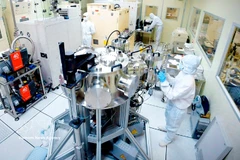
Satellite assembly activities at the Vietnam Space Centre. (Photo courtesy of the Vietnam Space Centre)

Hanoi (VNA) – The research, development and mastery of space technology have been identified as a priority of Vietnam’s science and technology agenda, serving as a foundation for economic development and national security. With an initial technological base and timely policy support, Vietnam’s space sector is now poised for significant breakthroughs.

Space technology is no longer unfamiliar in the country. According to Associate Prof. Dr. Pham Anh Tuan, General Director of the Vietnam Space Centre under the Vietnam Academy of Science and Technology, the country began applying remote sensing as early as the 1980s. However, efforts to master satellite technology really took shape after 2006, when the Prime Minister issued Decision No. 137/2006/QD-TTg approving the strategy for research and application of space technology to 2020.

Since then, Vietnam has successfully launched several satellites, including VINASat-1 (2008), VINASat-2 (2012), VNREDSat-1 and PicoDragon (2013), MicroDragon (2019) and NanoDragon (2021). Notably, LOTUSat-1, Vietnam’s first Earth observation radar satellite, has completed production and is ready for launch. These achievements have laid important technical and operational foundations for the sector’s next phase of development.

Yet, experts noted that Vietnam’s space technology still faces numerous challenges: coordination among ministries and agencies remains suboptimal; long-term strategies, specialised laws and unified technical standards are lacking, leading to fragmented and inefficient investments. Infrastructure, though improved, remains modest; the pool of specialists, especially system engineers and chief designers, is still thin, lacking a defined professional skills framework and suitable incentives. Furthermore, space research demands large investment, long payback periods and a high degree of risk, posing significant barriers for domestic institutions.

The Party and State have placed strong emphasis on developing the sector, reflected in major science and technology policies. The Politburo's Resolution No. 57-NQ/TW on breakthroughs in science, technology, innovation and national digital transformation clearly identifies research and application of space technologies as a priority. The PM’s Decision No. 1131/QD-TTg dated June 12, 2025 names aerospace technology among 11 strategic technology groups. Additionally, the National Assembly’s Resolution No. 193/2025/QH15 on piloting satellite-based telecommunications services provides an important legal framework to accelerate development in this field.

In terms of workforce and infrastructure, the Vietnam Space Centre has built a core team through master’s and doctoral training programmes in satellite technology in Japan, paired with hands-on experience in satellite design, integration, testing and operation. The centre has also collaborated with Vietnam National University, Hanoi, the University of Science and Technology of Hanoi, and the Posts and Telecommunications Institute of Technology to train undergraduate and postgraduate students in space-related fields. This growing workforce now contributes directly to satellite projects, ground stations and data platforms, gradually shaping a generation of systems engineers and chief designers for the future.

Infrastructure development has also progressed. Key facilities include satellite data reception and processing stations, a satellite integration and testing centre, and most recently the Vietnam Space Museum, opened in August this year.

vietnam-space-technology-remote-sensing-vietnam-space-centre.jpg
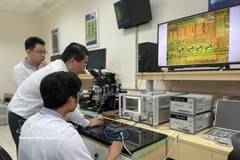
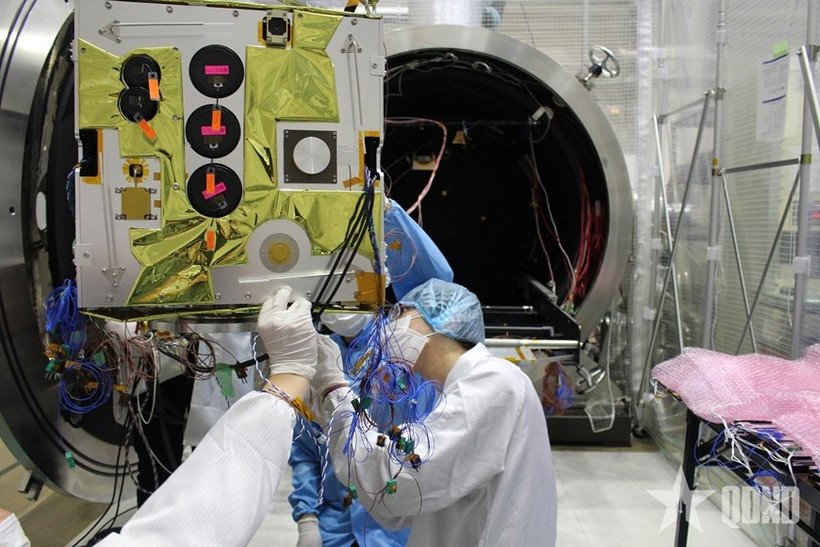
Satellite testing activities conducted by the Vietnam Space Centre in Japan. (Photo courtesy of the Vietnam Space Centre)

With policies in place and initial progress in human resources and infrastructure, choosing the right development pathway will be crucial for Vietnam’s space ambitions.

According to Tuan, a feasible roadmap involves developing a constellation of small Earth-observation satellites over the next 10 – 20 years, aligned with national needs in disaster reduction, climate response, agriculture, environmental management, infrastructure, and sea and islands.

Recently, VinSpace JSC was established, operating in six sectors, including aircraft manufacturing, spacecraft production and telecommunications satellites. The participation of such a private enterprise highlights the growing appeal of the industry and adds fresh momentum for its robust development in the years to come./.

VNA

See more

Experience virtual reality technology at Nha Trang Center shopping mall (Khanh Hoa). (Photo: VNA)

Experts give ideas to build AI economy from data

Vietnam’s economic growth over past decades has largely relied on labour expansion, capital accumulation, export promotion and deep global trade integration, but as the country enters a higher development stage, this model is showing limitations.

VINASA Vice Chairwoman and Secretary General Nguyen Thi Thu Giang (right) and SEPC General Director Abhay Sinha sign the MoU on cooperation in New Delhi on March 25. (Photo: VNA)

Vietnam, India ink deal to step up IT cooperation

Under the terms of the MoU, the two sides will jointly push trade and investment in IT and services, arrange business delegations and business-to-business meetings, share market and policy information, and help companies access partnership opportunities and expand into new markets.

The Ninh Thuan 1 Nuclear Power Plant project is planned to be built in Khanh Hoa province (Photo: VNA)

Vietnam approves atomic energy development strategy, targeting civil applications

Tran Chi Thanh, Director of the Vietnam Atomic Energy Institute under the Ministry of Science and Technology, underscored that in the coming period, the institute and its affiliated units will continue promoting their strengths to promote the safe and secure application of atomic energy, contributing effectively to socio-economic development goals.

Students at FPT Ha Nam Inter-level High School practice their lessons directly by applying digital technology software (Photo: VNA)

FPT joins top 35 global AI application development service providers

The recognition reflects FPT’s end-to-end AI capabilities, spanning strategic consulting, solution design, application development, and the integration and deployment of AI systems in real-world operations. Notably, the company has developed IvyHub, an integrated agentic AI platform that enables enterprises to design, deploy and manage AI agents at scale.

The High-Frequency Systems and Microchip Laboratory at Ho Chi Minh City University of Technology, Vietnam National University, Ho Chi Minh City. (Photo: VNA)

Ho Chi Minh City sets sights on becoming semiconductor hub

A central component of the plan is expanding cooperation with global technology leaders such as AMD, NVIDIA and Qualcomm. These partnerships are expected to support technology transfer, strengthen chip design capabilities and help the city move further up global semiconductor value chains.

The modern nanotechnology research laboratory of Vietnam National University, Ho Chi Minh City. (Photo: VNA)

Resolution 57 delivers tangible outcomes from local practice

In the course of implementing this resolution, the northern province of Quang Ninh has emerged as one of the early movers in translating strategic orientations into comprehensive development models linked to innovation and digital transformation.

Delegates at the launch of the new version of Ho Chi Minh City technology exchange platform. (Photo: VNA)

Ho Chi Minh City launches upgraded technology exchange platform

The upgraded platform represents a comprehensive shift from a simple information-sharing model to a managed online technology trading system, enabling monitoring and measurement of real transaction outcomes. It is built on three pillars, namely new tradable technology products, a modern digital platform, and an improved operational model.

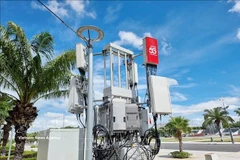
A Viettel 5G base station provides coverage at the April 16 Square area in Dong Hai ward, Khanh Hoa province. (Photo: VNA)

Conquering 6G networks helps Vietnamese businesses master strategic technologies

The global 6G alliance marks not only a technological milestone but also an opportunity for Vietnamese enterprises to strengthen their position on the global technology landscape. With the involvement of FPT, Viettel and VNG, Vietnam is gradually emerging as an early mover in the development and application of 6G technology.

At the Online Product Safety Summit in Hanoi on March 18. (Photo: dms.gov.vn)

Hanoi summit advances operation of ASEAN product safety portal

The Online Product Safety Summit in Hanoi on March 18 focused on practical enforcement solutions for identifying and removing non-compliant goods from online marketplaces, thereby strengthening consumer protection amid the rapid growth of e-commerce.

Illustrative image (Photo: VNA)

Resolution 57 charts directions for Vietnam’s technology ecosystem

Vietnam's sci-tech sector must evolve from a manufacturing base toward mastering technologies and ultimately developing original products independently, which requires shifting away from outsourcing and assembly models to one where domestic scientists lead in design, development and ownership of core technologies.

Party General Secretary To Lam (centre), Prime Minister Pham Minh Chinh (left), and Chairman of the Party Central Committee’s Commission for Internal Affairs Phan Dinh Trac mark the start of work on a high-tech semiconductor manufacturing plant in Hanoi on January 16, 2026. (Photo: VNA)

Resolution 57 refines technology priorities for new growth phase

The Ministry of Science and Technology is seeking feedback on a draft Prime Minister decision outlining four key categories: priority high technologies for investment, encouraged high-tech products, strategic technologies, and strategic tech products. The move is intended to capture emerging technology trends while strengthening the policy framework for high-tech development.

Professor Geert Angenon of Vrije Universiteit Brussel (Photo: VNA)

European experts highlight potential for AI cooperation with Vietnam

Experts believe that as demand for technological innovation grows and international partnerships expand, Vietnam has big opportunities to deepen cooperation with European partners in high-tech agriculture, healthcare, digital transformation and artificial intelligence.