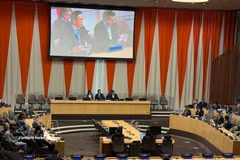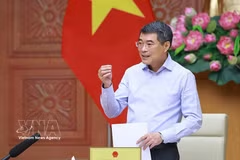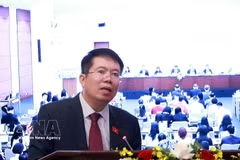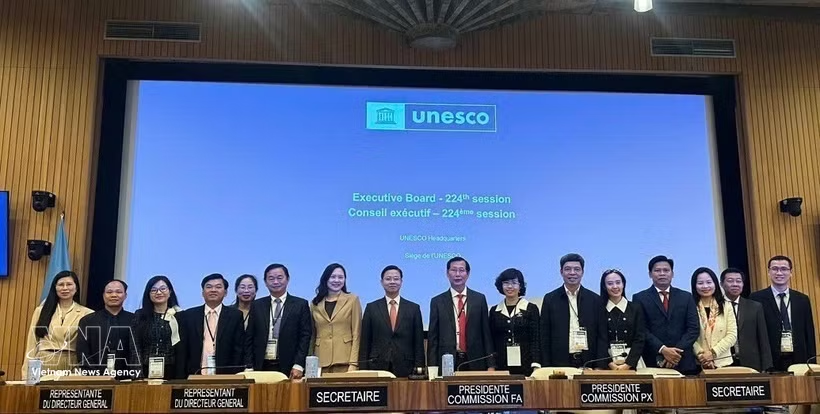
Paris (VNA) – Vietnam supports the vision and approach of “UNESCO for the people,” placing people at the centre of the organisation, with all policies and programmes meeting the practical needs of the public, especially vulnerable groups, Deputy Minister of Foreign Affairs Ngo Le Van, Chairman of the Vietnam National Commission for UNESCO, has said.
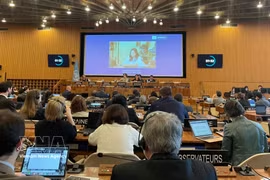
Addressing the 224th session of the Executive Board of the United Nations Educational, Scientific and Cultural Organisation (UNESCO) held in Paris from April 8–23, Van, who was head of the Vietnamese delegation, stressed that amid a world facing intertwined challenges, multilateralism, international cooperation and UNESCO play a key role in promoting dialogue and cooperation for peace and sustainable development.
He affirmed Vietnam’s support for the UNESCO80 reform roadmap, focusing on the organisation’s core mandate, priority areas, interdisciplinary approach, and the special status of the Vietnam National Commission for UNESCO, and UNESCO representative offices, alongside efforts to diversify resources and strengthen global partnerships to enhance the organisation’s effectiveness.
The official highlighted that following the success of the 14th National Congress of the Communist Party of Vietnam in early 2026, Vietnam is entering a new development era, aiming to become a high-income developed country by the mid-21st century where growth is only meaningful when it is humane, equitable and sustainable, leaving no one behind and not compromising the future of next generations.
Marking the 50th anniversary of the Vietnam - UNESCO partnership this year, Vietnam is committed to being not only an active member but also a partner in creating a practical and effective future for a peaceful, stable, and prosperous world.
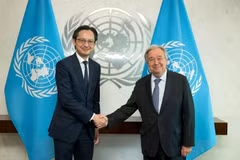
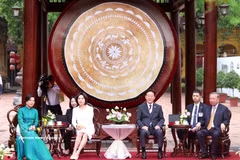
On the sidelines of the session, the Vietnamese delegation held meetings with UNESCO Director-General Khaled El-Enany, Deputy Director-General Åsa Regnér, Chairperson of the Executive Board Nasser Al Hinzab, President of the General Conference Khondker M. Talha, and other senior UNESCO officials to promote bilateral and multilateral cooperation, seek support for Vietnam’s key initiatives and dossiers, and advance activities marking the 50th anniversary of bilateral ties.
At the meetings, UNESCO leaders and delegation heads from various countries expressed their impression of Vietnam’s dynamic development as well as the strategic vision and major policies it has recently implemented, describing the country as a model of cooperation with UNESCO, particularly in balancing heritage conservation with socio-economic development, sustainable tourism and local people’ livelihoods.
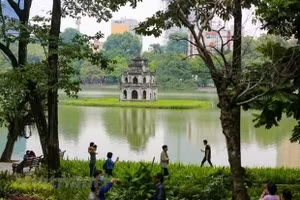
Van called on the UNESCO leadership and the Secretariat to continue supporting Vietnam’s initiative International Decade on Culture for Sustainable Development, as well as a range of heritage dossiers, including those related to the Thang Long Imperial Citadel, Oc Eo–Ba The archaeological site, Con Moong Cave, and several intangible cultural heritage nominations. UNESCO and International Council on Monuments and Sites (ICOMOS) leaders pledged assistance in this regard.
He also took this occasion to invite the UNESCO Director-General to visit Vietnam to attend celebrations marking the 50th anniversary of relations and to sign the Vietnam - UNESCO Cooperation Memorandum for the 2026-2030 period.
Van also conveyed invitations from localities to the UNESCO leaders to attend a number of international conferences hosted by Vietnam, such as the ASEAN+4 Global Learning Cities Conference, and the Summary Conference of the Marine and Island Biosphere Reserve Network in Ho Chi Minh City in November 2026.
The UNESCO leaders welcomed Vietnam’s plan to host major international events and expressed their appreciation for the invitations./.