Hanoi (VNS/VNA) - As global demand for aluminium reaches new heights, Vietnam is emerging as a strong contender to become a key production hub in the region, thanks to its abundant raw materials, experts say.
Once overshadowed by precious metals, such as gold and silver, aluminium is increasingly recognised as a critical resource in the modern economy.
Lightweight, recyclable and resistant to corrosion, aluminium plays a growing role across industries ranging from construction and transport to electronics and renewable energy.
Global aluminium price fever
The global aluminium market is heating up, with demand projected to surge by 40% by 2030, according to the International Aluminium Institute (IAI). The institute estimates global demand could exceed 119 million tonnes annually by the end of the decade.
Amid shifting global supply chains, countries with abundant resources and strategic advantages are moving to the forefront, and Vietnam is increasingly seen as one to watch, experts say.
Prices are also climbing sharply. In the US, aluminium prices have surged this year following the imposition of a 50% import tariff under the Trump administration. On the London Metal Exchange (LME), the global benchmark price for aluminium has risen by around 17% since its April low.
Analysts attribute the ongoing global aluminium shortage primarily to tight supply conditions. China, the world’s largest producer with more than 50% of global output, is maintaining a strict production cap of 45 million tonnes per year.
In Europe, numerous aluminium smelters have been forced to shut down in recent years due to soaring energy costs, a consequence of the Russia-Ukraine conflict. At the same time, increased production in India and Indonesia has so far fallen short of closing the supply gap.
Reflecting these pressures, the LME benchmark aluminium price has surged by about 17% since April 2025, recently surpassing $2,700 per tonne. Market analysts forecast prices could climb further, potentially breaching the $3,000 per tonne mark by 2026.
A rare window for Vietnam
As global demand for aluminium continues to surge, Vietnam is emerging as a strategic supplier, backed by one of the world’s largest bauxite reserves.
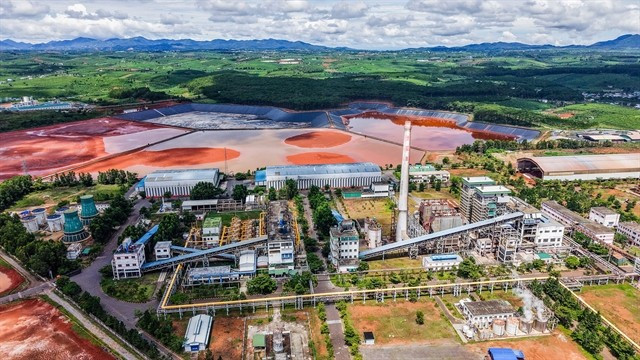
The country holds an estimated 5.8 billion tonnes of bauxite, with the vast majority located in the Central Highlands. Market analysts say this abundant resource positions Vietnam to become a key player in developing a robust alumina and primary aluminium industry.
Under national mineral planning for 2021–30, Vietnam targets annual output of 114–118 million tonnes of bauxite, 11.6–18.6 million tonnes of alumina, and 120,000–150,000 tonnes of primary aluminium annually. Beyond 2030, the country plans to increase primary aluminium output to 225,000–245,000 tonnes per year.
The Vietnam Association of Aluminium Profile (VAA) reported the country’s aluminium industry had expanded significantly over the past decade, with the number of factories, production capacity, and total output all doubling.
In 2024, total output across all aluminium types reached nearly 1.5 million tonnes, valued at 4.2 billion USD, a 14.5% increase compared to 2023. The domestic aluminium market is projected to grow to $4.53 billion by 2025.
Speaking at a recent conference on Vietnam’s aluminium industry, Vu Van Phu, Vice Chairman and General Secretary of VAA, said the sector faced a major opportunity for breakthrough growth, but significant challenges remained.
Echoing Phu’s remarks, Truong Minh Hai, Chairman of Nam Hai Group and EuroHa, pointed out insufficient financial capacity, a shortage of skilled workers, outdated technology, and a limited product range as major hurdles for Vietnam’s aluminium industry.
Hai said the industry was under growing pressure to shift toward green production and adopt environmental, social and governance (ESG) standards, yet many businesses lack clear guidance, funding and high-tech personnel in areas such as metallurgy, digitalisation and emissions management.
He added that the industry also struggled to produce high-quality aluminium and remained heavily dependent on imported raw materials. Overcapacity in some production segments persisted for years with no effective resolution.
Additionally, many Vietnamese aluminium firms have limited knowledge of international trade laws, little experience with import-export procedures, and face difficulties accessing high-standard markets, according to Hai.
Trade promotion and participation in global exhibitions also remain challenging, as most enterprises are small or medium-sized with limited resources.
To help domestic aluminium companies overcome these obstacles, Phu emphasised the need to accelerate digital transformation, promote green production, implement ESG management, and ensure product quality stability.
He also called for building a strong Vietnamese aluminium brand capable of replacing imports and competing on the global stage.
At the same time, Phu recommended a series of policy adjustments to support the industry, including reducing VAT, cutting export taxes by 5%, issuing clear ESG guidelines, expanding access to green credit, enhancing market access, leveraging free trade agreements, and adopting best practices from foreign-invested enterprises./.
Chinese province proposes cooperation in aluminium mining, processing with Cao Bang
In recent meetings, leaders of Guangxi province have repeatedly expressed their interest in partnering with Cao Bang in the exploration, production and processing of aluminium-based products.